Summary

Corvette ZR1 Comeback
Corvette has always made a big splash with their Z-Series sports cars. Badass Vettes such as the Z06, ZR1, and ZL1 received more power and torque, improved handling capabilities, and all-around upgrades for better track performance than just about any other vehicle General Motors was pushing on the market at the time (except the '14 and '15 Camaro Z/28).
Chatter started around 2007 about a new version of the ZR1—a ZR1 that would be so performance-packed that it would earn supercar status, with its name mentioned alongside the likes of Ferrari, Porsche, and Lamborghini.
This first 2009 ZR1 was auctioned off for a million bucks to Dave Ressler. He is also the owner of the oldest known Corvette in existence, #003.

6.2-Liter LS9
2009 ZR1 Motor and Transmission
A 6.2-liter LS9 aluminum V8 with a Twin Vortices Series supercharger and a top-loaded intercooler powers the ZR1. Hand-built in Wixom, Michigan, this powerhouse motor puts out 638 horsepower at 6,500 rpm and 604 lb.-ft. of torque at 3,800 rpm.
Sure, nowadays there are some stout performers that make more horsepower and torque, but not 13 years ago.
Controlling all this power is a close-ratio six-speed manual gearbox and a high-capacity, high-performance clutch that makes anyone sitting in the driver's seat feel like they are driving a professionally built race car.
Performance Stats
This General Motors engine and transmission combination is responsible for the staggering numbers this Corvette puts down while going in a straight line. This ZR1 gets from 0–60 in 3.4 seconds while reaching 100 mph in a matter of 7 seconds. The Corvette has no problem covering the quarter-mile in 11.3 seconds at 131 mph.
With a top speed of 200 mph, without a doubt, this was the most capable and powerful Corvette put into production.

Frame and Suspension
The ZR1 comes standard with an aluminum frame structure that weighs in at a mere 138 pounds. The frame was the exact frame used on the C6.R race car, giving it a power-to-weight ratio of 5.2 pounds per horsepower.
The aluminum frame rides on a Magnetic Selective Ride Control suspension. The Magnetic Ride Control was the most sophisticated suspension of its kind. This ride-control system gives the driver two different driving modes to select: Sport ride control, ideal for the racetrack, and Touring mode, which is ideal for everyday driving.
These modes can be easily switched back and forth in the cockpit with the push of a button. This may not seem like much of a wow factor today, but back in 2009, this convenience was just starting to become a top technology on American vehicles.
Tires
With all that power and such a capable suspension, you have to have some way of keeping the tires and wheels sticking to the ground, and in this department, GM spared no expense.
When testing the Corvette at Virginia International Raceway, the stock Michelin tires were eventually replaced with a set of Michelin Pilot Sport Cup tires. With this change, the ZR1 was able to shred a considerable amount of time off each lap.
And that's when the decision was made: the Michelins that performed the best would come on the best Corvette ever produced.

Braking
You can't have a vehicle with all that power and ability without having an effective way of stopping it. So massive Brembo carbon-ceramic 15-inch front and 15.5-inch rear vented, cross-drilled rotors were added.
These rotors can withstand heat of 1,000 degrees Celsius before warping. The brake system includes six-piston calipers in the front and four-piston calipers in the rear.
When this system all works together, it creates the stopping power you would need for a 200-mph supercar.
The Looks Of A Supercar
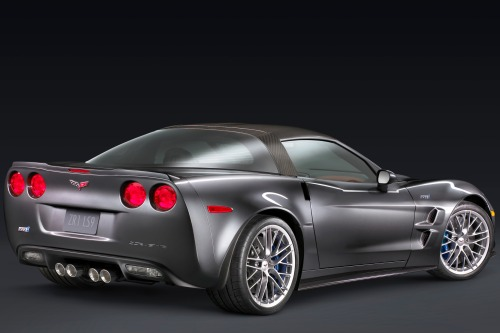
With a wider stance than the average Vette, the ZR1 is designed to take corners better and get around the track faster. Sporting 19x10-inch wheels in the front and 20x12-inch wheels in the back, the look of the ZR1 says nothing but supercar.
All buyers had the option to choose the color of the wheels, which included a bright silver-coated finish, a deep black-coated finish, or a chrome finish. All three colors look great, depending on the look you are trying to achieve.
There were nine color options for the exterior finish, all of which were in an exotic tint, helping give the ZR1 the supercar look that Corvette was ultimately after.
The spoiler on the back is both functional and proportional-looking, and the see-through carbon-fiber hood really makes a supercar statement.

Interior Options For The ZR1
When it comes to the interior, the ZR1 came with an abundance of options and colors. The buyer was able to request almost everything, from the steering wheel to the door panels, to be wrapped in rich leather. They also had the option of different model-specific badges to be placed on the inside of the vehicle.
Power-adjustable, heated leather seats with microfiber inserts could be purchased for a better day-to-day driving experience.
Corvette also offered a package called the 3ZR. This package included a nine-speaker Bose system, Bluetooth wireless technology, a head-up display, and SiriusXM satellite radio, making sure that ultimate convenience and comfort could be achieved.

Price Tag And Gas Mileage
With supercar looks, power, and track times to match, this ZR1 puts otherworldly supercars to shame when you compare price tags to performance.
When brand new, the MSRP was $112,000, which was much cheaper than a higher-powered Ferrari, Lamborghini, or Porsche at the time.
The ZR1 also rated surprisingly high in gas mileage for a 2009 sports car. With an EPA-estimated 14 city/20 highway mpg, the Corvette did better than most vehicles with an engine that size.
The best thing about the ZR1 is that, for the first time ever, Americans who were in the market for a supercar could finally buy an American-built supercar—minus the outrageous cost of maintenance, luxury taxes, and everything else that comes along with owning an overseas supercar.
.