Saturday, August 30, 2025

1939 GM Futurliner: When People Started To Believe Big

1939 GM Futurliner: When People Started To Believe


Summary

  • A rolling vision of tomorrow: The 1939 GM Futurliner was created to showcase General Motors’ vision of science, technology, and the future to the American public. 
  • Built for the Parade of Progress: GM constructed 12 Futurliners for its traveling exhibition, which brought futuristic displays to communities across the country.
  • Massive in size: Each Futurliner stretched about 33 feet long, stood nearly 12 feet tall, and weighed around 30,000 pounds.
  • A mobile museum: Instead of carrying passengers, the Futurliner’s interior was designed as an exhibition space filled with interactive displays and demonstrations.
  • The future on display: Exhibits covered subjects ranging from jet aircraft and household technology to nuclear energy, science, and industry.
  • Futuristic design: Dramatic lighting, Art Deco-inspired details, enormous wheels, and hydraulically operated display panels gave the Futurliner an unmistakable appearance.
  • Built to keep moving: Heavy-duty GMC power, a four-speed manual transmission with a two-speed splitter, and truck-style running gear allowed these enormous vehicles to travel across the country.
  • A rare survivor: Only nine of the original 12 Futurliners are known to survive today, making them incredibly rare pieces of automotive history.
  • Worth millions: Fully restored examples have become some of the world's most valuable and recognizable historic vehicles.
  • Bottom line: The Futurliner was more than a vehicle—it was a rolling symbol of American optimism, innovation, and our belief in the future.


  • 1939 GM Futurliner GM

  • A Rolling Vision of the Future

    Few vehicles capture the imagination quite like the General Motors Futurliner. Towering, futuristic, and unmistakable, the Futurliner wasn't just a mode of transportation—it was a rolling stage for America's dreams of tomorrow. Built for "GM's Parade of Progress," this massive machine symbolized innovation, optimism, and the spirit of forward-thinking design that defined pre-and post-war America.

    A Brief History Of The GM Futurliner 

    The Futurliner was first introduced in 1939 for General Motors’ traveling exhibition, the Parade of Progress. The event was essentially a mobile world’s fair that brought cutting-edge science and technology displays to towns across the country. GM built twelve Futurliners in total, each one measuring about 33 feet long, 8 feet wide, and standing nearly 12 feet tall.

    They were used from the late 1930s through the mid-1950s, with updates made in 1953 to keep their styling in line with GM’s design language of the era. Today, only a handful survive, and fully restored examples are considered some of the most prized vehicles in the world of automotive history.

    Take A Look Inside the Futurliner

    The interior of the Futurliner was unlike anything the public had ever seen in the 1940s and ’50s. Instead of simple passenger seating, each unit was built as a mobile exhibition space. The driver sat high up in a cockpit-like cab, while the rest of the body was devoted to large display areas that would open up once the vehicle reached its destination.


    Exhibits and Displays

    Each Futurliner was assigned a specific theme and outfitted with custom displays to showcase GM’s vision of the future. Some examples included:

    • Jet Engines and Aircraft Technology – Showcasing aviation advancements and jet propulsion.

    • Household of the Future – Exhibiting futuristic appliances and conveniences that would someday be common.

    • Science and Industry – Highlighting cutting-edge scientific research and industrial design.

    • Power of the Atom – Introducing nuclear energy to a curious public.

    The interiors often featured dramatic lighting, models, interactive demonstrations, and art deco-inspired design touches, reinforcing GM’s message that science and progress were not just functional but beautiful.


    The 1939 GM Futurliner Drivetrain

    Underneath its futuristic shell, the Futurliner was powered by a heavy-duty Detroit Diesel four-cylinder GMC diesel engine, later upgraded in some units to a 302-cubic-inch GMC inline-six gasoline engine. These powerplants were built for torque and reliability rather than speed, ensuring the massive 30,000-pound vehicles could haul themselves across the country. Power was delivered through a four-speed manual transmission with a two-speed splitter, giving the driver plenty of gear choices to handle the heavy load.


    Wheels and Tires

    One of the Futurliner’s most striking visual features is its oversized wheels and tires. Each vehicle rode on dual rear wheels and massive 10.00x20-inch truck tires, wrapped around full-disc wheel covers that enhanced the futuristic look. Combined with its wide stance and tall profile, these wheels gave the Futurliner a commanding presence whether parked at a fairground or rolling down the highway.


    Did You Know?

    • Only nine of the original twelve Futurliners are known to still exist, with varying degrees of restoration.

    • A fully restored Futurliner once sold at Barrett-Jackson for over $4 million, setting a record for vintage GM vehicles.

    • The driver’s seat was positioned in the very center of the cab, giving it a cockpit-like view similar to that of a bus or even an aircraft.

    • Each Futurliner had hydraulically operated side panels that folded open to reveal the displays inside, almost like giant wings unfolding.

    • The design was overseen by Harley J Earl, GM’s legendary head of styling, who also influenced icons like the Corvette and Cadillac tailfins.


    As We Still Keep Dreaming

    The General Motors 1939 Futurliner is more than just a truck—it’s a time capsule of American innovation and optimism. Its unique blend of futuristic design, educational exhibits, and sheer presence made it a rolling icon of the mid-20th century. Today, the Futurliner remains one of the most fascinating and celebrated vehicles ever created, a symbol of how the past once dreamed of the future, AND We Still Keep Dreaming!

    Monday, August 25, 2025

    1956 Firebird II by General Motors: Dreaming Futuristic


    1956 Firebird II


    Summary

    • GM built a family spaceship: The Firebird II was a four-passenger concept car that looked more like a jet fighter than something you'd take to the grocery store.

    • It was turbine-powered: A 200-horsepower Whirlfire GT-304 gas turbine sat under the hood and could run on multiple fuels, including kerosene, diesel, and jet fuel.

    • Titanium? In 1956? Yep: GM built the show car with a titanium body, because apparently regular steel wasn't futuristic enough.

    • Self-driving was already on the menu: GM envisioned special highways with electronic conductor strips that could communicate with the car and guide it automatically.

    • They actually tested the idea: GM built an experimental “Safety Autoway” setup in Arizona to demonstrate its vision of automated driving.

    • The styling was completely bonkers: Bubble canopy, aircraft-style controls, giant fin, turbine exhausts, and enough jet-fighter inspiration to make a normal sedan look painfully boring.

    • The interior was just as crazy: Four bucket seats, a cockpit-like dashboard, panoramic canopy, and enough futuristic hardware to make you wonder where the ejection seat was.

    • It was a rolling laboratory: GM used the Firebird II to experiment with turbine power, titanium construction, advanced suspension and braking, air conditioning, and automated driving.

    • And it actually ran: This wasn't just a fiberglass fantasy. A functional Firebird II was tested at GM’s proving grounds and on public roads.

    • The future didn't quite happen: Turbines didn't replace piston engines, and automated highways never took over America.

    • Bottom line: The 1956 Firebird II was GM basically asking, “What if your family car was a jet?” Then they actually built the damn thing.


      1956 Firebird II By GM: Flyer


    Is it a bird? Is it a plane? 

    Well, it's something like that: A 1956 Firebird II turbine concept built by some of the most out-of-the-box thinkers from General Motors.

    The 1950s were a golden era for futuristic cars, and none captured the optimism of the time quite like the 1956 Firebird II. Built by General Motors as part of its experimental Firebird series, the Firebird II was unveiled at GM’s Motorama show as a glimpse into the future of family transportation.

    Unlike the radical single-seat Firebird I, which resembled a jet fighter on wheels, the Firebird II was designed as a four-passenger concept car. Harley Earl, GM’s legendary styling chief, envisioned it as a family vehicle of the future—one that would combine turbine power with aircraft-inspired design.

    Although the Firebird II was never intended for production, it remains one of the most ambitious and advanced concept cars GM ever created. Today, it stands as a symbol of mid-century innovation and the bold spirit of Motorama


    Firebird II Turbine Performance

    At its core, the Firebird II featured the Whirlfire GT-304 gas turbine engine, a 200-horsepower powerplant capable of running on a variety of fuels such as kerosene, diesel, or jet fuel. Turbine technology fascinated GM engineers because it promised fewer moving parts, lower maintenance, and higher reliability compared to piston engines.


    Turbine Engine For Firebird II


    The Firebird II wasn’t just about raw power—it was about reimagining the future of driving. GM constructed the car’s body out of titanium, an incredibly strong and lightweight material rarely used in automobiles even today. The Firebird II also incorporated one of the boldest ideas of the 1950s: automated highways.

    Engineers designed the Firebird II with sensors that could communicate with wires embedded in the road, allowing the car to guide itself automatically. This vision of self-driving cars was decades ahead of its time, proving just how forward-thinking the GM engineers were with this Firebird II. 


    1956 Firebird II Wacky


    A Wacky Appearance

    The Firebird II looked nothing like an ordinary 1950s automobile. Its design borrowed heavily from jet fighters, with a sharply pointed nose, a sleek canopy roof, and pronounced tailfins that gave it an unmistakably futuristic look. The car’s wide stance and low profile emphasized aerodynamics, while four exhaust outlets at the rear showcased its turbine engine.

    Where typical family cars of the 1950s were boxy and conservative, the Firebird II looked like it came straight out of a science fiction movie. Chrome trim, smooth lines, and space-age details made it a showstopper at Motorama and a visual icon of GM’s futuristic vision.


    1956 Firebird II Interior


    Complicated, Crazy Interior 

    Inside, the Firebird II continued its aviation-inspired theme. The cabin featured individual bucket seats for all four passengers, separated by a central console that ran the length of the interior. The controls and instrumentation resembled those of an aircraft, reinforcing the idea that the Firebird II was more machine than car.

    The most striking feature was the wraparound bubble canopy, which gave panoramic views and bathed the interior in light. It wasn’t just about style—the canopy emphasized the futuristic experience GM wanted to deliver with the Firebird II, making every passenger feel like part of a space-age adventure.


    Motor Trend Magazine Cover With '56 Firebird II

    Did You Know?

    • The Firebird II was the first turbine-powered concept car designed specifically as a family vehicle.

    • Its titanium body made it one of the most advanced material experiments of its era.

    • GM designed the Firebird II to operate on an automated highway system, an early vision of autonomous driving.

    • The Firebird II was fully functional and toured the country as part of GM’s Motorama exhibitions.

    • Today, the Firebird II survives as part of the GM Heritage Center collection.


    If You Dream It, You Can Build It

    The 1956 Firebird II was far more than a show car—it was a rolling vision of the future.

    Turbine engine? Check.

    Titanium body? Check.

    Bubble canopy? Check.

    Aircraft-style interior? Check.

    Automated highway? Absolutely.

    GM wasn’t just trying to build the next year's family car. They were trying to figure out what the family car might look like decades into the future.

    Of course, the future didn't quite turn out the way GM imagined.

    Turbine engines never replaced the good old piston engine, and automated highways never became the nationwide reality envisioned by the engineers and designers of the 1950s.

    But that's what makes the Firebird II so damn interesting.

    It represents an era when automakers weren't afraid to take a completely ridiculous idea, throw a bunch of engineers and designers at it, and see what happened.

    Sometimes they built a car.

    Sometimes they built a dream.

    And sometimes they built a 200-horsepower, titanium-turbine-powered family spaceship with a bubble canopy and a plan to drive itself down the highway.

    The 1956 Firebird II was definitely the last one.

    And honestly, that's pretty freaking cool.

    Wednesday, August 20, 2025

    Monte Carlo Aerocoupe: An Odd Look With a Purpose That Became Classic


    1986-87 Chevrolet Monte Carlo SS Aerocoupe

    Summary

  • Built for NASCAR: Chevrolet created the Aerocoupe primarily to meet NASCAR homologation rules and fight Ford’s slippery Thunderbird on the superspeedways.
  • That weird rear window had a job: The distinctive sloped rear glass and shortened trunk weren’t just styling quirks—they helped clean up airflow and improve high-speed stability.
  • It was an SS underneath: The Aerocoupe came with a 5.0L (305 cu. in.) High Output V8, 4-speed automatic, performance-tuned F41 suspension, and a 3.73 rear axle.
  • But don't expect supercar numbers: With only 180 horsepower, the Aerocoupe wasn't exactly terrifying in a straight line. The magic was in the aerodynamics and its NASCAR connection.
  • NASCAR success made it famous: The aerodynamic advantage helped Chevrolet—and Dale Earnhardt—dominate on tracks like Daytona and Talladega.
  • Dale Earnhardt's #3: The Aerocoupe played a role in Earnhardt's 1986 and 1987 Winston Cup championship seasons, adding serious racing credibility to the street car.
  • Rare as hell: Chevrolet built only 200 Aerocoupes in 1986, followed by 6,052 in 1987 after demand—and racing success—took off.
  • Love it or hate it: That odd fastback roof either makes the Aerocoupe look incredibly cool or like someone parked a Monte Carlo under a garage door before it was finished.
  • Bottom line: The Monte Carlo SS Aerocoupe wasn't built to win beauty contests. It was built to win races—and then let you drive the race-car-inspired version home.

  • Chevy Monte Carlo SS Aerocoupe


    The 1986 and 1987 Chevrolet Monte Carlo Aerocoupe models are rare and legendary pieces of GM’s performance legacy. Built primarily to meet NASCAR homologation requirements, these limited-edition Monte Carlos blurred the line between street car and race car. With unique aerodynamic styling and performance tweaks, the Aerocoupe helped Chevrolet dominate stock car racing in the late '80s


    Dale Earnhardt, Monte Carlo Aerocoupe #3

    A Brief History of the Unique Monte Carlo Aerocoupe

    Chevrolet introduced the Aerocoupe in 1986 as a response to increasing competition in NASCAR, particularly from Ford’s aerodynamic Thunderbird. The goal was to streamline the Monte Carlo’s body to reduce drag and improve high-speed stability. NASCAR rules required at least 200 examples to be sold to the public to qualify for racing. Chevrolet built just 200 Aerocoupes in 1986, but demand—and racing success—prompted a much larger production run of 6,052 units for 1987. All Aerocoupes were based on the Monte Carlo SS trim, pairing aggressive styling with the usual underwhelming V8 horsepower outputs for that era. 


    Appearance and Design

    The Aerocoupe stood out from the standard Monte Carlo with its distinctive sloped rear window and shortened trunk lid, a feature designed to improve airflow over the rear of the car. It retained the SS’s front air dam, body-colored bumpers, and subtle rear spoiler. The fastback glass gave the coupe a sleek, almost European look, yet its squared-off front kept the car unmistakably American. 


    89-87 Monte Carlo SS Aerocoupe Engine Bay


    Performance Features

    • Engine: 5.0L (305 cubic inch) High Output V8

    • Horsepower: 180 hp @ 4,800 RPM

    • Torque: 225 lb-ft @ 3,200 RPM

    • Transmission: 4-speed automatic with overdrive (200-4R)

    • Suspension: Performance-tuned F41 that included firmer springs and tougher bushings, and larger front and rear sway bars

    • Brakes: Front disc, rear drum setup

    • Rear Axle Ratio: 3.73 for improved acceleration

    • Top Speed: Estimated 120 mph

    • 0–60 Time: Approximately 8.5 seconds


    Something Cool to Know

    The Monte Carlo SS Aerocoupe design played a crucial role in helping Dale Earnhardt secure the 1986 and 1987 Winston Cup Championships. The improved aerodynamics of the rear window design gave Chevrolet a significant edge on superspeedways like Daytona and Talladega. This "win on Sunday, sell on Monday" success made the Aerocoupe a sought-after collectible even today.

    1987 Chevrolet Monte Carlo  SS Aerocoupe


    Love or Hate the Odd Design

    The 1986 and 1987 Monte Carlo Aerocoupe models weren’t just styling oddities—they were purpose-built muscle cars with a mission. Their brief production run for winning NASCAR purposes and distinctive design make them standout classics from the 1980s. For collectors and racing fans alike, the Aerocoupe remains a street-legal piece of Chevrolet’s championship-winning legacy.


    Thursday, August 7, 2025

    1983 Corvette C4: Only One In Existence


    1983 Corvette C4

    1983 C4 Corvette

    Summary

  • The Corvette that technically never happened: GM built 14 prototypes and 43 pilot cars for the 1983 C4 Corvette, but none were sold to the public.
  • Only one survived: The surviving car was #4 off the Bowling Green assembly line, making it incredibly rare—but technically not a 1-of-1.
  • GM wasn't ready to release it: Engineers found plenty of quirks with the new chassis, body, and other systems. Instead of rushing the new C4 to market, GM decided to hit the brakes.
  • Goodbye, T-tops: GM also decided the original T-top design wasn't the way forward and developed the targa-style roof that appeared on the production 1984 C4.
  • The others got crushed: After testing, GM ordered the 1983 cars destroyed—the normal fate for experimental vehicles that weren't going to be sold.
  • But somehow, #4 escaped: Nobody knows exactly how this particular Corvette avoided the crusher. There are several stories, but the real answer has been lost to time.
  • It was found by accident: About two years later, the Bowling Green plant manager spotted the dirty, beat-up Corvette sitting around the plant property. Checking the VIN revealed what it really was.
  • It got a second chance: The plant cleaned it up and gave it a red, white, and blue paint job before eventually donating it to the National Corvette Museum.
  • Restored to its roots: The Corvette was eventually returned to its original white exterior and blue interior, along with its original configuration.
  • A very important Corvette: The 1983 C4 became a showcase piece at the museum and a reminder that sometimes not building a car can be the smartest move an automaker makes.
  • Bottom line: GM could have rushed the C4 onto the market in 1983. Instead, they crushed almost every one, fixed the problems, and launched the 1984 C4 as a much better car. Somehow, one escaped the crusher—and became Corvette history.


    1983 Corvette Emblem


  • Most people don't know that there were any Corvette C4s built for 1983, but there were a few (none sold), and there is one survivor that resides at the National Corvette Museum in Bowling Green, Kentucky. 

    For the people who do know it exists, they often refer to it as a 1-of-1 Corvette. But this is not true because, altogether, there were 14 prototypes built and 43 "Pilot Cars" built, which were going to be sold to the public. The surviving '83 Corvette was #4 in the bunch that rolled off the assembly line at the Bowling Green, Kentucky, Corvette Plant. 

    What Happened to the Other '83 C4? 


    General Motors, Corvette executives, engineers, and designers decided that with all of the quirks of the new frame, new body style, and all the other things that still needed more engineering adjustments, the new generation just wasn't ready to be sold to the public. 

    They also decided that the original T-tops weren't the way to go. They wanted to design a targa top for the Corvette because it would be more appropriate to keep up and compete with the design of the European sports cars.

    After testing the Corvettes at the GM Milford proving grounds, all 1983 C4 Corvettes were marked for destruction. It's a common practice for automotive companies to crush cars they have no intention to sell to the public. 


    GM brought in their car crusher and got to work turning the test Corvettes into hunks of metal. This is where the story gets dicey. No one really knows how this #4 1983 Corvette with the VIN # 1G1AY0783D5110023 survived, but one of the stories is that someone hid the Corvette just to keep at least one left around. 

    Another story goes that the work crew ended their shift, and the last remaining Corvette was simply going to be put out of its misery the next day. Fortunately, for the survival of this piece of history, the compactor was picked up early and taken away, leaving the #4 1983 Corvette forgotten about.

    There are more than just two stories, but we would all just be guessing as to what the true story is. But the story of how it was found is quite frank. Two years after the crushing of the '83 Corvettes, the Bowling Green Plant Manager was poking around the car lot on a different mission and found the out-of-shape, dirty, run-down '83 Corvette on a fluke

    Not knowing exactly what the sports car was or why it was sitting there, the Corvette was pulled into the plant, and the  VIN # was cross-referenced with meticulous records, eventually revealing its true identity.  

    1983 Corvette C4


    Bringing The '83 Back to Life


    The guys at the plant cleaned the Corvette up and gave it a red, white, and blue paint job. The Corvette stayed at the plant until 1994, when the National Corvette Museum was built, which was built right across the street from the famous Bowling Green, Kentucky Corvette Assembly Plant. 

    Realizing how important the Corvette was to Corvette history, it was eventually donated to the Corvette Museum. The decision was made to repaint the Corvette back to its original white body color with the original blue interior color, and everything else was restored back to its original condition according to records. 

    1989 Corvette


    The '83 Corvette became a showcase for the grand opening of the National Corvette Museum, especially since most people didn't even know that they ever existed. 

    The 1983 Corvette leap year is said to be one of Corvette's best decisions. They would have put a vehicle on the market that had massive changes for a new generation, but still needed a lot of work to get it perfect. 

    When the 1984 Corvette was introduced, it made a big splash in the market, and everyone enjoyed the new look, sophisticated suspension, stiffer chassis, and the many other upgrades that came along with it.  


    Saturday, August 2, 2025

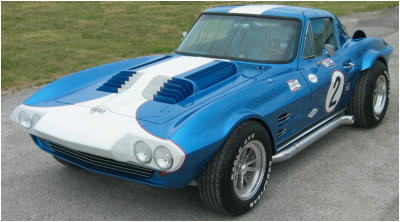
    Own A '63 Corvette Grand Sport Without Paying Millions

      1960s Corvette Grand Sport


    Summary

  • Born to race: Zora Arkus-Duntov designed the Corvette Grand Sport to be a lightweight racing weapon capable of taking on Ford GTs and the competition at Sebring and Le Mans.
  • Only five were built: Duntov originally wanted 1,000, but only five Grand Sports actually made it out the door in the early ’60s.
  • Good luck buying the real thing: These cars are now multimillion-dollar collectibles. The #002 Grand Sport once attracted a $4.9 million bid—and still didn't sell.
  • Yeah, that's a little outside most budgets: Unless you've got several million dollars burning a hole in your pocket, owning an original isn't exactly realistic.
  • Enter Superformance: The company received licensing to build replicas of the legendary Grand Sport, giving regular(ish) people a chance to own one.
  • They went deep: Superformance even got access to the original #002 build sheets, allowing them to build extremely accurate replicas.
  • But you don't have to go full museum piece: Buyers can customize their Grand Sport with modern goodies like power steering, four-wheel disc brakes, power windows, A/C, and independent suspension.
  • Want some serious horsepower?: There are seven engine choices, including an LS9 supercharged V8 for those who apparently don't believe enough horsepower is a thing.
  • Coupe or roadster: Choose the more comfortable, feature-packed coupe or go with the roadster for a more stripped-down, old-school race-car experience.
  • The best part: You get the look and attitude of one of the most legendary Corvettes ever built for a fraction of the price of an original.
  • Bottom line: You can't afford the five real Grand Sports? Neither can most of us. But with a Superformance replica, you can get damn close—and actually drive the thing.

  • 1963 Corvette Grand Sport Emblem


    Rare Corvettes for Less

    Some of the rarest sports cars of all time are a group of five early-’60s Corvette Grand Sports built with one purpose in mind: racing. These lightweight monsters were designed to compete in the GT classes at the Sebring 12 Hours and the 24 Hours of Le Mans.

    The Godfather of Corvettes, Zora Arkus-Duntov, led the crusade to build lightweight, race-ready Corvettes capable of going toe-to-toe with the dominant Ford GTs and the rest of the field.

    Duntov originally planned to build 1,000 of these Corvettes, but only five Corvette Grand Sports were ultimately built in the ’60s.

    Two of the Corvettes, #001 and #002, were put aside, while the other three were sent to John Mecom of Houston, Texas. Mecom eventually passed them along to three other prominent names in the racing world.


    Purchasing One of These Rare Beauties

    So, let's say you weren't lucky enough to be one of the people who received one of those five Corvettes, but now you'd like to see if you can purchase one today.

    Well, although these Corvettes aren't tearing around the 24 Hours of Le Mans or other major races anymore, there's about a fat chance of getting your hands on one for under five million dollars.

    A few years back, the #002 Corvette Grand Sport found its way onto the auction block. Although the high bid reached $4.9 million, it still wasn't enough to take the beautiful blue race car home.

    If you're like most car guys, you probably don't have $4.9 million sitting around for a sports car you wouldn't even want to drive that much anyway.

    But getting something similar—and in many cases, much more modern, comfortable, and drivable—with a somewhat more affordable price tag?

    Now we're talking.


    A Grand Sport You Can Actually Own

    Superformance, a car-building company in Southern California, pushed to obtain licensing to build replicas of Zora Duntov's famed Corvette Grand Sport. That made it possible for people to own something very close to the legendary race car—well, at least a replica of one.

    Superformance was even granted access to the original build sheets for the #002 Grand Sport Corvette. According to the company, if you wanted a replica nearly identical to the original, they could build one so accurate that only experts would be able to tell it wasn't the real #002.

    That's pretty damn cool.

    But let's be honest. Not everybody needs a museum-quality replica that has to be treated like the automotive equivalent of the Hope Diamond.

    Maybe you just want the look of the legendary Corvette, along with the performance, comfort, and drivability of a newer car.

    And that's perfectly fine.

    Superformance is also dedicated to building Grand Sports that can actually be enjoyed on the road.


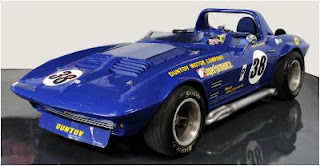
    1960s Corvette Grand Sport Roadster

    Customize Your Own Corvette Grand Sport

    Superformance will build you a vintage Corvette Grand Sport to your liking. Want power steering? Check.

    Four-wheel disc brakes? Yep.

    Power windows? Absolutely.

    A/C? You bet.

    Fully independent front and rear suspension with Bilstein components? You can have that, too.

    There are roadster versions available as well. They'll look and drive more like the race Corvettes of the past, but many of the features and options available on the coupe are limited.

    And then we get to the fun part: the engines.

    Superformance offers a variety of powerplants, including an LS9 supercharged monster that can turn these cars from cool-looking replicas into seriously nasty street machines.

    There are seven engines to choose from, giving you plenty of ways to decide just how much trouble you want to get yourself into.

    All engines come with a 2-year/50,000-mile warranty that can be serviced at an authorized dealer.

    Let's Go Cruising

    The greatest thing about the Superformance Corvette Grand Sport replica isn't just that it looks like one of the most legendary Corvettes ever built.

    It's that you can actually drive the damn thing.

    The original Grand Sports are multimillion-dollar pieces of Corvette racing history. They're rare, valuable, and about as likely to be driven to the local cruise night as a Picasso is to be used as a garage drop cloth.

    A Superformance Grand Sport gives you the chance to have the looks, attitude, and performance inspiration of Zora Duntov's legendary racer without needing five or six million dollars sitting in the bank.

    It's not the real thing.

    But it might be about as close as most of us are ever going to get—and that's not a bad consolation prize.

    1959 Corvette: Unbeatable Purple People Eater MKIII

         Summary Born to stand out: The Corvette team painted their cars metallic purple with white trim so they could actually find them in th...