Monday, September 19, 2022

NHRA Pro Stock Turbo: Buddy Ingersoll's Buick V6 Pro Stock

86 Buick Pro Stock Turbocharged


It was back in 1986 when Buick started to master the turbocharger game. Turbochargers have been around for quite a while before the first 1984 and '85 Buick Grand National and T-Type turbos came out. The '84 and '85 Buick turbos lacked the power that the 1986 and '87 Buick turbos did due to a lack of an intercooler and other things. But even with the success of the two-sedan being faster than all of the American sports cars at the time, no one expected to see one compete in a professional Pro Stock class. 


Read all about the '86 and '87 Grand National success here. 


700+ cu.-in. Pro Stock Engines Racing Against A 286 cu.-in. Buick Engine


Buddy Ingersoll's Buick V6 Pro Stock

This was when the drag racing world started realizing that it is not always all about big blocks and displacement. This race was from 1986, but later the Buick setup would be deemed illegal in the Pro Stock classes. Of course, the reasons for the outlaw were a bunch of smokescreen excuses to hide the absolute truth - old-timers didn't understand it and didn't want to believe a V6 could beat a V8. 

To me, it sounds much like when Nitrous Oxide exploded on the drag racing scene - if you didn't understand it or you couldn't figure it out, it was easier to just say using NOS was cheating. 

Early '90s GS Nationals in Kentucky 


It was in the early '90s when I attended my first Buick GS Nationals at Beech Bend Raceway for a week (a week off school - a week at the drag strip)! That's when I saw the first single turbocharged Grand National break into the sevens (1/4-mile), and when I saw a T-Type in stock trim ride its bumper halfway down the track while still turning in a time of 10: something. That was when my cousin and I, best friends, knew we were watching something the drag racing world wasn't ready for yet. 

Buick Regal T-Type Doing Wheelie


Slowly but surely, the drag racing world caught up, and now you'd be hard-pressed to see a drag car that isn't racing in a highly regulated class that doesn't have at least one turbo under the hood or another kind of power adder.  

Beech Bend Raceway


The lineup to get into the GS Nationals—all Buicks—and the track entrance is quite a ways away. 


Sunday, July 3, 2022

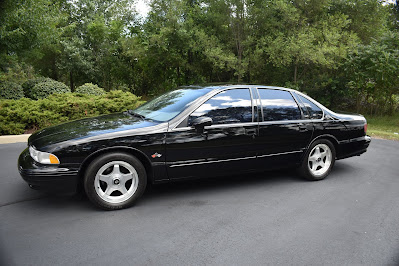
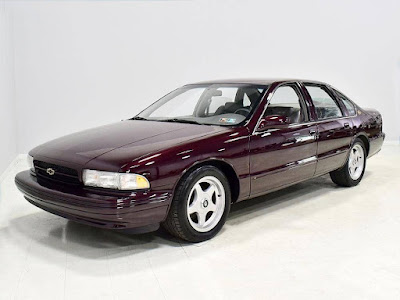
Modern Muscle Car: 94-96 Chevrolet Impala SS


96 Chevy Impala SS

Summary

  • 1994–1996 Chevy Impala SS — a full-size sedan with true 1990s muscle-car attitude.
  • 5.7L LT1 V8 producing 260 hp and 330 lb.-ft. of torque.
  • Rear-wheel drive, limited-slip differential, heavy-duty suspension, 12-inch disc brakes, and dual exhaust.
  • Comfortable enough for five, but capable of 0–60 mph in about 7 seconds.
  • The LT1 offered plenty of potential for aftermarket performance upgrades.
  • Only 69,758 were produced, making clean, original examples increasingly desirable.
  • A big, comfortable American cruiser with legitimate muscle-car DNA.
  • The Big and Bold
    These beautiful 94-96 Chevrolet Impala SS sport sedans were not in production long, but they did make a big impact in the Chevy lineup for a couple of years. What made this Caprice in disguise such a success was a Corvette 5.7-liter LT1 V8 engine added in with a few other upgrades.

    94-96 Impala SS
    • 260 Horsepower and 330 lb.-ft. of Torque
    • 4l60e Automatic Transmission
    • 3.08 Tall Rear Gear with a Limited Slip Differential
    • Lowered Heavy Duty Suspension from the Caprice Police Car Package
    • Performance-Oriented Shocks w/Semi-Stiff Anti-Roll Bars
    • 12-Inch Vented Disc Brakes
    • 0-60 in 7.0 Seconds and 15.0 Second 1/4 Mile Time @ 92-MPH Give or Take  

    Now, of course, that doesn't sound like much today, with V6 SUVs outperforming the big-bodied vehicle. But this 4,220-pound beast was considered pretty fast for its size 26 years ago. 

    The funny thing is the decision to go with the Caprice LT1 Impala combo came about because the original Caprice 4.6-liter engine was having a hard time making emission standards. The LT1 engine that was placed in the Corvette, Camaro, and Pontiac sports cars were doing fine passing emissions and smog regulations, and that's why it got the duties of lugging the Impala SS around.  

    Potential For More Power 

    Dropping the 4.6-liter and moving to the LT1 made the Impala SS even more like a muscle car. Since there was not a lot you could do in terms of upgrades to the 4.6-liter, the dud you got in the 93 and older Caprice, was the dud you got. The LT1 on the other hand offered plenty of room for upgrades. If you could get the upgrade for a Corvette, Camaro, Firebird, or Trans Am, chances are you could get it for the Impala. This opened up the door for easy upgrades from cold air induction and computer programmers to cam, heads, and nitrous. I'd go over all the upgrade options, but I figure you could use your imagination here.

    Four-Door Competition

    It was definitely faster than its American four-door competitors i.e. the Ford Taurus SHO and the Pontiac Bonneville SSEi. Moreover, it was $65,800+ cheaper than the Mercedes-Benz S500 and could accelerate faster, handle better, and match the Benz in braking abilities, all while sounding like true American Muscle. 

    Impala SS front seats


    What The Impala SS Had Its Sports Car Companions Didn't 

    That's easy, front bucket seats that made you feel like you were sitting on a sofa, a back seat where people even 6-feet tall and hefty could sit in comfortably, and a trunk you could neatly place a dead body in. 

    Impala SS rear seats


    The Impala's colors were limited. In 1994, you were only able to get one in Black, but '95 and 96-year models brought about a dark Cherry Red and a dark Green color. 

    Impala SS


    95-96 Impala SS


    Dark Green Impala SS


    There were also a few other differences about the 1994 Impala SS. There was a digital dashboard with no tachometer and a column shifter. When Chevrolet noticed the consumer's want for this vehicle in the muscle car capacity, they added in an analog dashboard with a tach and a floor shifter to add to the muscle car feel. 

    94 Chevrolet Impala SS


    95-96 Impala SS


    For all three years, the exterior sported special 17-inch 5-spoke rims wrapped up in large 255/50R-17 tires, a nice-sounding dual exhaust system was added with a rear spoiler, and deleted Caprice chrome. The stance, the sound, the power, and the name of it alone, Impala SS, made this disguised Caprice no longer a car you would expect a 90-year-old church-going lady to drive.  

    Driving Impala SS


    Taking One For A Ride

    I've taken a few for a ride here and there working at a dealership. They're not that fast, but one thing they are is a little surprising. You just don't think a 94-96 Caprice with special SS Impala badges is going to offer you so much.

    The Impala gives you more than enough throttle response to get the big, long sedan in the passing zone and go. It also gives you plenty of comforts, from the leg and headroom to the soft suspension that performs well but still gives you a ride that reminds you of your grandpa's unmolested Lincoln. 

    And no, there is no media center, cell phone connectivity, or sophisticated driver assist safety functions that allows you to disregard paying attention to the road. These Impala SS big-bodies are true cruising cars. A car that you can shine up, hit the road, listen to the muffles humm, and get a few looks of envy from drivers in their cookie-cutter trucks and crossovers. 

    94-96 Impala SS for Sales


    Purchasing A 94-96 Impala SS   

    With 69,758 Impala SS sports sedans produced between 94-96, they are not the rarest cars in the world. But a lot of them are stored away in garages as their value goes up. If you're looking to purchase one of these modern Impala SS muscle cars, your best option is to look out for one that has low miles and has little to no upgrades. Some of these cars have been heavily modified, and some have been around the block a time or two. 

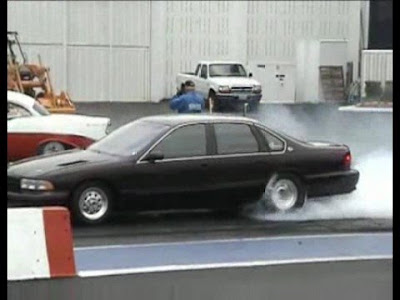
    SS Impala at the track


    Look for rust in the usual places, signs of years of abuse, aftermarket hacked stereo systems and suspension components, and beat-up interiors. Some of these cars may still have potential, but it would depend on how much money you want to put into them. There are still plenty of good ones out there that have been well-taken care of and can offer you a fun and cool multi-purpose Hot Rod!  


    Sunday, May 1, 2022

    1982 Buick Grand National: History, NASCAR, And '80s Performance

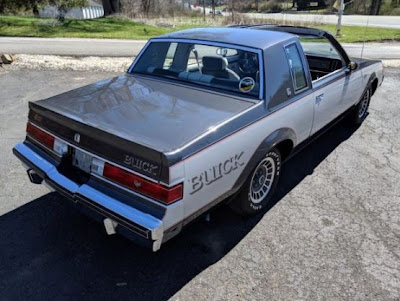
     1982 Buick Grand National


    Although almost everyone you ask will tell you, there is no such thing as a true Buick Grand National that was not all "Black", the fact is, they'd be wrong! 

    They might also tell you there's no such thing as an '82 Grand National, that would also be wrong! The first Grand National was actually born in 1982; it was charcoal grey and silver and has a pretty cool little story to it.

    The Birth Of Something That Would Soon Become A Legend 

    Back in 1981, Buick took to the main stage at NASCAR with their G-Body Regal. A few Regals made their debut in California at the Riverside International Raceway. But it was in Daytona, the second week of the season, where the tides changed for the Regal and set the way for Buick and the G-Bodies in NASCAR for quite a while. 


    Richard Petty Wins Daytona 500 In A Regal

    For a record-setting 7th time, Petty takes the checkered flag, but this time in a Buick Regal. This win broke a long drought of 16 years since someone drove across the finish line at a NASCAR event in a Buick. It was last done by Herb Thomas, who did it in 1955 in a '55 Buick Century. 

    Record-Breaking Year For Buick In NASCAR 

    Throughout the season, a Buick Regal would cross the finish line first in 22 out of 31 events with just five different Buick Drivers—Petty, Boddy Allison, Ron Bouchard, Cale Yarborough, and Darrell Waltrip. In the end, Waltrip would bring home the championship title for his team and Buick.

    These efforts brought the NASCAR Manufacturing title home to the Flint, Michigan plant that had been pumping out those Regals since 1978. 

    The new sporty image and the accomplishments at NASCAR that followed prompted Buick to take full advantage of the newfound "This Isn't Your Grandma's Car" image and run with it. 

    1982 Buick Grand National Flyer


    In December 1981, Buick announced that a "Special Edition" Regal was going to be unveiled in the first week of the NASCAR season. This just so happened to be the first time the Daytona 500 would be set for the first race of the season, and is now a staple in NASCAR racing to this day. The Daytona week is like the Super Bowl of NASCAR and prime time for anything special, especially for automotive manufacturers that want to show off something new. 
     

    Buick And NASCAR Copyright Issues

    Buick went ahead and already named their "Special Edition" Regal the "Grand National", the only problem was that NASCAR already had the copyrights to the name—NASCAR Winston Cup Grand National Series—so NASCAR sued. After some legal wrangling, Buick kept the name but changed the nameplate to the recognizable one everyone knows today—a big turbo-6 on the right side of the emblem, the words "Grand National" stacked on top of each other, and a checkered flag on the left side of the emblem. 

    1982 Daytona 500

    Daytona 500 Week 1982

    Now whether or not the Grand National was ever actually unveiled at the 1st Daytona week, no one seems to really remember. Many think it never made it, largely because of the ongoing legal dispute with NASCAR, but regardless, the "Special Edition" prototype GN was done. 

    Not only was the Grand National project moving forward for Buick, but on Feb 14, the day of the Daytona 500, 25 of 42 cars lined up as Buick Regals, and 7 of 10 of them were in the top 10 positions. The race ended just about the same way it started, with Allison winning in his Buick Regal, followed by three other drivers driving Buick Regals. The success continued for Buick throughout the season, and so did production on the Buick Grand National. 

    1982 Buick Grand National


    1982 Buick Grand National: What Was Special 

    Was the first Buick Grand National fast? By today's standards, not at all! In fact, most soccer Moms' crossovers would take the '82 Grand National out pretty easily. But in 1982, it's sad to say; this V6 would beat most factory V8s on the road, at the same time looking cooler than most of them.

    When I say V6, you're probably thinking of the turbo 3.8-liter that Grand Nationals are known for, but this first GN was a little different. The '82 Grand National came with a 4.1-liter V6 that ran through a 4-barrel quadrajet carburetor naturally aspired. This fun combination would get you a whopping 125 horsepower and 205 lb.-ft. of torque. 

    1982 Buick Grand National Engine


    There were a few buyers out there that had inside information about the soon-to-be-famous 3.8-liter turbo engine combo, and checked the right boxes on the order sheet. This combo would get the buyer 175 horsepower and 290 lb.-ft. of torque.

    Heading Off For Special Treatment 

    All soon-to-be Grand Nationals rolled off the assembly line as normal Buicks and then were shipped off to Cars and Concepts in Auburn Hills, MI, where they received their Grand National treatment. They were all done in Charcoal Gray exterior paint and grey interior but weren't all based on the same Regal. Some base Buick Regals were sent to Cars and Concepts, but so were some Limited and Sport coupe Regals. So for a collector on the hunt for a legitimate one, there are a few different real options out there (do your research). 

    1982 Buick "Grand National" Special Edition Upgrades  

    • 215 made plus on prototype
    • 4.1-liter V6 naturally-aspired or (roughly) 20 3.8-liter V6 turbocharged
    • 125 horsepower (4.1) or 175 horsepower (3.8 turbo)
    • 205 lb.-ft. of torque (4.1) or 290 (3.8 turbo) 
    • Automatic transmission
    • Heavy-duty engine and trans coolers
    • 3.23:1 rear gear (4.1) or 3.03:01 (3.8)
    • F41 Grand Touring Suspension

       1982 Buick Grand National Interior


    Cosmetic Upgrades
    • Silver stripe in the middle of the charcoal grey paint (hand-laid) red pinstriping separating the Colors (hand-laid) 
    • Big Buick letters on the back quarter panels and on the back decklid lip

    • Blacked-out grille and headlamp door covers
    • Special Edition rally wheels w/Buick center caps
    • Front bucket seats w/black leather inserts throughout the whole interior
    • Leather-wrapped steering wheel
    • Center console w/shifter
    • Special Grand National gauge cluster 
    • Special Grand National badging on exterior and interior

    1982 Buick Grand National Gauge Cluster

    It's hard to find these cars in good shape. One of the biggest problems they had was through the years, their lack of power left a lack of enthusiasm to keep them running and looking good. The usual rust invades the lower doors and quarter panels in the usual places, and their interiors are commonly faded and torn from sun damage due to T-tops (some had sunroofs instead).  

    But these Grand Nationals can still be considered collector items thanks to their history and the lack of numbers produced. You could say they started a mid-to-late-'80s revolution of more desirable cars for the auto enthusiast, not to mention they paved the way for the '80s most famous muscle car, the 1986 and '87 Grand National.   

    1982 Buick Grand National


    How Expensive Were They?

    The Grand Nationals weren't as expensive as buying a Corvette, but spending extra cheese on a Buick was something people didn't do much of since the muscle days. With a Regal sticker price of $8,702, you would have to cough up another $3,278 for the Grand National packages and about another $1,000 more if you ordered the turbo 3.8-liter version. With America in a recession at the time, that was a lot of money, and Buick's most expensive styling and performance package it ever sold. 

    1982 Buick Grand National 

    All and all, if you found one in good shape, it would be worth buying a 1982 Grand National just to preserve it. And if you found a 1983 Grand National, I have a bridge to sell you because there were no Grand Nationals made in '83. 

    Sunday, December 26, 2021

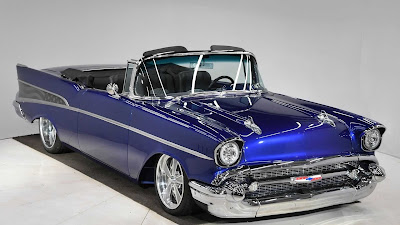
    '57 Chevy: One Of The Most Influential And Iconic Cars Of All Time!


    '57 Chevy Bel Air

    How Did The 1957 Chevy Come About?

    It starts with Chevy's need for change. For the first time since 1918, Chevrolet was willing to offer a V8 in its 1955 Chevy sedan, and with that V8, Chevy thought it would be a good time to get rid of the shoe-box look that they were recently using and try something different. 

    Chevrolet Chief Designer, Ed Cole, wanted to get rid of the shoe-box look by 1956 and have a whole new look for 1957. Unfortunately, things didn't go as planned and the new look never launched forcing Cole and the design team to make do with the shoe-box style for one more year, but there were going to be big changes.

    To help differentiate the '57 from '55 and '56 Chevy, Cole brought in Harley J. Earl, a famous automotive designer. Earl had already had huge styling successes under his belt that not only worked out for General Motors, but also influenced the automotive world as a whole. 


    The changes Earl was making to the '57 Chevy would be widely ridiculed by Earl's co-workers, automotive experts, and anyone and everyone who just couldn't see his vision the way he did. 

    '57 Chevy Dramatic Transformation

    '57 Chevrolet

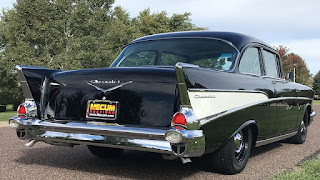
    Some of the changes were: A new dashboard, a reshaped windshield, sealed cowl, and 15-inch rims to replace the 16-inch rims. Also, Earl decided to relocate the air-ducts to the headlights, which gave the car the big distinctive chrome look in the front. Then he added the iconic quarter-panel fins to the rear to help make the Chevy six inches longer, ultimately giving the Chevy the lowered look that everyone recognizes today.

    1957 Chevy Fuel Injection


    Other intriguing things that were new with the '57 were a lighter front-end, a bigger engine bay, and new drivetrain options that included a fuel-injection system and a three-speed Hydra-Matic transmission. A dual exhaust was offered with all V8 options for a little more horsepower but more so for the cool sound that it would give the Chevy. 

    In commercials, magazine ads, and on billboards, the Chevy motto was always the same: "Chevy Puts The Purr Back Into Performance."

    1957 Chevy; New York Times


    A 1957 Chevrolet Coupe And Convertible For Everyone

    Different trim options helped make the car more affordable for the average family and classy enough for those who wanted the feel of something a little more luxurious.

    Trim Models Were As Followed:

    Base: 150 Series
    '1957 Base 150 Series


    Base: 210 Series
    '57 Chevy Based 210 Series


    Del Ray: 210 Series
    '57 Chevy Del Ray 210 Series


    Base: Bel Air
    '57 Chevy Bel Air


    Convertible: Bel Air
    1957 Chevy Convertible Bel Air


    Nomad: Bel Air (station wagon)
    1957 Chevy Nomad Bel Air


    El Morocco: custom hand-built to mimic a Cadillac
    1957 El Morocco


    Each version was available in a two-door or four-door body style. The base "150" series with an in-line six was not only priced very well for consumers on a budget but also did very well when it came to gas mileage compared to the V8s. 

    As you went up in models, you went up in comfort and class and, of course, in price. The Bel Air and Bel Air convertible was the most popular and expensive models, and in today's market, it is the most wanted by all collectors and car enthusiast alike, even if you're not a Chevy fan, you've probably wished you had a '57 Chevy at one point or another.

    Choose Your '57 Chevy Options

    Each version had options that could be ordered up to make the car more comfortable and luxurious. Some of those options were air-conditioning, power brakes, power steering, a padded dashboard, power windows, and power seats. Color schemes and chrome trim options were another way to show your impeccable taste in automobile selection.    

    Also, a signal-seeking radio with a power antenna could be purchased along with a separate speaker that could be placed in the back, and at that time, that's what automotive companies called surround sound. The "Automatic-Eye" was another new option. The Automatic-Eye was attached to your dashboard and could detect on-coming traffic and dim your headlights automatically - high-tech for 1957.


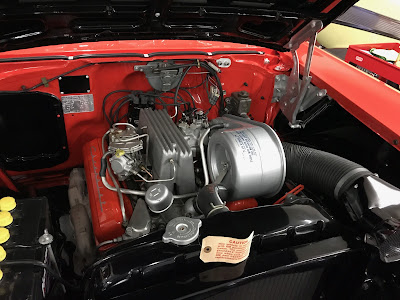
    '57 Chevy Engine Bay


    One of the things that played a part in making the '57 Chevy so desirable was the bigger engine bay it came with. This was important because it made room for the big-block engines that Chevy was making for racing at the time. As drag racing became more popular and going fast was the thing to do, having a '57 Chevy that could accommodate Chevy's big-block engines with virtually no fabrication required was a huge plus to the go-fast racing enthusiast.

    Even without the big blocks, you could still make plenty of power by opting for what Chevy called the Power-Pack (283 cubic-inch engine with solid lifters, a 4 barrel carb, and dual exhaust), which would make 275 horsepower right off the showroom floor. 

    Fuel-Injection '57 Chevy


    Although the 283 cubic-inch motors would make 283-hp with fuel injection, that option was often overlooked by consumers at the time because very few people knew how to work on fuel injection setups. Even mechanics were having problems working on the new fuel-injection system. So, if you were buying the car to modify it and or race it, going with the carburated setup you already knew how to work on was a much smarter way to go.

    The odd thing about these desirable collector cars is that in 1957, the sales of Ford's '57 Fairlane model ended up out-selling the Chevy. Maybe it was the 1957 Chevy's bold chrome front-end or the rear-fins that threw consumers off. Maybe it was the introduction of the fuel injection and the 3-speed Hydra-Matic transmission - both of which consumers were skeptical about. Whatever the case was, by the time the '80s rolled around, these were considered one of the most, if not the most, collectible cars around.

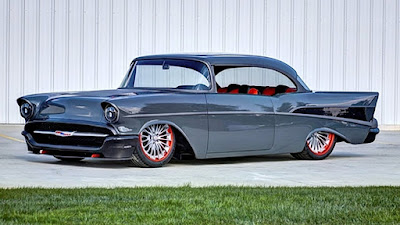
    '57 Chevy Custom


    Worth Every Penny

    Nowadays, a meticulously restored '57 Chevy Bel-Air can go for around $100,000.00 or more, and a seller could catch even more for a convertible in the same condition. But if you are thinking about buying one, you will want to be careful and maybe even seek some professional help before doing so. There are a lot of replicas out there, and it can be very easy to be fooled.

    Saturday, September 18, 2021

    TV Tommy Ivo Four-Engine Buick Dragster Heads to Auction


    TV Tommy Ivo 4 Engine Buick Dragster

    Talk about a piece of Motorsports history. Coming from a Buick family makes this wild Buick dragster even cooler to me. With a Buick Riveria front end and a Roadmaster Station Wagon rear body frame, this exhibition dragster host four Buick 401 cu.-in. Nailhead V8 engines. 

    The rare all-wheel-drive dragster originally raced by the famous "TV Tommy Ivo" will be auctioned off in January at the Mecum auto auction in Kissimmee during an eight-day event. 

    The history behind the "Wagonmaster" and "Tommy Ivo" is vast. Before Tommy Ivo sold the, what was then called the "Showboat" dragster to Tom McCourry, it looked like just a regular slingshot dragster with four engines.  

    Showboat Dragster - TV Tommy Ivo


    To keep the exhibition interest alive for the Buick dragster, McCourry had the hand-crafted Buick body fitted for the slingshot and called it the "Masterwagon". Eventually, it was sold back to TV Tommy so he could take it on its last stretch of exhibition work that ended in 1996 at the Good Guys Hot Rod Nationals in Indianapolis. 


    TV Tommy's name had a reason behind it, he was actually a TV star, movie star, singer, dancer, and radio personality. When told by his producers, he had to stop the racing and focus on his entertainment career, TV Tommy chose "Racing" instead. 

      Some of "TV Tommy Ivo" Great Racing Accomplishments

    • First to Succeed With Buick Power
    • First to Succeed With Dual Engines - Record Breaker of 170 MPH, 175 MPH, 180 MPH
    • First to Succeed With Quad Engines
    • First to Brake the 9-Second Barrier With Dual Engines
    • First to Break Into The 7-Second and 5-Second 1/4-Mile Barrier
    • With Other Racers - Brought Drag Racing to England in a Six Event Exhibition
    • Joined The Motorsports Hall of Fame of America in 2005


    TV Tommy

    Masterwagon Car Facts (Mecum)

    • This is the original Showboat slingshot dragster
    • Built by TV Tommy Ivo
    • The Showboat debuted on July 23, 1961, at San Fernando Drag Strip
    • The Showboat was converted to the Wagonmaster in 1981
    • 30th Anniversary and Final Tour car for 1982
    • Last competitive run at the 1982 World Finals at Orange County Raceway
    • Vintage run at the July 1996 Goodguys Nostalgia National at Indianapolis Raceway Park
    • Four Buick Nailhead 401 CI V-8 engines
    • The Nailhead V-8s essentially form two V-16 engines
    • Over 1,500 cubic inches and over 2,000 horsepower
    • 4-wheel drive
    • Two engines drive the front wheels
    • Two engines drive the rear wheels
    • Black/Orange/Red exterior
    • Black interior
    • Roll cage
    • Chrome side exhaust stacks
    • Parachute
    • Luggage rack
    • First-ever escape hatch
    • Two specially chromed front wheels
    • Cragar rear wheels
    • Formerly owned by Norm Day
    • Centerfold car in the September 2012 issue of Hot Rod Deluxe magazine
    • Sold on a Bill of Sale

    The "Masterwagon" will be sold on the eighth day (last day) with over 300 other consignments at the Mecum auction event. The "Master Wagon" is the original "Showboat" slingshot dragster and is authenticated with an autograph by TV Tommy himself, including his quote to the future owner, "Take Care of My Baby."

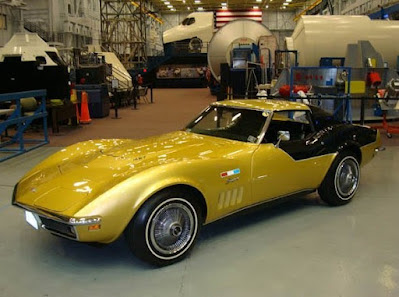
    1969 Corvette Stingray "AstroVette" Apollo-Themed

       Summary NASA + Corvette: GM connected the Corvette brand with NASA astronauts through cars, publicity, and an executive lease program. T...