Showing posts with label Grand National. Show all posts

Friday, November 28, 2025

Buick Regal T-Type: Modest Beginnings To A Modest Legacy


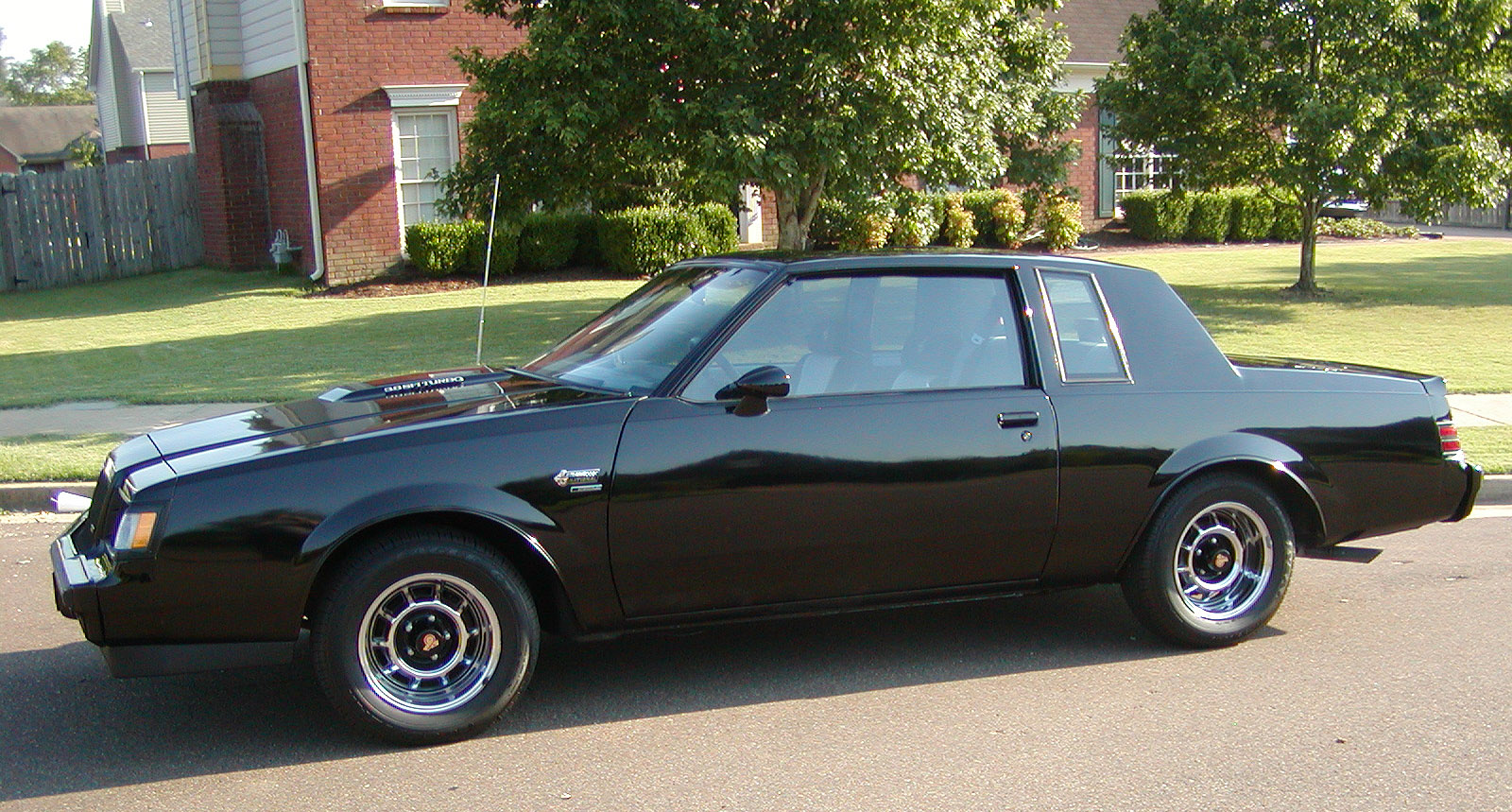
1986 Buick Regal T-Type

Summary

  • Built for performance: The Buick Regal T-Type combined Buick’s traditional luxury with a sportier, turbocharged personality.
  • Turbocharged beginnings: The Regal received the T-Type treatment in 1983, featuring Buick’s 3.8-liter turbocharged V6.
  • Plenty of choices: Unlike the Grand National, T-Types were available in a wide range of colors, interiors, and configurations, including rare sleepers with bench seats and hubcaps.
  • Turbo power: By 1986, the turbo V6 produced approximately 235 horsepower and 330 lb-ft of torque with fuel injection and intercooling.
  • Sport-tuned drivetrain: A THM200-4R four-speed automatic, 3.42 rear axle, and Gran Touring suspension helped put the turbo power to the pavement.
  • Surprisingly quick: The 1986 T-Type could reach 60 mph in the low-6-second range, making it a serious performer despite its non-V8 engine.
  • A lighter alternative: Its lower curb weight helped the T-Type deliver performance that could rival—and sometimes exceed—the more famous Grand National.
  • Rare by comparison: Only 2,384 T-Types were produced for 1986, adding to the model’s appeal among collectors.
  • A true sleeper: The T-Type could look like an ordinary Regal while hiding enough turbocharged muscle to surprise unsuspecting drivers.
  • Bottom line: The Regal T-Type proved that Buick could blend luxury, subtle styling, and serious turbocharged performance into one of the most interesting American cars of the 1980s.
  • Buick Regal T-Type Emblem

    How The Buick Regal T-Type Came About

    The story of the Buick Regal T-Type begins in the early 1980s, a period when Buick was looking to fuse refined luxury with emerging performance sensibilities. The T-Type badge, introduced in 1981 on the Buick Riviera, stood for “Touring,” and marked Buick’s serious foray into sportier, performance-oriented trims. But it was in 1983 when the Regal—already a staple mid-size coupe—received the T-Type treatment, pairing its sleek G-body silhouette with a turbocharged 3.8-liter V6. The Regal T-Type quickly became the backbone of Buick’s turbocharged sport-touring legacy, bridging the gap between ordinary Buick sedans and the more aggressive Grand National models.

    The Many Types of Buick Regal — T-Type Trims, Colors & Interior

    Over its production run, the Regal T-Type existed in a few distinct forms, each catering to different tastes. Initially, from 1983 through 1986, the T-Type was offered as a distinct performance package,  meaning that a buyer opted not just for the turbo V6, but also for special suspension, wheels, and T-Type badging.  In 1987, that all changed: Buick broke out the options, separating the powertrain from the cosmetic and handling parts, giving rise to a “T-package” that could be added independently.

    In terms of exterior colors, the T-Type was quite versatile. While the Grand National often gets remembered for its all-black schema, the Regal T-Type could be ordered in most of the same colors as other Regals — even lighter shades. In fact, it was available in a wide variety of two-tone and single-tone liveries, giving buyers freedom beyond the all-dark look of its turbo siblings. For example, a limited “designer series” was introduced in 1986 (RPO code WH1) that came in a distinctive two-tone paint: black on the upper body, gray on the lower.

    Inside the T-Type Regals, there were also a variety of interiors. Standard equipment included front bucket seats and a center console with a center console-mounted shifter, contributing to a sporty yet comfortable cabin. Upholstery often leaned toward darker tones, but depending on the year and trim options, you could find contrasting interior schemes. T-Type models also featured a leather-wrapped steering wheel, along with full instrumentation that included a tachometer and a turbo boost gauge—essential components for a turbocharged ride. 

    There was even one T-Type produced that was a total sleeper. With bench seats, a column shifter, and granny wheels/hub caps, the only thing that would give its true identity away is the "T" badge on the fender, and when it starts putting car lengths on you in a drag race. Some other rare t-types came with moon roofs or t-tops—just many more options and configurations than you had with a Grand National.

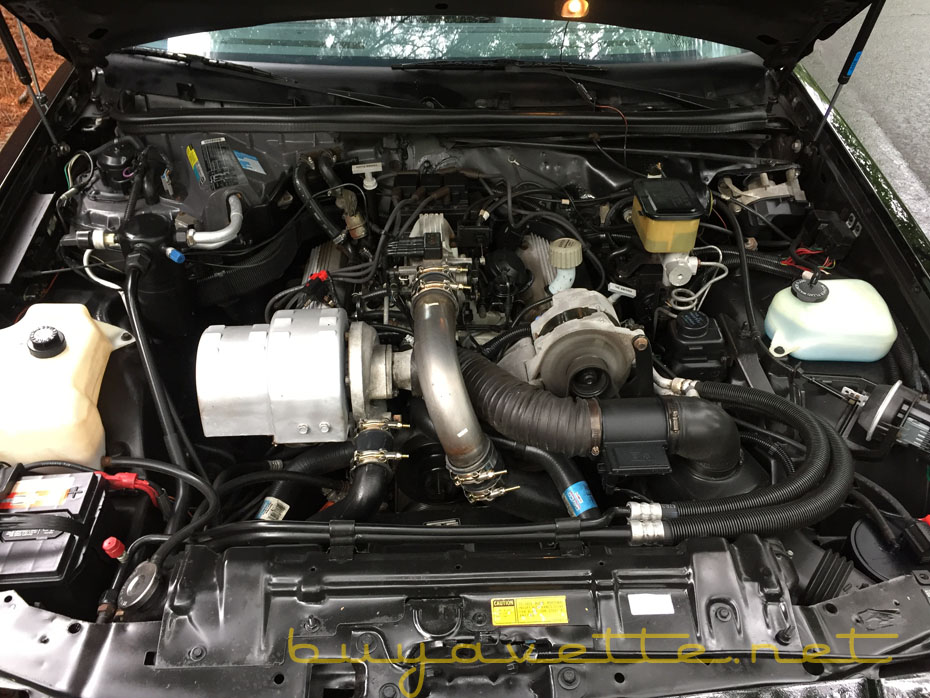
    1986 Buick Regal T-Type Engine


    Drivetrain and Performance

    Under the hood, the Regal T-Type packed a serious punch for its era. From 1983 through 1986, the power came from Buick’s 3.8-liter turbocharged V6, initially carbureted and non-intercooled. The 1983 version produced around 190 hp and 280 lb-ft of torque, impressive numbers for the time. By 1984, Buick had upgraded to sequential fuel injection, boosting output to approximately 200 hp and 300 lb-ft.

    In its later years, especially by 1986, the engine became even more potent, thanks to intercooling and improved tuning, producing up to 235 hp and a substantial 330 lb-ft of torque. Power was sent through a THM200-4R four-speed automatic transmission, paired with a 3.42:1 performance rear axle.  To make sure all that power stayed manageable, the T-Type came standard with Buick’s Gran Touring suspension package, which featured stiffer springs, sport-tuned shocks, larger sway bars, and quicker-ratio steering—all helping the Regal handle more crisply than its more sedate siblings. And by most accounts, the T-Type was quicker than the Grand National by a little bit because it was lighter in curb weight. Thanks to this setup, the 1986 T-Type could sprint from 0 to 60 mph in the low-6-second range, putting it in surprising company for a non-V8 American car of the day.

    Production Numbers (Buick Regal T-Type)

    Here’s a breakdown of how many Buick Regal T-Types were built:
    1983
    3,732
    1984
    3,401
    1985
    2,100
    1986
    2,384
    1987(1)
    8,547 (with the “T-package,” including Turbo-T, Regal Limited, WE4)

    (1)Note: By 1987, Buick had shifted from calling these “T-Types” to offering the T-package separately, so these numbers reflect a broader category than earlier years.

    Black and Silver 1986 Buick T-Type


    Modest Beginnings To A Modest Legacy 

    The Buick Regal T-Type may not command as much attention as its flashier Grand National or GNX siblings, but it holds a distinct and meaningful place in automotive history. It embodied Buick’s vision of a performance-luxury car—one that could carry passengers in comfort while quietly packing serious turbocharged muscle. 

    With its combination of style, performance, and relative rarity, the T-Type remains a cherished classic for enthusiasts and collectors alike. Its legacy paved the way for Buick’s modern performance efforts and continues to resonate with fans of ’80s performance cars. Whether you’re drawn to its subtle blacked-out trim, its turbocharged heart, or the way it balances power and poise, the Regal T-Type is a reminder that performance doesn’t always have to look flashy.

    Monday, September 19, 2022

    NHRA Pro Stock Turbo: Buddy Ingersoll's Buick V6 Pro Stock

    86 Buick Pro Stock Turbocharged

    Summary
    • Buick's 1986 and 1987 Grand Nationals and T-Types took turbocharged performance to another level with an intercooler and other improvements.

    • Buddy Ingersoll's Buick V6 Pro Stock effort challenged the conventional wisdom that bigger V8 engines were unbeatable.

    • By the early '90s, Buick's turbocharged performance was on full display at the GS Nationals at Beech Bend Raceway in Kentucky.

    • Seeing a single-turbo Grand National run in the sevens and a T-Type lift its front end at the track showed just how much potential these cars had.

    • Drag racing eventually embraced turbochargers and other power adders, proving that displacement wasn't everything.


      Buddy Ingersoll V6 Buick Pro Stock

    It was back in 1986 when Buick started to master the turbocharger game. Turbochargers had been around for quite a while before the first 1984 and '85 Buick Grand National and T-Type turbo models came out. However, the '84 and '85 Buick turbos lacked the power of the 1986 and '87 models due to the absence of an intercooler and other differences.

    Even with the success of these two-door sedans, which were faster than all of the American sports cars at the time, no one expected to see one compete in a professional Pro Stock class.

    Read All About the '86 and '87 Grand National's Success Here


    700+ Cu.-In. Pro Stock Engines Racing Against a 286 Cu.-In. Buick Engine


    Buddy Ingersoll's Buick V6 Pro Stock


    Buddy Ingersoll's Buick V6 Pro Stock

    This was when the drag racing world started realizing that it wasn't always all about big blocks and displacement. This race took place in 1986, but the Buick setup would later be deemed illegal in Pro Stock competition. Of course, in my opinion, the reasons for outlawing it were a bunch of smokescreen excuses to hide the absolute truth: the old-timers didn't understand it and didn't want to believe a V6 could beat a V8.

    To me, it sounds a lot like when nitrous oxide exploded onto the drag racing scene. If you didn't understand it or couldn't figure it out, it was easier to just say that using NOS was cheating.

    Early '90s GS Nationals in Kentucky 


    It was in the early '90s when I attended my first Buick GS Nationals at Beech Bend Raceway for a week. A week off school—a week at the drag strip! That's when I saw the first single-turbocharged Grand National break into the sevens in the quarter-mile. It's also when I saw a T-Type in stock trim ride on its bumper halfway down the track while still turning in a time in the 10-second range.

    That was when my cousin and I, who were best friends, knew we were watching something the drag racing world wasn't ready for yet.

    Buick Regal T-Type Doing Wheelie


    Slowly but surely, the drag racing world caught up. Today, you'd be hard-pressed to find a drag car competing in a highly regulated class that doesn't have at least one turbo under the hood or some other kind of power adder.


    Beech Bend Raceway


    The lineup to get into the GS Nationals—all Buicks—and the track entrance is quite a ways away. 


    Sunday, May 1, 2022

    1982 Buick Grand National: History, NASCAR, And '80s Performance

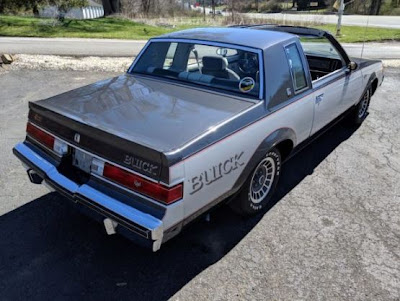
     1982 Buick Grand National


    Although almost everyone you ask will tell you, there is no such thing as a true Buick Grand National that was not all "Black", the fact is, they'd be wrong! 

    They might also tell you there's no such thing as an '82 Grand National, that would also be wrong! The first Grand National was actually born in 1982; it was charcoal grey and silver and has a pretty cool little story to it.

    The Birth Of Something That Would Soon Become A Legend 

    Back in 1981, Buick took to the main stage at NASCAR with their G-Body Regal. A few Regals made their debut in California at the Riverside International Raceway. But it was in Daytona, the second week of the season, where the tides changed for the Regal and set the way for Buick and the G-Bodies in NASCAR for quite a while. 


    Richard Petty Wins Daytona 500 In A Regal

    For a record-setting 7th time, Petty takes the checkered flag, but this time in a Buick Regal. This win broke a long drought of 16 years since someone drove across the finish line at a NASCAR event in a Buick. It was last done by Herb Thomas, who did it in 1955 in a '55 Buick Century. 

    Record-Breaking Year For Buick In NASCAR 

    Throughout the season, a Buick Regal would cross the finish line first in 22 out of 31 events with just five different Buick Drivers—Petty, Boddy Allison, Ron Bouchard, Cale Yarborough, and Darrell Waltrip. In the end, Waltrip would bring home the championship title for his team and Buick.

    These efforts brought the NASCAR Manufacturing title home to the Flint, Michigan plant that had been pumping out those Regals since 1978. 

    The new sporty image and the accomplishments at NASCAR that followed prompted Buick to take full advantage of the newfound "This Isn't Your Grandma's Car" image and run with it. 

    1982 Buick Grand National Flyer


    In December 1981, Buick announced that a "Special Edition" Regal was going to be unveiled in the first week of the NASCAR season. This just so happened to be the first time the Daytona 500 would be set for the first race of the season, and is now a staple in NASCAR racing to this day. The Daytona week is like the Super Bowl of NASCAR and prime time for anything special, especially for automotive manufacturers that want to show off something new. 
     

    Buick And NASCAR Copyright Issues

    Buick went ahead and already named their "Special Edition" Regal the "Grand National", the only problem was that NASCAR already had the copyrights to the name—NASCAR Winston Cup Grand National Series—so NASCAR sued. After some legal wrangling, Buick kept the name but changed the nameplate to the recognizable one everyone knows today—a big turbo-6 on the right side of the emblem, the words "Grand National" stacked on top of each other, and a checkered flag on the left side of the emblem. 

    1982 Daytona 500

    Daytona 500 Week 1982

    Now whether or not the Grand National was ever actually unveiled at the 1st Daytona week, no one seems to really remember. Many think it never made it, largely because of the ongoing legal dispute with NASCAR, but regardless, the "Special Edition" prototype GN was done. 

    Not only was the Grand National project moving forward for Buick, but on Feb 14, the day of the Daytona 500, 25 of 42 cars lined up as Buick Regals, and 7 of 10 of them were in the top 10 positions. The race ended just about the same way it started, with Allison winning in his Buick Regal, followed by three other drivers driving Buick Regals. The success continued for Buick throughout the season, and so did production on the Buick Grand National. 

    1982 Buick Grand National


    1982 Buick Grand National: What Was Special 

    Was the first Buick Grand National fast? By today's standards, not at all! In fact, most soccer Moms' crossovers would take the '82 Grand National out pretty easily. But in 1982, it's sad to say; this V6 would beat most factory V8s on the road, at the same time looking cooler than most of them.

    When I say V6, you're probably thinking of the turbo 3.8-liter that Grand Nationals are known for, but this first GN was a little different. The '82 Grand National came with a 4.1-liter V6 that ran through a 4-barrel quadrajet carburetor naturally aspired. This fun combination would get you a whopping 125 horsepower and 205 lb.-ft. of torque. 

    1982 Buick Grand National Engine


    There were a few buyers out there that had inside information about the soon-to-be-famous 3.8-liter turbo engine combo, and checked the right boxes on the order sheet. This combo would get the buyer 175 horsepower and 290 lb.-ft. of torque.

    Heading Off For Special Treatment 

    All soon-to-be Grand Nationals rolled off the assembly line as normal Buicks and then were shipped off to Cars and Concepts in Auburn Hills, MI, where they received their Grand National treatment. They were all done in Charcoal Gray exterior paint and grey interior but weren't all based on the same Regal. Some base Buick Regals were sent to Cars and Concepts, but so were some Limited and Sport coupe Regals. So for a collector on the hunt for a legitimate one, there are a few different real options out there (do your research). 

    1982 Buick "Grand National" Special Edition Upgrades  

    • 215 made plus on prototype
    • 4.1-liter V6 naturally-aspired or (roughly) 20 3.8-liter V6 turbocharged
    • 125 horsepower (4.1) or 175 horsepower (3.8 turbo)
    • 205 lb.-ft. of torque (4.1) or 290 (3.8 turbo) 
    • Automatic transmission
    • Heavy-duty engine and trans coolers
    • 3.23:1 rear gear (4.1) or 3.03:01 (3.8)
    • F41 Grand Touring Suspension

       1982 Buick Grand National Interior


    Cosmetic Upgrades
    • Silver stripe in the middle of the charcoal grey paint (hand-laid) red pinstriping separating the Colors (hand-laid) 
    • Big Buick letters on the back quarter panels and on the back decklid lip

    • Blacked-out grille and headlamp door covers
    • Special Edition rally wheels w/Buick center caps
    • Front bucket seats w/black leather inserts throughout the whole interior
    • Leather-wrapped steering wheel
    • Center console w/shifter
    • Special Grand National gauge cluster 
    • Special Grand National badging on exterior and interior

    1982 Buick Grand National Gauge Cluster

    It's hard to find these cars in good shape. One of the biggest problems they had was through the years, their lack of power left a lack of enthusiasm to keep them running and looking good. The usual rust invades the lower doors and quarter panels in the usual places, and their interiors are commonly faded and torn from sun damage due to T-tops (some had sunroofs instead).  

    But these Grand Nationals can still be considered collector items thanks to their history and the lack of numbers produced. You could say they started a mid-to-late-'80s revolution of more desirable cars for the auto enthusiast, not to mention they paved the way for the '80s most famous muscle car, the 1986 and '87 Grand National.   

    1982 Buick Grand National


    How Expensive Were They?

    The Grand Nationals weren't as expensive as buying a Corvette, but spending extra cheese on a Buick was something people didn't do much of since the muscle days. With a Regal sticker price of $8,702, you would have to cough up another $3,278 for the Grand National packages and about another $1,000 more if you ordered the turbo 3.8-liter version. With America in a recession at the time, that was a lot of money, and Buick's most expensive styling and performance package it ever sold. 

    1982 Buick Grand National 

    All and all, if you found one in good shape, it would be worth buying a 1982 Grand National just to preserve it. And if you found a 1983 Grand National, I have a bridge to sell you because there were no Grand Nationals made in '83. 

    Sunday, July 28, 2019

    Buick Grand National: The First Muscle Car Since The Mid-70s

    Related image


    Buick Grand National


    The Death Of High-Output Muscle Cars
    In the late '70s and all of the '80s, American auto companies were being forced to come up with more fuel-efficient economy-friendly cars.


    So what did this mean? 


    This meant the Muscle Car era was over. Even cars like the high profile Corvette was suffering. For the most part, sports car styling was still very appealing, but their lack of performance issues was a big problem for consumers. 


    Buick Was Ready To Change The Automotive Company
    The Grand Nationals were produced between '84-'87 and had the same body type as the Regal. The GN was upgraded with a sportier interior, a high-performance turbo V-6, suspension upgrades, and exterior styling upgrades. 


    The '84 and '85 Grand National was not quite the performer that the '86-'87 Grand National was. Due to a lack of an intercooler, the ‘84-’85 did not produce as much power, but they still came with a V-6 3.8-liter with a turbo that produced 200 horses, which was more horsepower than the Camaro was producing at the time.


    '86-'87 Grand National: The Real Performer

    The '84-'85 Grand National was the launchpad that got the Grand National's name out there and paved the way for the '86 and '87 Grand National. Buick added an intercooler upgrade to the already stout turbo set-up making it capable of producing 235 horsepower and 355 lb-ft torque. This was impressive for a V-6 full-bodied car from the '80s, and even more impressive was the gains it was able to produce after a few minor affordable bolt-ons. 


    Image result for 87 grand nationals engine


    A 13-second pass in the quarter-mile was very common for these V-6 legends. This may not seem very fast by today's standards, but in the '80s, Camaros, and Mustangs were lucky to break into the 14-second range unless you were willing to dump a boatload of money into them. 


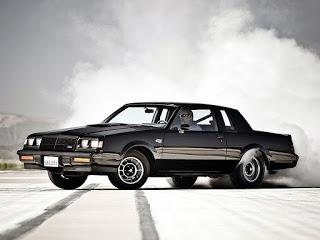
    From 1986 to the early 1990s, the Grand National took no shame in leaving Corvettes, Camaros, Firebirds and Mustangs in their dust. Stock GM TPI and Ford 5.0 motors just did not hold a candle to what the Grand National brought to the table.


    My First Personal Experience

    Before my senior year of High School, before my dad and I built my first muscle car ('71 Buick Skylark 455) for my senior year, my dad owned an '87 Grand National. I got the joy of taking it to school a few times. With its grocery-getter body style, it was not too hard to lure the Camaros and Mustangs to the local drag race spot. 


    The Grand National was running in the low 13's and the guys who drove the TPI's and 5.0's of our school had never even seen a 1/4 time-slip. But most of them guaranteed me that their cars were 12 and 11-second rides. Needless to say, that day they all got a rude awakening when a proven 13-second quarter mile car left them literally many car lengths behind. This left most of my friends dumb-founded. A quiet V-6 with interior room to fit five passengers comfortably beating up on their cool looking V-8 sports car. That day a lot of people found out what the meaning of a true sleeper was.   


    The Buick Grand National Gave Hope
    In the 1980s, the Grand National was just what the auto industry needed: a car that could promote good performance, reasonable gas mileage, and style and comfort. Not only did it bring those great things to the auto industry, but it also brought hope back to car enthusiasts. It brought the hope that soon the beloved Corvettes, Camaros, Mopars, and Mustangs would eventually bring back the power that they were once known for but in a more efficient technology-driven form.

    The Chevrolet SS: The 415-HP Sleeper Sedan That's Still a Great Buy in 2026

    Summary Performance: 415-hp 6.2-liter LS3 V8, 415 lb-ft of torque, and rear-wheel drive. Sleeper Status: An inconspicuous four-door sedan ...