Saturday, June 21, 2025

1969 Chevrolet Nova Yenko/SC: Fastest and Rarest of All Yenko Vehicles

1969 Yenko/SC Nova 427

Summary

  • One seriously rare Nova: Only 37 Super Novas were sold through Don Yenko's dealership, with only about 7–10 known to survive today.
  • Don Yenko wasn't messing around: He took the already stout Nova SS 396 and decided it needed a 427 big-block. Because apparently 396 cubic inches wasn't enough.
  • Even Yenko called it lethal: Don himself described the cars as “lethal and barely legal at best” and called it the craziest project he ever did.
  • The recipe was nasty: L72 427, roughly 450 horsepower, 780-cfm Holley carburetor, aluminum intake, Muncie M21 four-speed, Positraction, and serious F41 suspension.
  • It could stop, too: Heavy-duty power front discs, rear drums, and upgraded suspension helped keep all that big-block insanity under control.
  • Quick for 1969—and quick by any standard: The Super Nova was estimated to hit 0–60 mph in about 4.7–5.1 seconds, run the quarter-mile in the 11s, and reach roughly 120 mph.
  • It didn't look crazy: Yenko kept the exterior relatively understated, adding his famous decals, emblems, a Stewart-Warner tach, and optional Torque Thrust wheels.
  • Want one today? Bring money: A real Super Nova is extremely valuable, and replicas or fakes can look convincing enough to separate an unsuspecting buyer from a very large pile of cash.
  • Do your homework: If you find one for sale, verify the documentation, specifications, and history with a Yenko/Nova expert before handing over the check.
  • Bottom line: The Super Nova was Don Yenko taking a compact Chevy and stuffing it full of big-block attitude. It may have looked like a mild-mannered Nova, but underneath was a 427-powered street-legal lunatic.

  • 1969 Chevrolet Nova 427 Yenko/SC — Super Nova


    1969 Chevrolet Nova 427 Yenko/SC — Super Nova


    The 1969 Chevrolet Nova 427 Yenko/SC, also known as the Super Nova, is said to be the rarest and fastest Yenko vehicle ever built. With only 37 of these bad boys sold through Don Yenko's dealership, there are only about 7–10 known to still exist today.

    Taking The Nova SS To The Next Level

    Mr. Yenko used the Nova SS as the starting point for his conversion because it was already equipped with a lot of high-performance parts he could use for the project. And not to say that the '69 Nova SS with the 396 cu-in engine wasn't already a pretty stout vehicle, but Don Yenko always loved to push the envelope.

    The only problem Don had with these 427 Yenko/SC projects was that, in his own words, “These cars are lethal and barely legal at best.”

    He went on to say, “It's the craziest project I ever did.”

    And when the guy who built it tells you it's crazy, you might want to pay attention.


    Problems With Insurance Companies

    Since the Nova was labeled a compact car, it was almost impossible to get your Super Nova insured. Insurance companies were already a little shy about insuring the Nova when it had the 396 engine, but putting a beefed-up L72 427 into a car classified as a compact—and then adding even more performance goodies—left insurance companies feeling pretty uncomfortable about taking on the risk.

    What insurance companies saw was that street racing was becoming more and more popular and dangerous, and all that extra performance could give drivers even more incentive to push the limits.

    And oddly enough, although the Nova was labeled a compact car, it actually weighed about 50 pounds more than the ’69 Yenko/SC Camaros. The Camaros had fewer problems with insurance companies because they were classified as sports/muscle cars.

    In the end, as far as anyone knows, there were no Yenko fatalities.

    Super Nova 427


    The Super Nova Go-Fast Recipe 

    It starts with yanking out the 396 cu-in engine and replacing it with an L72 427 cu-in big-block that would produce an estimated 450 horsepower.

    The original 396 heads were used on the 427, helping produce an 11.0:1 compression ratio. Also added was an aluminum intake manifold, a 780-cfm Holley four-barrel carburetor, and an AC Delco single-point ignition system.

    Add in a little extra high-performance tuning, and the heart of the Super Nova was ready to pound the pavement and embarrass competitors.

    Slamming gears was easy with the Muncie M21 four-speed transmission. Making it even more fun was the Positraction rear end, available with either 3.55 or 4.10 gears.

    Keeping all that power and asphalt under control was an F41 heavy-duty front and rear suspension with an 11/16-inch-diameter front anti-sway bar.

    And when it was time to put the brakes on after some serious pedal-to-the-metal action, a Delco-Moraine heavy-duty master cylinder activated the 11-inch power front disc brakes and 9½-inch power rear drum brakes. 


    How Did The Super Nova Perform?

    It performed like an out-of-control monster.

    The Nova could reportedly get from 0–60 mph in roughly 4.7–5.1 seconds while tearing down the quarter-mile with estimated 11-second passes and reaching a top speed of about 120 mph.

    For a compact car from 1969, that's one hell of a recipe.


    1969 Super Nova Yenko


    Visual Hop Ups For The Nova

    There isn't a whole lot to talk about here—and that was intentional.

    Don wanted to keep the Nova looking pretty modest. His classic Yenko decals were placed on the exterior, with Yenko emblems both inside and out.

    A Stewart-Warner tachometer was installed for hard-driving accuracy, and it looked pretty damn cool, too.

    For wheels, 14-inch wheels were standard with dog-dish hubcaps, while some cars came with 14-inch Torque Thrust wheels.


    Yenko Nova Interior

    Coming Across One Of These Rare Novas For Sale

    First, if it is a true Super Nova, you should be prepared to have a lot of money on hand.

    Second, make sure it's real.

    These cars aren't exactly impossible to replicate, and if you don't know what you're looking at, you could lose a fortune.

    That's not to say a true Nova SS 396 isn't a nice car to own or invest in, but they aren't nearly as valuable as a true '69 Yenko/SC Nova.

    There are plenty of little details that can tip you off to an impostor, so make sure you have a Nova expert—or a trustworthy set of factory specifications and documentation—you can cross-reference with the car.

    Don't just take someone's word for it.

    Happy Hunting!

    Sunday, February 23, 2025

    Best Car Cruising Movie of All Time "American Graffiti"


    A Movie That Emulates a Great Time in Car 
    History!

    American Graffiti hosted a lot of great cars, a lot of great music, and a lot of great up-and-coming actors. I wasn't even a sparkle in my mom and dad's eyes in the generation the movie portrays, but I do know the importance of it. 


    I grew up in a family full of car enthusiasts. We all had our own vehicles and we worked together to build them and keep them running. I got my own street and track banger when I was 17, and boy it was fun. 

    This great movie shows the fun you can get into while enjoying cool vehicles and the little bit of trouble you can find with them. 

    Finding a place you can hang out with your buddies, finding out through the grapevine your closest competition has been doing some upgrades to his or her vehicle—of course, you have as well and you're trying to keep it a secret for your next possible opponent. The drama, the excitement, and the slight danger are all part of the appeal.


    The Changing of a Car Cursing Generation

    The car cruising scene is still out there it's just a lot different. Obviously, stricter laws, crazy young kids driving their Dad's car that is way too fast for them, too many people watching "Street Outlaws" and believing it, and true cruising music that has turned into stuff I don't even understand are just some elements that make that longer drive to the drag strip worth it.

    My time of cruising and drag racing in an area of Detroit, MI that was notorious for cruising/drag racing culture was almost extinct a few years after I got involved. The atmosphere went from fun to stupidly dangerous. 


    What's Coming New Look for The Car Curing Scene?

    A safer more responsible way for car guys to get together and enjoy the car culture. Here in Michigan, bar and grilles, coffee shops, and a lot of other sponsorships have joined together to host cruise nights across the state, and they start out early and end way before 4:00 AM in the morning. 

    Pretty much any day of the week, there are plenty of these mini-car cruises going on. Not to mention big ones on Saturday night that draw people from all around, and never to be forgotten, the world-famous Woodard Dream Cruise that happens every year.

    What Happen to the Illeage Drag Racing Scene?

    It's still around, it's just played out in much darker corners of the streets where fewer people will show up causing more complications than needed. That means fewer cell phone videos, fewer people making the spot look oddly too busy, fewer distractions, and faster getaways if the boys in blue show up.  

    "American Graffiti" The Grooming of Some Great Actors

    You know a movie is legendary when many actors get their first big break with their roles and go on to have very successful careers. Actors like Suzan Sommers, Harrison Ford, Wolfman Jack, and many more Hollywood greats played in American Graffiti


    .  

    A Great Movie for a Great Time in American History

    Back in those days, cars were "Big, Bulky, and Beefy. They looked different from one another. In this current generation, you can take badges off of just about any vehicle and switch with another vehicle in their respective class and you wouldn't know the difference. 


    Mustang vs Camaro Look Alike
                                        
                                               Camaro/Mustang 
                            
    It's a "Monkey See, Monkey Do" automotive industry anymore. 

    We Need To Get Back To This Type Of Fun


    Tuesday, February 4, 2025

    First 1967 Camaro Commercial Broadcast In 1966


    Back in 1966, the American people were introduced to a sports car that would see five decades of success. That sports car was the Camaro, and to this day has just as much power and influence in the high-performance auto motor industry as the day it first went on sale on Sept. 29, 1966.


    After the Mustang was introduced in 1964, Chevrolet had to come up with a sportier, tougher two-door sports car than its current two-door sports car at the time, the Corvair. So under the code name XP-836 and then soon after named the Panther for temporary identification, Chevy went to work.

    For the year 1967, Chevy decided to name the soon-to-be iconic sports car, the "Camaro". This obscure word comes from the French-English dictionary meaning "friend". They added eight different engine setups including a SS 350 option and a stout 427 option. Even though the Z/28 did not come along till the next year, on the day of September 29th, 1966, the Camaro hit the road for the first time. Five decades later, this sports car is still a noticeable piece of automobile history no matter what year or model you are driving. 

    Sunday, May 26, 2024

    Indianapolis 500 Corvette E-Ray Pace Car And The Rest Of The Corvettes That Served Indy


    2024 E-Ray Corvette Pace Car for the Indy 500

    Summary

  • Corvette and Indy go way back: Corvette has paced the Indianapolis 500 21 times since 1978, more than any other car.
  • The E-Ray brings a new trick: The 2024 E-Ray combines a 6.2-liter V8 with electric all-wheel drive to make 655 horsepower.
  • Supercar numbers: With a 0–60 MPH time of 2.5 seconds and a 10.5-second quarter-mile, the E-Ray is seriously quick.
  • A long line of legends: From the 1978 Corvette to the mid-engine C8s, Indy has used some of Corvette's most memorable performance models as pace cars.
  • Celebrity drivers: Jim Rathmann, Chuck Yeager, Morgan Freeman, Colin Powell, Lance Armstrong, Patrick Dempsey, Jeff Gordon, Dale Earnhardt Jr., Danica Patrick, and others have all taken Corvette pace cars around the Brickyard.
  • 2024 adds another chapter: Ken Griffey Jr. got the keys to the E-Ray as Corvette continued its long-running relationship with the Indianapolis 500.

  • Indy 500


    Sunday, May 26, 2024, we will once again see a Corvette running laps as the pace car for the Indianapolis 500. But this won't be just any Corvette—it will be the all-new 2024 Corvette E-Ray, Corvette's first electrified, all-wheel-drive Corvette.

    This will mark Corvette's 21st time pacing the Indy 500 since 1978, more than any other car in history. Add in all 35 appearances by Chevrolet vehicles that have paced the event since 1948, and Chevy is by far the leader when it comes to this legendary honor.

    How Does the E-Ray Corvette Stack Up to Its Siblings?

    The Electric All-Wheel Drive (eAWD) E-Ray is the quickest production Corvette to ever roll off the assembly line at the Corvette Plant in Bowling Green, KY.

    Using a 6.2-liter powerhouse V8 running in tandem with an electric motor that adds an additional 160 horsepower and 125 lb.-ft. of torque to the front wheels, this Corvette puts down a combined 655 horsepower.

    2024 Corvette E-Ray Indy 500

    What do these numbers mean while the Corvette is in motion? How about 0–60 MPH in just 2.5 seconds? If you decide to keep the pedal to the metal, you'll cover the quarter-mile in just 10.5 seconds. The E-Ray can also drive on its electric motor alone for up to four miles at speeds of up to 45 MPH when Stealth Mode is selected.


    Who's Going To Be Driving The E-Ray Pace Car?

    Ken Griffey Jr. Driving the Indianapolis 500 Pace car.

    Piloting the E-Ray at the Indy 500 will be famous former MLB outfielder and All-Star Ken Griffey Jr. If you haven't heard of this guy, even if you don't watch sports, you must have been living under a rock for the past 35 years. All you have to do is punch his name into a search engine, and you'll find a mountain of awards and accomplishments—Gold Glove Awards, All-Star selections, hitting titles, and plenty more.


    Here's A Run Down Of The Past Corvettes To Take The Indy Honor

    1. May 26, 1978—the 62nd Annual Indianapolis 500 was the first time Corvette graced Indy fans with its presence. It was driven by American race car driver Jim Rathmann.


    1979 Corvette Pace Car


    2. May 25, 1986—the 70th Indianapolis 500 chose this 1986 Corvette because it was the first convertible Corvette put into production in ten years. It was driven by General Chuck Yeager, one of America's finest fighter pilots and the first person to break the sound barrier.


    1986 Corvette Pace Car


    3. May 28, 1995—the 79th running of the Indianapolis 500 brought one of the more colorful Corvette Pace Cars to the track. This 1995 Corvette Pace Car was equipped with a five-point safety harness, an onboard fire suppression system, a special "halo" roll bar, and a special strobe-light setup for extra eye appeal. This year, the Corvette was driven by former Chevrolet manager Jim Perkins.


    1995 Corvette Pace Car


    4. May 24, 1998—the 82nd running of the Indianapolis 500 brought even more colorful action. Driven by American race car driver and team owner Parnelli Jones, this Corvette was hard to miss with Radar Blue paint, eye-catching graphics, and bright yellow seats with matching wheels.


    1995 Corvette Pace Car


    5. May 25, 2003—the 86th Indianapolis 500 celebrated the 50th anniversary of Corvette production by once again putting a Corvette at the front of the pack. Actor Jim Caviezel got the honor of driving this special Corvette, complete with a big "50th" badge on the hood.


    2003 Indy 500 Corvette Pace


    6. May 30, 2004—the 88th running of the Indianapolis 500 saw Corvette make its first back-to-back appearance. This was also the first time Chevrolet and Corvette decided not to make replicas of the Indy Pace Car. Morgan Freeman took the reins this year, pacing the IndyCar field around the track. The Corvette's patriotic color scheme made this pace car one of the more iconic ones.


    2004 Indy 500 Corvette Pace


    7. May 29, 2005—the 89th Indianapolis 500 saw its first sixth-generation Corvette leading the IndyCar field. This wasn't just the first time the sixth-gen made it to Indy; it was also the first time the general public was introduced to the car beyond renderings, pictures, and spy photos. General Colin Powell, former U.S. Secretary of State, was put in the driver's seat for pace car duties.


    2005 Corvette Indy 500 Pace Car


    8. May 28, 2006—the official pace car of the 90th Indianapolis 500 was the 2006 Corvette Z06. Back to a patriotic color scheme, the 505-horsepower sports car was driven by seven-time Tour de France winner Lance Armstrong.


    2006 Corvette Z06 Indy 500 Pace Car


    9. May 27, 2007—the 91st Indianapolis 500 brought Corvette back for pace car duties. Team owner and actor Patrick Dempsey took on the duties in this Atomic Orange LS2-powered, 400-horsepower machine.

     
    2007 Corvette Indy 500 pace car

    10. May 25, 2008—the 92nd running of the Indianapolis 500 would see two pace cars for the first time. First, there was a 2008 Corvette Z06 engineered to run on E85 ethanol fuel. Then there was another pace car dressed in a black-and-silver color scheme to celebrate the anniversary of the first Corvette Indy 500 car, which debuted 30 years earlier. Both pace cars were driven by legendary racer Emerson Fittipaldi.


    Indy 500

    11. After a little break from the action, Corvette returned to Indy. May 27, 2012—the 96th running of the Indianapolis 500—saw its first sixth-generation ZR1. This car took Americans by storm with supercar-like performance. Famous Emmy Award-winning television cook and personality Guy Fieri received the honor of driving this LS9-powered beast around the track—too bad he wasn't able to reach its 205-MPH top speed in pace-car mode.

    2013 Indy 500 Corvette ZR1 pace car

    12. May 26, 2013—the 97th running of the Indy 500 brought the all-new seventh-generation Corvette Stingray. San Francisco 49ers head coach Jim Harbaugh was asked to take on pace car duties for the year, and he happily obliged.


    Corvette Pace Car q


    13. May 24, 2015—the 99th running of the Indianapolis 500 brought NASCAR superstar Jeff Gordon to the driver's seat of the 2015 Corvette Z06 Pace Car. Gordon won his first NASCAR race in Indianapolis before going on to become a legend in the sport. Although he wouldn't be going as fast as he's used to on the track, this supercharged, 650-horsepower sports car was certainly capable of high speeds.

    2015 Indy 500 Corvette Pace Car


    14. May 28, 2017—the 101st running of the Indianapolis 500 saw the new 2017 Corvette Grand Sport take over pace car duties. This was the first year the Indy 500 Corvette Pace Car didn't change much in its color scheme from the year before, but the Vette itself was different. Actor Jeffrey Dean Morgan took the wheel and paced the IndyCar field around the famous track.


    2017 Corvette Grand Sport Indy 500


    15. May 27, 2018—the 102nd Indianapolis 500 pace car would be another ZR1, but this 2019 Corvette ZR1 would boast 755 horsepower, a 0–60 time of 2.85 seconds, and a top speed of 212 MPH. This powerful supercharged Corvette would be driven by Victor Oladipo, an Indiana University and Indiana Pacers basketball player.


    2019 Corvette ZR1 Pace Car


    16. May 26, 2019—the 103rd running of the Indianapolis 500 saw another 2019 Corvette take on pace car duties. Following the previous year's '19 ZR1 pace car, the Corvette Grand Sport took center stage. Getting to have some non-competitive fun on the track was Dale Earnhardt Jr., who paced the IndyCar field.


    2019 Corvette pace car


    17. On to the unveiling of the mid-engine Corvette. It was a long-time coming, and that made it an obvious choice to become the official Pace Car for the 2020 Indianapolis 500. GM President Mark Reuss was honored to be the driver who paced the track for this Indy 500.


    Corvette Mid-Engine


    18. May 30, 2021—the 105th Indianapolis 500 brought another mid-engine Corvette to the pace car role. Its white exterior with yellow accents and black wheels made the Corvette stand out. Chosen to take this beautiful ride around the track was legendary open-wheel racer Danica Patrick.


    2021 Corvette Pace Car


    19. May 29, 2022—the 106th running of the Indianapolis 500 brought a masterpiece: the 2023 Corvette Z06. This 70th-anniversary Vette was powered by a naturally aspirated, flat-plane-crank 5.5-liter V8. This sports car was a beast all on its own. Chosen to pilot this Corvette was former IndyCar driver and three-time podium finisher Sarah Fisher.


    2023 Corvette Z06 Indy 500 pace car


    20. May 28, 2023—Corvette paced the Indianapolis 500 with its first-ever convertible hardtop Z06. This badass-looking ride is something anyone can fall in love with. So who got to drive this fine sports car on the big day? Tyrese Haliburton, an Indiana Pacers basketball point guard.


    2023 Corvette Z06


    Update:

    Indy 500 2025 Corvette Pace Car


    21. May 25, 2025— For this year, it's Michael Strachan who gets to have his turn in the driver's seat at Indy. Pacing around the innovative Chevrolet Corvette ZR1, this amazing piece of machine promtoes a 5.5L twin-turbo engine with 1,064 horsepower and a top speed of 233 mph.


    2026 Corvette ZR1X Indy 500 Pace Car


    22. May 24, 2026—The 2026 Chevrolet Corvette ZR1X hybrid hypercar was an obvious choice for the Indy 500 Pace Car. Dominated all of its competitors by combining a 5.5L twin-turbo V8 and a front-axle electric motor to make a total of 1,250 horsepower, this Corvette is and will stay a beast among the pack for a long time. The lucky pilot was Indiana University head football coach Curt Cignette. 

    And the Corvette years of domination keep ticking!


    Thursday, May 2, 2024

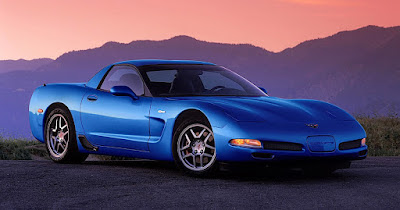
    2001 Corvette Z06: The First Modern Day Z06


    2002 Corvette Z06


    Unless you've been living under a rock, you know about the extremely potent 2023 Corvette Z06 that is on its way to the market sometime in late 2022. If you want to read about that, just look up any automotive website on the web and you can find out everything you know or you can go to this ride-along video/article with top engineers on the project, written by me for Muscle Cars & Trucks (C8 Corvette Z06 Engineers Share Untold Details On New Supercar: Video.


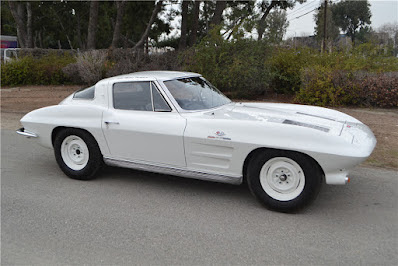
    1963 Corvette Z06


    1963 Corvette Z06

    Since we all should know everything about the new Corvette Z06, I decided that we should take a look back at the birth of the first modern Corvette Z06. But first, let's take a short look at the birth of the very first Z06. 

    The first Z06 became available in 1963 and there were only 199 produced and sold. These Corvette Z06's sole purpose was to be sold for road course racing. They came with a 327 cu.in. (5.4-liter) engine, four-speed transmission, a beefed-up suspension, a massive brake system upgrade that included dual master cylinders, and an optional 36.5 US gal (138 l; 30 imp gal) tank.

    The thing about these C2 Corvette Z06s was you didn't just go to the dealership and buy one, you had to know someone who knew what boxes to check in the order form if you wanted one of these race-ready (RPO Z06) Corvettes, and just like the 2001 Corvette Z06, you didn't get many luxuries with the car, it was truly for going fast. 


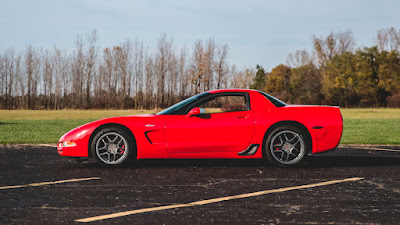
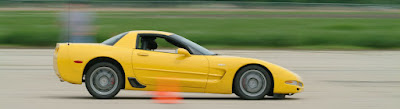
    2001 Corvette Z06


    2021 Corvette Z06

    This Corvette was built to surprise and dominate the market. The Z06 was designed for the track and pushed the boundaries of what was really possible from a production car that could drive to the track, make better times than its competition, and drive back home with the air conditioning kicking and the radio blasting. 

    Basic Spec:

    • 5.7-liter LS6 V8
    • 6-speed manual
    • 385 horsepower and 385 lb-ft of torque
    • New FE4 Suspension (four-wheel independent suspension)
    • Bose speaker system
    • Leather bucket seats
    • 17" front and 18” rear rims wrapped in Goodyear Eagle F1 SC tires
    • Hardtop only
    • Brake coolers
    • Curb weight: 3,118 lbs.

    • Gas Mileage: 17 City / 26 highway

    Z06 Engine Corvette

    Engine And Transmission

    The LS6 is essentially a more powerful version of Corvette's LS1 V8. The LS6 engine upgrades start with a redesigned intake manifold with better-flowing internal passageways. Reengineered cylinder heads create more flow through the intake and exhaust valves, and the combustion chambers were redesigned to reduce valve shrouding.

    All these upgrades led to a higher compression ratio which then led to a redesigned thin-walled cast-iron exhaust manifold system to provide a smoother exit for the combustion escape.

    Of course, all this extra flow wouldn’t be worth much without a redesigned camshaft. So a beefier cam was installed by Corvette engineers with more valve overlap and greater valve lift. Chrome-vanadium-steel valve springs and stronger pistons cast from a more durable alloy were implicated in the engine’s design for toughness. And finally, the LS6 was engineered with windows cast into the internal crankcase walls to help air retreat from the underside of the burning hot pistons.

    This new engine setup gave the New Corvette Z06 385 horsepower at 6,000 RPMs and 385 lb-ft of torque at 4,800 RPMs, and a redline RPM of 6,500. In between all the power and the rear wheels was a beefed-up clutch (with lighter pedal effort), a larger-diameter driveshaft, and a revised six-speed manual transaxle. This new M12 gearbox was introduced with shooter 1st, 2nd, and 3rd gears to better utilize the new higher-revving LS6. All gears were 10-16 percent shorter except for the 4th gear which remained the same.

    Corvette Suspension

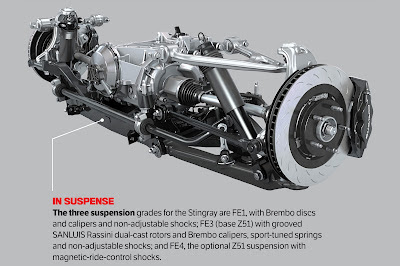
    2001 Corvette Z06 Suspension

    More power always means more changes all around. To accommodate the power of the LS6, Corvette went with a new FE4 suspension that included revised shock calibrations, a stiffer rear transverse leaf spring setup, and stiffer anti-roll bars for the front and rear.

    To add ground support, each corner of the Vette receives 1-inch wider tires, bringing them up to 9.5-inch wide in the front and 10.5-inch wide in the back. New custom light-weight 10-spoke wheels were wrapped in Goodyear F1 Eagle tires: 265/40ZR-17s in the front and 295/35ZR-18s rears. The F1 Eagle SC tires were designed with more flexible sidewalls achieved by doing away with the famous run-flat tire design. This permitted a half-degree more negative camber to keep the tread flatter during hard cornering for track use.

    To prove the Corvette was built for business, engineers found places around the car where they could shave pounds off the curb weight. Helping save weight was the deletion of the run-flat tire design, mufflers were made from Titanium, and the windshield and rear glass were all lightened to help bring the Corvette’s curb weight down to 3,118 pounds, that is 38 pounds lighter than its original form. A lot of weight was saved in the Titanium mufflers alone, but the weight of the new suspension offset the weight-saving by a lot.  

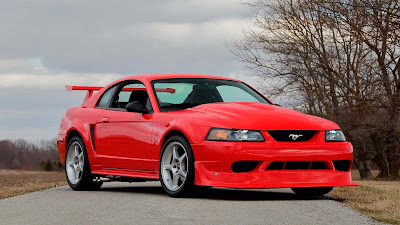
    2001 Cobra R

    Step Aside Cobra R

    The Cobra R was making some big waves at the track. Performance numbers were pretty impressive, and the Corvette Z06 was Chevrolet's answer to those performance numbers.

    The Cobra R and the Z06 were pretty close in performance numbers at the time (numbers for Z06 below). The Cobra R turned numbers out of its 5.4-liter that looked a little like this: 385 horsepower and 385 lb.-ft. of torque (the same as the Z06), 0-60 mph in 4.7 seconds, a quarter-mile time of 13.2 (Ford tested) and 12.9 (Motor Trend tested) with a top speed of 170 mph, and stops from 60-0 in 127 feet.

    Although the numbers were somewhat close, the Corvette beat out the Cobra R in other places. The Cobra R lacked air conditioning, an audio system, rear seats, sound dampening, and cruise control. The Corvette also lacked a back seat, but that's because it was never meant to have one, it wasn't a compromise. Also, because of the limited number of Cobra Rs that were built, the sticker price showed $55,5ish, but you couldn't buy one for under $75,000. The Corvette Z06 stuck pretty close to its price tag of just under $50,000 without a lot of limited edition inflation.

    2001 Corvette Z06

    Let's Go Over Some 2001 Corvette Z06 Numbers 

    The 2001 Corvette Z06's proof of superiority is in the numbers. A 0-60-mph time is recorded at 4.3 seconds, and a 70-mph to 0 stop takes only 152 feet. In a quarter-mile sprint, the Corvette can cover it in 12.7 seconds at 113 mph. Hitting 150 mph will only take you 28 seconds total, while a top speed of 170 mph is easily manageable. Although the top speed does suffer a little bit as the C5 Vettes will hit 175 mph, that's because of the Z06's closer transmission clutch gear ratios. 

    Hitting corners is another place where the Corvette Z06 shows no mercy to its competitors. Pulling .98 Gs in and out of corners is just what this sports car does, and that actually beats out all other sports cars out of there including the Viper GTS and the Ferrari 360 Modena, which are above the Corvette Z06s price bracket by a lot. 


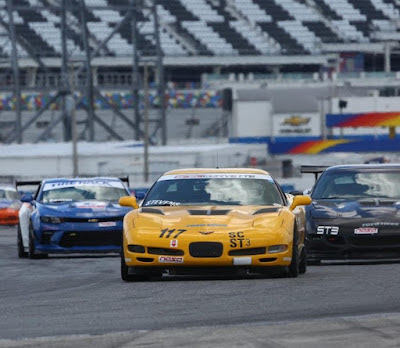
    Racing Z06 Corvette

    Z06 Performance Built

    Making sure everything was performance-built was what this Corvette was all about, even both the dual mesh grilles in the front and the rear brake coolers in front of the rear wheel wells are completely functional. 

    The 2001 Corvette Z06 is just like the new Z06s, although classified as a sports car, they perform like a supercar compared to its competition.


    1959 Corvette: Unbeatable Purple People Eater MKIII

         Summary Born to stand out: The Corvette team painted their cars metallic purple with white trim so they could actually find them in th...