Showing posts with label Don Yenko. Show all posts

Tuesday, July 14, 2026

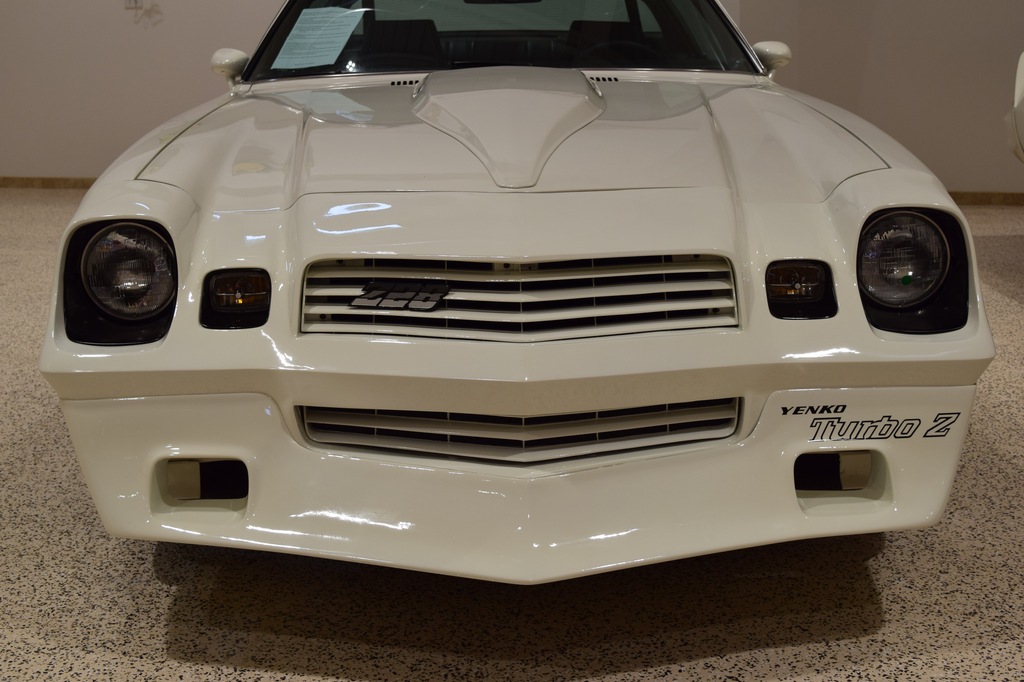
The Forgotten Last Yenko: The 1981 Camaro Turbo Z

  1981 Camaro Yenko Turbo Z


1981 Yenko Camaro Turbo Z 

Car enthusiasts, including many knowledgeable Camaro fans, often believe one of two things: either the last Don Yenko specialty car was the 1971 Chevy Nova Yenko, or it was the 2010 Chevy Camaro Yenko. However, neither belief is actually true.


2010 Chevy Camaro Yenko - Not A True Yenko
The 2010 Chevy Camaro Yenko is, in fact, not a true Don Yenko car. Chevrolet obtained the rights to use the Yenko name on the 2010 Camaro, but that alone does not make it an authentic Don Yenko creation. Unlike the original Yenko cars, which were modified and sold through Don Yenko's dealerships, the 2010 Yenko Camaro was simply a special-edition Camaro produced under license. Don Yenko himself—and the original Yenko operation—had nothing to do with its development.


Stage I & II 1981 Camaro Yenko Turbo Z While the 1971 Chevy Nova Yenko may be the last well-known Yenko specialty car, there was one genuine Yenko model that followed it. The extremely rare Stage I and Stage II 1981 Camaro Yenko Turbo Z may not have arrived during the golden age of muscle cars, but like most Yenko creations, these Camaros were modified to produce considerably more performance than they offered from the factory.


Image result for 1981 Camaro Yenko

Thanks to tightening emissions regulations, the 1981 Camaro Z28's 350-cubic-inch V8 was rated at just 175 horsepower—far from the fire-breathing muscle cars of the late 1960s. Don Yenko decided one of his final automotive projects would be giving the Chevrolet Camaro the extra power it desperately needed.


1981 Yenko Camaro Stage I & II

Only 19 Stage I and Stage II Yenko Camaros were built through Don Yenko dealerships. Of those, just three were Stage II Turbo Z models, making them among the rarest Camaros ever produced. Today, all 19 examples are considered exceptionally rare and feature numerous visual and performance upgrades.

Not only did the 1981 Yenko Camaro receive enough performance enhancements to shave roughly three seconds off the stock Z28's quarter-mile time, but it also came loaded with nearly every luxury option available from the factory, including leather seats, air conditioning, a tilt steering wheel, and more. The only thing it didn't include was a radio. In its place was a distinctive "Yenko Turbo Z" identification plate.


Chevy 350 cu-in. Turbo


1981 Yenko Camaro Upgrades:

  • 7-psi turbocharger added to the 350-cubic-inch V8
  • Turbo 350 automatic transmission
  • G80 Positraction rear differential
  • 3.08:1 rear axle ratio
  • Koni shock absorbers
  • Stiffer stabilizer bars
  • IROC front spoiler
  • Turbo Z-specific decals and floor mats
  • Leather-wrapped racing steering wheel

Image result for 1981 Camaro Yenko

So, how much horsepower did the turbocharged 1981 Camaro Yenko produce? No one knows for certain, but most experts estimate the output to be somewhere between 210 and 225 horsepower.

While those numbers may not sound impressive by today's standards, they represented a substantial increase over the stock 175-horsepower engine and made the Turbo Z one of the quickest third-generation Camaros of its day.


Heading To Mecum Auto Auction

If you're thinking about adding one of these rare Camaros to your collection—especially one of the three Stage II models—good luck finding one.


The last 1981 Camaro Yenko Turbo Z to cross the auction block sold for $66,000 at a Mecum auction in 2018. Considering its rarity and significance as the last true Don Yenko specialty car, that seems like a bargain today. It's possible many bidders simply weren't aware of the car's fascinating history or just how rare it really is.

Saturday, June 21, 2025

1969 Chevrolet Nova Yenko/SC: Fastest and Rarest of All Yenko Vehicles

1969 Yenko/SC Nova 427

The 1969 Chevrolet Nova 427 Yenko/SC, also known as the Super Nova, is said to be the rarest and fastest Yenko vehicle ever built. With only 37 of these bad boys being sold from Don Yenko's dealership, there are only about 7-10 left known to be in existence today. 


Taking The Nova SS To The Next Level

Mr. Yenko only used the Nova SSs to complete the Yenko conversion because they were already equipped with a lot high performce stock parts he could use for the project. And not to say that the '69 Nova SS with the 396 cu-in engine wasn't already a pretty stout vehicle; Don Yenko always loved to push the envelope. 

The only problem that Don had with these 427 Yenko/SC projects was that, in his own words, "These cars are lethal and barely legal at best." He goes on to say, "It's the craziest project I ever did."

Problems With Insurance Companies

Since the Nova was labeled a compact car, it was almost impossible to get your Super Nova insured. Insurance companies were already a little shy about insuring the Nova when it had the 396 motor in it, but putting a beefed-up L72 427 in a labeled compact car with extra beefed-up goodies left insurance companies feeling uncomfortable about taking on the risk. 

What insurance companies saw was that street racing was becoming more and more popular and dangerous, and all the extra performance would only give drivers more of an incentive to push the limits even further. 

And oddly enough, although the Nova was labeled a compact car, it actually weighed about 50 lbs. more than the 69 Yenko/SC Camaros, which had fewer problems with insurance companies because they were labeled a sports/muscle car. End the end, as far as anyone knows, there were no Yenko fatalities. 

Super Nova 427


The Super Nova Go-Fast Recipe 

It starts with yanking out the 396 cu-in engine and replacing it with a L72 427 cu-in big-block that would produce an estimated 450 horsepower. 

The original 396 heads would be used on the 427, completing an 11.0:1 compression ratio. Also added was an aluminum manifold, 780-cfm Holley four-barrel carburetor, and an A/C Delco single-point ignition system. Add in a little extra high-performance tuning, and the heart of the Super Nova would be ready to pound the pavement and embarrass competitors.

Slamming gears was easy with the Muncie M21 four-speed transmission. Making it even more fun was the positraction rear-end with either 3.55 gears or 4.10 gears. 

Keeping all this power and asphalt on the ground safely was a F41 front and rear heavy-duty suspension with an 11/16-inch diameter front anti-sway bar. Pulling the beast to a stop after some pedal to the metal action was a Delco Moraine heavy-duty master cylinder, which activated the 11-inch power front disc brakes and 9 1/2-inch power rear drum brakes. 

How Did The Super Nova Perform?

It performed like an out-of-control monster. The Nova could get from 0-60 in between 5.1-4.7 seconds while strutting down the quarter-mile with estimated 11-second passes and reach a top speed of about 120 MPH. 

1969 Super Nova Yenko


Visual Hop Ups For The Nova

Not much to speak of here. Don wanted to keep the Nova looking pretty modest. His classic Yenko decals were placed on the exterior, and some Yenko emblems were placed both on the inside and out. A Stewart-Warner tachometer was installed for hard-driving accuracy and looked pretty cool. For wheels, 14 inches were standard with the Dog dish hub caps, or some came with 14-inch torque trust. 

Yenko Nova Interior

Coming Across One Of These Rare Novas For Sale

First, if it is a true Super Nova, you should know to have a lot of money on hand. Second, make sure it is real. These are not hard cars to replicate, and you could lose a fortune. Not to say that a true Nova SS 396 isn't a nice car to invest in, but they are not as valuable as a true '69 Yenko/SC Nova

There are plenty of little things that can tip you off to an impostor, so make sure you have a Nova expert or a trustworthy spec sheet that you can cross-reference with the car instead of just taking someone's word for it. Happy Hunting!