Showing posts with label L72 427. Show all posts

Tuesday, September 9, 2025

Chevrolet Biscayne 427 (1966 1968–1969): A Sleeper Muscle Car That Time Forgot


Chevrolet Biscayne 427 (1968–1969)

Summary

  • The ultimate sleeper: The Chevrolet Biscayne 427 looked like a basic family sedan but could deliver serious muscle-car performance.
  • Built for simplicity: As Chevrolet’s entry-level full-size car, the Biscayne focused on affordability and practicality rather than luxury or flashy styling.
  • Big-block power: The top-performance L72 427ci V8 produced 425 horsepower and 460 lb-ft of torque.
  • Serious speed: With the right gearing and transmission, an L72 Biscayne could run the quarter mile in the mid-13-second range.
  • Plain on purpose: Basic steel wheels, dog-dish hubcaps, minimal chrome, and understated bodywork helped disguise the performance underneath.
  • Minimalist interior: Vinyl bench seats, rubber floor mats, and limited options kept the Biscayne light, affordable, and focused on function.
  • Police power: Biscayne 427s were also used by police departments as high-performance pursuit cars.
  • Rare today: Many were driven hard, worn out, or scrapped, making surviving 427-powered examples increasingly scarce and desirable.
  • Collector appeal: The combination of rarity, big-block performance, and sleeper status has made the Biscayne 427 a highly sought-after Chevrolet.
  • Bottom line: The Biscayne 427 proved that you didn’t need flashy styling to have serious muscle, making it one of Chevrolet’s greatest sleeper cars of the era.


    Chevrolet Biscayne Badge

  • A Muscle Car?

    When enthusiasts talk about late-1960s Chevrolet performance, names like Chevelle SS, Camaro Z/28, and Corvette Stingray almost always dominate the conversation. But hiding in plain sight was a full-size sedan that could embarrass many of its flashier siblings—the Chevrolet Biscayne 427. Built in 1966, 1968, and 1969 (also '67 but with no big block 427 option), this stripped-down, big-block sleeper delivered muscle car performance without the muscle car price tag. While it never achieved the same level of fame as its stablemates, the Biscayne 427 remains one of the most underrated Chevrolets of the muscle car era.


    Chevrolet Biscayne 427 (1968–1969): A Sleeper Muscle Car That Time Forgot

    The Ups and Downs of the Biscayne 427

    The biggest strength of the Biscayne 427 was its simplicity. Chevrolet designed the Biscayne as the entry-level, no-frills full-size car, aimed at budget-conscious buyers and fleet sales. When paired with the L72 427-cubic-inch V8, the result was a lightweight, unassuming powerhouse that could outrun many purpose-built muscle cars.

    Yet, the same qualities that made it special also kept it from stardom. The Biscayne lacked the aggressive styling, flashy trim, and high-end marketing that boosted the popularity of cars like the Chevelle SS 396 or the Camaro Z/28. Too many buyers thought of it as “just a taxi cab with a big engine,” and that reputation limited its appeal. While enthusiasts today view it as a collectible sleeper, back in the day, most people overlooked it in favor of Chevrolet’s sportier offerings.

    Chevrolet Biscayne 427 (1968–1969): A Sleeper Muscle Car That Time Forgot


    What Was The BiscayneTrim Available

    In 1966, 1968, and 1969, the Biscayne sat at the bottom of Chevrolet’s full-size lineup, below the Bel Air, Impala, and Caprice. Buyers could choose between two-door sedans, four-door sedans, and station wagons. For the performance-minded, the two-door sedan was the lightest and most desirable configuration, especially when ordered with the legendary 427 V8. Because the Biscayne was sold as a budget car, most were sparsely optioned, with few luxuries beyond the basics.

    Exterior: The Dull And Unassuming Biscayne 427

    At first glance, the Biscayne 427 didn’t look like anything special. It wore the same boxy, full-size body lines as its siblings, but without much chrome, ornamentation, or badging. This understated look was exactly what made it the ultimate sleeper—few people expected such a plain car to pack serious muscle under the hood.

    The stance was straightforward: upright, practical, and without the aggressive rake or wide-track look of other dedicated muscle cars. It could be ordered with a performance suspension and wider wheels that took on a more subtly athletic posture, but not too many were bought that way—they were purchased for what they were, a get-around car. 

    Chevrolet offered a variety of exterior colors, from conservative hues like Grecian Green, Tripoli Turquoise, and Ash Gold, to bolder shades like Matador Red and LeMans Blue. Many were ordered in fleet-style colors, adding to their “ordinary” appearance on the street. The fact that family cars, taxi cabs, and police cars didn't need to look fancy, the cheapest colors were big sellers.

    Chevrolet Biscayne 427 (1968–1969): A Sleeper Muscle Car That Time Forgot

    Performance: Drivetrain and Stats

    The heart of the Biscayne 427 was its engine lineup. Buyers could choose from several 427-cubic-inch V8s, but the star was the L72, rated at 425 horsepower and 460 lb-ft of torque. This solid-lifter big-block was a drag-strip favorite, with real-world performance numbers that rivaled or exceeded smaller muscle cars.

    Mated to either a 4-speed manual transmission or a heavy-duty 3-speed Turbo Hydra-Matic automatic, the L72-powered Biscayne could run the quarter mile in the mid-13-second range—serious numbers for a car that weighed over 3,800 pounds. Rear-end gear ratios could be tailored to buyer preference, with steep options like 4.10 or 4.56 for drag racing duty.

    In short, the Biscayne 427 delivered near-Corvette performance at a fraction of the cost—and it did so without the prestige or flash.

    Chevrolet Biscayne 427 (1966 1968–1969): A Sleeper Muscle Car That Time Forgot


    Chevrolet Basic Wheels and Tires (Unless Optioned)

    Most Biscaynes came with basic steel wheels and dog-dish hubcaps, keeping in line with the car’s sleeper persona. Buyers looking for better traction often upgraded to wider tires and rally wheels, but the majority of cars rolled off the lot with no-frills rubber that belied the monster lurking under the hood. This goes back to the fact that these cars weren't bought for flashiness. 


    Chevrolet Biscayne 427 (1968–1969): A Sleeper Muscle Car That Time Forgot

    Interior: Colors, Power Options, and Features (Not Many)

    Step inside a Biscayne 427, and you are reminded that this was Chevrolet’s full-sized, bargain-basement car. Vinyl bench seats, rubber floor mats, and minimal trim were the norm. Interiors were offered in practical colors like black, blue, and tan.
    Power options were scarce, but buyers could check boxes for things like power steering, power brakes, or a radio. Air conditioning was available, but many high-performance Biscayne buyers skipped it to save weight, horsepower, and money. In keeping with its working-class roots, the Biscayne was all business—everything you needed, nothing you didn’t.


    Chevrolet Biscayne 427 (1968–1969): A Sleeper Muscle Car That Time Forgot


    Did You Know?

    • Only a small number of Biscayne 427s were produced in 1966, 1968, and 1969, making surviving examples rare and valuable today.
    • Many were ordered by police departments for pursuit duty, giving officers one of the fastest cruisers of the era.
    • Because of their plain looks and utilitarian nature, many Biscayne 427s were driven hard, worn out, and scrapped, contributing to their scarcity.
    • Collectors today prize the Biscayne 427 for its sleeper mystique, with well-documented cars fetching six-figure prices at auction.

    Chevrolet Biscayne 427 (1968–1969): A Sleeper Muscle Car That Time Forgot


    Conclusion

    The 1966, 1968, and 1969 Chevrolet Biscayne 427 is a perfect example of how looks can be deceiving. While it lacked the flashy stripes, chrome trim, and marketing hype of more famous muscle cars, it packed some of the most serious performance of its day. For buyers who wanted raw power without the extra hoopla—or who simply wanted to surprise unsuspecting challengers at a stoplight—the Biscayne 427 was the ultimate underdog.

    Today, it stands as a rare gem from Chevrolet’s golden era of performance, a reminder that sometimes the most ordinary-looking cars hide the most extraordinary capabilities.

    Saturday, June 21, 2025

    1969 Chevrolet Nova Yenko/SC: Fastest and Rarest of All Yenko Vehicles

    1969 Yenko/SC Nova 427

    Summary

  • One seriously rare Nova: Only 37 Super Novas were sold through Don Yenko's dealership, with only about 7–10 known to survive today.
  • Don Yenko wasn't messing around: He took the already stout Nova SS 396 and decided it needed a 427 big-block. Because apparently 396 cubic inches wasn't enough.
  • Even Yenko called it lethal: Don himself described the cars as “lethal and barely legal at best” and called it the craziest project he ever did.
  • The recipe was nasty: L72 427, roughly 450 horsepower, 780-cfm Holley carburetor, aluminum intake, Muncie M21 four-speed, Positraction, and serious F41 suspension.
  • It could stop, too: Heavy-duty power front discs, rear drums, and upgraded suspension helped keep all that big-block insanity under control.
  • Quick for 1969—and quick by any standard: The Super Nova was estimated to hit 0–60 mph in about 4.7–5.1 seconds, run the quarter-mile in the 11s, and reach roughly 120 mph.
  • It didn't look crazy: Yenko kept the exterior relatively understated, adding his famous decals, emblems, a Stewart-Warner tach, and optional Torque Thrust wheels.
  • Want one today? Bring money: A real Super Nova is extremely valuable, and replicas or fakes can look convincing enough to separate an unsuspecting buyer from a very large pile of cash.
  • Do your homework: If you find one for sale, verify the documentation, specifications, and history with a Yenko/Nova expert before handing over the check.
  • Bottom line: The Super Nova was Don Yenko taking a compact Chevy and stuffing it full of big-block attitude. It may have looked like a mild-mannered Nova, but underneath was a 427-powered street-legal lunatic.

  • 1969 Chevrolet Nova 427 Yenko/SC — Super Nova


    1969 Chevrolet Nova 427 Yenko/SC — Super Nova


    The 1969 Chevrolet Nova 427 Yenko/SC, also known as the Super Nova, is said to be the rarest and fastest Yenko vehicle ever built. With only 37 of these bad boys sold through Don Yenko's dealership, there are only about 7–10 known to still exist today.

    Taking The Nova SS To The Next Level

    Mr. Yenko used the Nova SS as the starting point for his conversion because it was already equipped with a lot of high-performance parts he could use for the project. And not to say that the '69 Nova SS with the 396 cu-in engine wasn't already a pretty stout vehicle, but Don Yenko always loved to push the envelope.

    The only problem Don had with these 427 Yenko/SC projects was that, in his own words, “These cars are lethal and barely legal at best.”

    He went on to say, “It's the craziest project I ever did.”

    And when the guy who built it tells you it's crazy, you might want to pay attention.


    Problems With Insurance Companies

    Since the Nova was labeled a compact car, it was almost impossible to get your Super Nova insured. Insurance companies were already a little shy about insuring the Nova when it had the 396 engine, but putting a beefed-up L72 427 into a car classified as a compact—and then adding even more performance goodies—left insurance companies feeling pretty uncomfortable about taking on the risk.

    What insurance companies saw was that street racing was becoming more and more popular and dangerous, and all that extra performance could give drivers even more incentive to push the limits.

    And oddly enough, although the Nova was labeled a compact car, it actually weighed about 50 pounds more than the ’69 Yenko/SC Camaros. The Camaros had fewer problems with insurance companies because they were classified as sports/muscle cars.

    In the end, as far as anyone knows, there were no Yenko fatalities.

    Super Nova 427


    The Super Nova Go-Fast Recipe 

    It starts with yanking out the 396 cu-in engine and replacing it with an L72 427 cu-in big-block that would produce an estimated 450 horsepower.

    The original 396 heads were used on the 427, helping produce an 11.0:1 compression ratio. Also added was an aluminum intake manifold, a 780-cfm Holley four-barrel carburetor, and an AC Delco single-point ignition system.

    Add in a little extra high-performance tuning, and the heart of the Super Nova was ready to pound the pavement and embarrass competitors.

    Slamming gears was easy with the Muncie M21 four-speed transmission. Making it even more fun was the Positraction rear end, available with either 3.55 or 4.10 gears.

    Keeping all that power and asphalt under control was an F41 heavy-duty front and rear suspension with an 11/16-inch-diameter front anti-sway bar.

    And when it was time to put the brakes on after some serious pedal-to-the-metal action, a Delco-Moraine heavy-duty master cylinder activated the 11-inch power front disc brakes and 9½-inch power rear drum brakes. 


    How Did The Super Nova Perform?

    It performed like an out-of-control monster.

    The Nova could reportedly get from 0–60 mph in roughly 4.7–5.1 seconds while tearing down the quarter-mile with estimated 11-second passes and reaching a top speed of about 120 mph.

    For a compact car from 1969, that's one hell of a recipe.


    1969 Super Nova Yenko


    Visual Hop Ups For The Nova

    There isn't a whole lot to talk about here—and that was intentional.

    Don wanted to keep the Nova looking pretty modest. His classic Yenko decals were placed on the exterior, with Yenko emblems both inside and out.

    A Stewart-Warner tachometer was installed for hard-driving accuracy, and it looked pretty damn cool, too.

    For wheels, 14-inch wheels were standard with dog-dish hubcaps, while some cars came with 14-inch Torque Thrust wheels.


    Yenko Nova Interior

    Coming Across One Of These Rare Novas For Sale

    First, if it is a true Super Nova, you should be prepared to have a lot of money on hand.

    Second, make sure it's real.

    These cars aren't exactly impossible to replicate, and if you don't know what you're looking at, you could lose a fortune.

    That's not to say a true Nova SS 396 isn't a nice car to own or invest in, but they aren't nearly as valuable as a true '69 Yenko/SC Nova.

    There are plenty of little details that can tip you off to an impostor, so make sure you have a Nova expert—or a trustworthy set of factory specifications and documentation—you can cross-reference with the car.

    Don't just take someone's word for it.

    Happy Hunting!

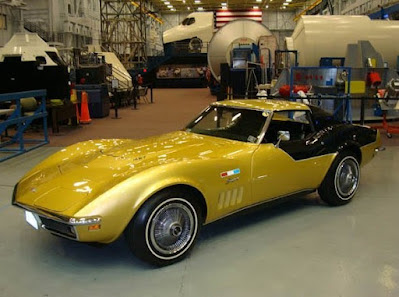
    1969 Corvette Stingray "AstroVette" Apollo-Themed

       Summary NASA + Corvette: GM connected the Corvette brand with NASA astronauts through cars, publicity, and an executive lease program. T...