Wednesday, October 21, 2026

Rare 1982 Buick Grand National—The Only Year It Wasn't All Black

 1982 Buick Grand National


Summary

  • The 1982 Buick Grand National was the first Grand National, and it wasn't black—it came in charcoal gray and silver.
  • Buick's NASCAR success, including Richard Petty's 1981 Daytona 500 win, helped inspire the Grand National.
  • Only 215 were produced, plus one prototype, making the '82 GN extremely rare.
  • Most came with a 4.1L naturally aspirated V6 producing 125 hp, while roughly 20 received the 3.8L turbo V6 making 175 hp and 290 lb.-ft. of torque.
  • Cars were sent to Cars and Concepts in Auburn Hills, Michigan, for their Grand National upgrades.
  • Special features included F41 suspension, heavy-duty cooling, rally wheels, blacked-out trim, special badging, bucket seats, and unique Grand National gauges.
  • The '82 GN wasn't especially fast by today's standards, but it started the Grand National legacy that would lead to the legendary turbocharged '86–'87 models.
  • Finding a good original example is difficult due to rust, interior deterioration, and years of neglect.
  • There was no 1983 Grand National, making the 1982 model even more significant to collectors.


    Grand National Emblem


  • Don't Answer Without The Facts

    Although almost everyone you ask will tell you there is no such thing as a true Buick Grand National that was not all "Black", the fact is, they'd be wrong! 

    They might also tell you there's no such thing as an '82 Grand National, which would also be wrong! The first Grand National was actually born in 1982; it was charcoal grey and silver and has a pretty cool little story to it.

    The Birth Of Something That Would Soon Become A Legend 

    Back in 1981, Buick took to the main stage at NASCAR with their G-Body Regal. A few Regals made their debut in California at the Riverside International Raceway. But it was in Daytona, the second week of the season, where the tides changed for the Regal and set the way for Buick and the G-Bodies in NASCAR for quite a while. 


    Richard Petty Wins Daytona 500 In A Regal

    For a record-setting 7th time, Petty takes the checkered flag, but this time in a Buick Regal. This win broke a long drought of 16 years since someone drove across the finish line at a NASCAR event in a Buick. It was last done by Herb Thomas, who did it in 1955 in a '55 Buick Century. 

    Record-Breaking Year For Buick In NASCAR 

    Throughout the season, a Buick Regal would cross the finish line first in 22 out of 31 events with just five different Buick Drivers—Petty, Bobby Allison, Ron Bouchard, Cale Yarborough, and Darrell Waltrip. In the end, Waltrip would bring home the championship title for his team and Buick.

    These efforts brought the NASCAR Manufacturer title home to the Flint, Michigan plant that had been pumping out those Regals since 1978. 

    The new sporty image and the accomplishments at NASCAR that followed prompted Buick to take full advantage of the newfound "This Isn't Your Grandma's Car" image and run with it. 

    1982 Buick Grand National Flyer


    In December 1981, Buick announced that a "Special Edition" Regal was going to be unveiled in the first week of the NASCAR season. This just so happened to be the first time the Daytona 500 would be set for the first race of the season, and it is now a staple in NASCAR racing to this day. The Daytona week is like the Super Bowl of NASCAR and prime time for anything special, especially for automotive manufacturers that want to show off something new. 
     

    Buick And NASCAR Copyright Issues

    Buick went ahead and already named their "Special Edition" Regal the "Grand National"; the only problem was that NASCAR already had the copyrights to the name—NASCAR Winston Cup Grand National Series—so NASCAR sued. After some legal wrangling, Buick kept the name but changed the nameplate to the recognizable one everyone knows today—a big turbo-6 on the right side of the emblem, the words "Grand National" stacked on top of each other, and a checkered flag on the left side of the emblem. 

    1982 Daytona 500

    Daytona 500 Week 1982

    Now, whether or not the Grand National was ever actually unveiled at the 1st Daytona week, no one seems to really remember. Many think it never made it, largely because of the ongoing legal dispute with NASCAR, but regardless, the "Special Edition" prototype GN was done. 

    Not only was the Grand National project moving forward for Buick, but on Feb 14, the day of the Daytona 500, 25 of 42 cars lined up as Buick Regals, and 7 of 10 of them were in the top 10 positions. The race ended just about the same way it started, with Allison winning in his Buick Regal, followed by three other drivers driving Buick Regals. The success continued for Buick throughout the season, and so did production on the Buick Grand National. 

    1982 Buick Grand National


    1982 Buick Grand National: What Was Special 

    Was the first Buick Grand National fast? By today's standards, not at all! In fact, most soccer Moms' crossovers would take the '82 Grand National out pretty easily. But in 1982, it's sad to say, this V6 would beat most factory V8s on the road, at the same time looking cooler than most of them.

    When I say V6, you're probably thinking of the turbo 3.8-liter that Grand Nationals are known for, but this first GN was a little different. The '82 Grand National came with a 4.1-liter V6 that was naturally aspirated and fed by a 4-barrel Quadrajet carburetor. This fun combination would get you a whopping 125 horsepower and 205 lb.-ft. of torque. 

    1982 Buick Grand National Engine


    There were a few buyers out there that had inside information about the soon-to-be-famous 3.8-liter turbo engine combo and checked the right boxes on the order sheet. This combo would get the buyer 175 horsepower and 290 lb-ft of torque.

    Heading Off For Special Treatment 

    All soon-to-be Grand Nationals rolled off the assembly line as normal Buicks and then were shipped off to Cars and Concepts in Auburn Hills, MI, where they received their Grand National treatment. They were all done in Charcoal Grey exterior paint and grey interior, but weren't all based on the same Regal. Some base Buick Regals were sent to Cars and Concepts, but so were some Limited and Sport coupe Regals. So for a collector on the hunt for a legitimate one, there are a few different real options out there (do your research). 

    1982 Buick "Grand National" Special Edition Upgrades  

    • 215 made plus one prototype
    • 4.1-liter V6 naturally aspirated or (roughly) 20 3.8-liter V6 turbocharged
    • 125 horsepower (4.1) or 175 horsepower (3.8 turbo)
    • 205 lb.-ft. of torque (4.1) or 290 (3.8 turbo) 
    • Automatic transmission
    • Heavy-duty engine and trans coolers
    • 3.23:1 rear gear (4.1) or 3.03:01 (3.8)
    • F41 Grand Touring Suspension

       1982 Buick Grand National Interior


    Cosmetic Upgrades
    • Silver stripe in the middle of the charcoal grey paint (hand-laid), red pinstriping separating the colors (hand-laid) 
    • Big Buick letters on the back quarter panels and on the back decklid lip
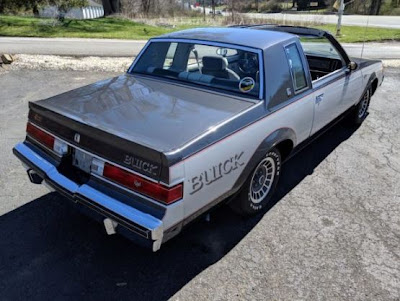
    • Blacked-out grille and headlamp door covers
    • Special Edition rally wheels w/Buick center caps
    • Front bucket seats w/black leather inserts throughout the whole interior
    • Leather-wrapped steering wheel
    • Center console w/shifter
    • Special Grand National gauge cluster 
    • Special Grand National badging on exterior and interior

    1982 Buick Grand National Gauge Cluster

    It's hard to find these cars in good shape. One of the biggest problems they had was that, through the years, their lack of power left a lack of enthusiasm to keep them running and looking good. The usual rust invades the lower doors and quarter panels in the usual places, and their interiors are commonly faded and torn from sun damage due to T-tops (some had sunroofs instead).  

    But these Grand Nationals can still be considered collector items thanks to their history and the lack of numbers produced. You could say they started a mid-to-late-'80s revolution of more desirable cars for the auto enthusiast, not to mention they paved the way for the '80s' most famous muscle car, the 1986 and '87 Grand National.   

    1982 Buick Grand National


    How Expensive Were They?

    The Grand Nationals weren't as expensive as buying a Corvette, but spending extra cheese on a Buick was something people didn't do much of since the muscle days. With a Regal sticker price of $8,702, you would have to cough up another $3,278 for the Grand National packages and about another $1,000 more if you ordered the turbo 3.8-liter version. With America in a recession at the time, that was a lot of money, and Buick's most expensive styling and performance package was one that it had ever sold. 

    1982 Buick Grand National 

    All in all, if you found one in good shape, it would be worth buying a 1982 Grand National just to preserve it. And if you found a 1983 Grand National, I have a bridge to sell you because there were no Grand Nationals made in '83. 

    Monday, October 19, 2026

    1965 Chevrolet Chevelle Z16 396: Putting Chevelle On The Muscle Car Map


    1965 Chevrolet Chevelle Z16 White


    Summary

    • Production: Approximately 201 cars, including one prototype.

    • Engine: 396-cubic-inch Mark IV Turbo-Jet V8.

    • Horsepower: 375 hp at 5,600 rpm.

    • Torque: 420 lb-ft at 3,600 rpm.

    • Transmission: Muncie four-speed manual.

    • Drivetrain: Rear-wheel drive.

    • Body style: Two-door hardtop.

    • Performance: The 396 put the power that consumers wanted into a mid-size sedan

    • Estimated collector value: Big-time auctions can see these cars in great condition go for around $200,000, with recent auction sales proving they're holding or increasing in value.

    • Historical significance: The Z16 helped introduce Chevrolet's big-block performance power to the midsize Chevelle lineup.


    1965 Chevrolet Chevelle Z16 Emblem

    Why Was It Time For The 1965 Chevrolet Chevelle To Bring Out The Big Guns?

    During the 1960s, American automakers were competing to build vehicles that combined everyday practicality with the excitement of high-performance driving. Chevrolet entered the midsize market with the Chevelle in 1964, offering buyers a versatile alternative to larger full-size cars and smaller compact models.

    The Chevelle was designed to appeal to a broad audience. Families could purchase a practical sedan or station wagon, while buyers seeking something sportier could choose a two-door coupe or convertible. A selection of six-cylinder and V8 engines also allowed customers to decide how much performance they wanted from their new Chevrolet.

    However, the muscle car market was developing rapidly. Pontiac had already demonstrated the appeal of combining a midsize body with a powerful V8 through the GTO, and Chevrolet needed a compelling answer.

    That answer arrived in 1965 with the Chevrolet Chevelle Malibu SS 396 Z16.

    The Z16 was an extraordinarily rare performance package that combined a 375-horsepower big-block V8 with a four-speed manual transmission, upgraded suspension, improved braking hardware, and an unusually generous collection of comfort and convenience features.

    With only approximately 201 examples commonly cited, the Z16 became one of the rarest factory-built Chevelles ever produced. More importantly, it helped establish the foundation for the 396-powered Chevelle SS models that followed in 1966.

    The Z16 was not simply an ordinary Chevelle with a bigger engine. It was an early demonstration of what Chevrolet could accomplish when it combined midsize-car practicality with serious big-block performance.

    Trim Options Were Key For The 1965 Chevrolet Chevelle

    Chevrolet offered several Chevelle series in 1965, ranging from basic transportation to more upscale and performance-oriented models.

    • Chevelle 300: The entry-level model, emphasizing affordability and practical transportation.

    • Chevelle 300 Deluxe: Added trim and equipment over the base 300.

    • Chevelle Malibu: A more upscale series available in several body styles.

    • Chevelle Malibu SS: The sport-oriented model featuring distinctive SS styling, bucket seats, and other upgraded options.

    • Chevelle Malibu SS 396 Z16: The rare, high-performance package featuring the 396-cubic-inch V8 and specialized chassis upgrades.

    The Z16 was built around the Malibu SS sport coupe rather than an entirely separate body design. Its high-performance powertrain setup, performance chassis components, and extra upgraded equipment distinguished it from the other Chevelles in the lineup.


    1965 Chevrolet Chevelle 396 Engine

    The Significance of the 396: The Powertrain That Started Chevelle's Muscle Dominance

    The 1965 Chevelle offered several engine choices, including inline-six engines and small-block V8s. Depending on the configuration, buyers could select a 283-cubic-inch V8 or one of several 327-cubic-inch engines.

    The high-performance 327 was already capable of producing as much as 350 horsepower in the appropriate configuration. However, Chevrolet's new big-block 396 brought a different level of torque and performance potential to the midsize platform.

    The 396-Cubic-Inch Turbo-Jet V8

    The Z16 received a specially specified 396-cubic-inch Mark IV Turbo-Jet V8 rated at 375 horsepower and 420 lb-ft of torque. Its 11.0:1 compression ratio helped deliver the strong performance expected of a premium muscle car.

    The Z16's L37 engine used hydraulic valve lifters, distinguishing it from the solid-lifter 396 configurations associated with other high-performance Chevrolet applications.

    The engine was paired exclusively with a Muncie four-speed manual transmission and rear-wheel drive. Chevrolet also upgraded the chassis and braking systems to support the additional power.

    These changes made the Z16 a complete performance package rather than an engine upgrade alone.

    Why the 396 Was a Big Deal

    The 396 represented an important shift in Chevrolet's midsize performance strategy. While the 327 small-block offered impressive power, the big-block delivered the substantial torque that enthusiasts increasingly wanted from American muscle cars.

    The Z16 helped Chevrolet introduce this combination to the Chevelle lineup before the 396 became a central part of the 1966 Chevelle SS identity.

    It also demonstrated that a midsize Chevrolet could compete with established muscle cars without requiring buyers to step up to a larger, heavier vehicle.

    For Chevrolet enthusiasts, the Z16 represents an important link between the early performance Chevelles and the increasingly powerful muscle cars that followed during the late 1960s.

    Exterior Styling: An Understated Muscle Car

    The 1965 Chevelle featured clean body lines, a long hood, and balanced proportions that gave it a sporty appearance without sacrificing everyday usability. The Malibu SS added distinctive grille details, SS identification, bright trim, and sporty wheel covers.

    The Z16 retained the familiar Chevelle silhouette but featured unique rear-end trim and specialized wheel and tire equipment. Its appearance was relatively restrained compared with some later muscle cars, allowing the big-block powertrain and limited production to define its character.

    The car was offered in striking colors, including Crocus Yellow, Regal Red, and Tuxedo Black. A black vinyl roof was also available.

    Its understated styling is part of the Z16's appeal today. It looks like a product of the muscle car era without relying on oversized graphics or exaggerated body modifications.


    Exterior Styling: A Sleeping Muscle Car

    The 1965 Chevelle featured clean body lines, a long hood, and balanced proportions that gave it a sporty appearance without sacrificing everyday usability. The Malibu SS added distinctive grille details, SS identification, bright trim, and sporty wheel covers.

    The Z16 retained the familiar Chevelle silhouette but featured unique rear-end trim and specialized wheel and tire equipment. Its appearance was relatively restrained compared with some later muscle cars, allowing the big-block powertrain and limited production to define its character.

    The car was offered in striking colors, including Crocus Yellow, Regal Red, and Tuxedo Black. A black vinyl roof was also available.

    Its understated styling is part of the Z16's appeal today. It looks like a product of the muscle car era without relying on oversized graphics or exaggerated body modifications.


    1965 Chevelle Interior Red


    Comfortable, Practical Interior

    The Z16 was not a stripped-down racing machine. Chevrolet equipped it with an extensive collection of convenience features, making it a relatively sophisticated performance car for 1965.

    The interior included bucket seats, a center console, an in-dash tachometer, a 160-mph speedometer, and a wood-grain steering wheel. Power steering, power-assisted drum brakes, and radio equipment were also part of its extensive equipment package.

    Other features included power windows, tinted glass, seat belts, and an instrument-panel pad. Interior colors included black, red, and white or ivory, depending on the particular car's specification.

    This combination of performance and comfort made the Z16 appealing to buyers who wanted a powerful street car rather than a bare-bones competition vehicle.

    Estimated Performance for 1965

    With 375 horsepower and 420 lb-ft of torque, the 1965 Chevelle Z16 had the powertrain to deliver serious acceleration for its era. Its relatively compact midsize body, four-speed manual transmission, and rear-wheel-drive layout made it well suited to enthusiastic drivers.

    Exact performance numbers from 1965 to today will vary.

    As a general estimate, these are what the numbers should come close to:

    • 0–60 mph: Approximately 6–7 seconds.

    • Quarter-mile: Approximately 14–15 seconds.

    • Quarter-mile trap speed: Potentially around 95–100 mph.

    These are indicative estimates, not guaranteed factory specifications or verified results for every Z16. Traction, driver skill, weather, and the car's mechanical condition would and will influence actual performance.

    The 396's strong torque was especially useful when accelerating through the gears. Rather than requiring extremely high engine speeds to produce useful power, the big-block delivered the kind of muscular response that helped define the American muscle car experience.

    The Z16's upgraded suspension and braking hardware also mattered. Chevrolet recognized that adding horsepower was only part of the equation; the car needed the supporting components to manage that power on the road.

    Muscle Car Competitors: How Did the Z16 Compare?

    The Z16 arrived during a period when American manufacturers were competing to produce increasingly powerful midsize cars.

    Pontiac GTO: The GTO helped establish the modern muscle car formula with its available 389-cubic-inch V8, sporty styling, and strong acceleration. It was one of the most important rivals in Chevrolet's effort to build a competitive midsize performance car.

    Oldsmobile 4-4-2: Oldsmobile offered a performance-oriented midsize package with V8 power and chassis upgrades. It appealed to buyers who wanted a more understated alternative to some of the era's flashier performance cars.

    Buick Skylark Gran Sport: Introduced for 1965, the Gran Sport combined Buick's midsize platform with a larger V8 and a more performance-focused character.

    Ford Fairlane: Ford's Fairlane competed in the same general midsize market, with available V8 engines and performance-oriented configurations.

    Plymouth Belvedere: Plymouth's midsize models provided another alternative for buyers interested in American V8 performance, as Chrysler continued expanding its muscle car offerings.

    The Z16's greatest distinction was its combination of a powerful 396, extensive equipment, and extremely limited production. Unlike more widely available competitors, it was built in numbers that make surviving examples especially important to collectors.


    Old School Chevelle in Garage

    Projected Worth Today: What Is a 1965 Chevelle Z16 Worth?

    The 1965 Chevrolet Chevelle Z16 has moved well beyond the price range of an ordinary classic Chevelle. Its rarity, factory specifications, and historical significance place it among the most desirable early Chevrolet muscle cars.

    Recent auction results provide useful benchmarks. Mecum Auctions reported sales of $203,500 for a Z16 at its Kissimmee event in January 2026. Another Z16 sold for $244,750 in May 2026, demonstrating the substantial prices that highly desirable examples can command. 

    For a genuine Z16, a reasonable broad market discussion would place many desirable examples in the low-to-mid six-figure range, with exceptional, highly original, or expertly restored cars potentially reaching higher amounts. This is an indicative estimate rather than a formal appraisal or guarantee of future value.

    Several factors can substantially affect a car's worth:

    • Authenticity: Documentation establishing the car as a genuine factory Z16 is essential.

    • Originality: Matching major components and retaining factory-correct equipment can increase desirability.

    • Condition: Rust, previous damage, mechanical issues, and restoration quality affect value.

    • Provenance: Original paperwork, ownership history, and documented restoration records can strengthen a car's appeal.

    • Market conditions: Collector demand and auction competition influence the final selling price.

    The distinction between a genuine Z16 and a standard Chevelle modified to resemble one is particularly important. Buyers considering a car at this price level should seek expert verification of its identity and history.

    Although no classic car is guaranteed to appreciate, the Z16's limited production and historical importance give it a strong foundation in the collector market.


    1965 Chevrolet Chevelle Z16 Red

    What the 1965 Chevrolet Chevelle Z16 Means in Today's Culture

    Today, the 1965 Chevrolet Chevelle Z16 represents an important moment in American automotive history. It arrived before the muscle car movement reached its late-1960s peak, demonstrating how much performance Chevrolet could deliver in a midsize package.

    Its significance goes beyond horsepower figures. The Z16 represents a period when automakers were experimenting with new combinations of engines, chassis engineering, comfort features, and everyday usability. Buyers wanted cars that could take them to work during the week and deliver an exciting driving experience on the weekend.

    The Z16 helped establish the direction Chevrolet would take with its later SS 396 models, which became important names in the muscle car world.

    For collectors, it offers something increasingly difficult to find: a rare, historically significant factory performance car with a documented place in Chevrolet's development. For enthusiasts, it is a reminder that the muscle car era was not defined solely by the most powerful or most famous models. Limited-production vehicles like the Z16 also played a major role in shaping the industry's direction.

    Its rarity makes it an aspirational collector car, while its understated styling and big-block power continue to appeal to enthusiasts who appreciate the engineering and character of 1960s American automobiles.

    The 1965 Chevrolet Chevelle Z16 may not be as widely recognized as some later Chevelle SS models, but its importance is difficult to overstate. It helped bring big-block performance to Chevrolet's midsize lineup and laid the groundwork for one of the most celebrated muscle car families in automotive history.

    The Chevrolet SS: The 415-HP Sleeper Sedan That's Still a Great Buy in 2026

    Summary Performance: 415-hp 6.2-liter LS3 V8, 415 lb-ft of torque, and rear-wheel drive. Sleeper Status: An inconspicuous four-door sedan ...