Wednesday, February 7, 2024

Rare Chevrolet 454 SS Half-Ton Pick-Up From The Early '90s

   1990 Chevy SS


With only 17,000 produced between 1990-93, these Chevy 454 SS trucks are some of the rarest Chevrolet C1500s of the 90s. In fact, purchasing one of these badasses was the only way you could get a 454 cu.-in. big-block stock in a half-ton truck. 

There is nothing really too special about these trucks. Let's face it, in this day and age, a higher trim-modeled crossover could take it off the line and beat down the quarter-mile. But it is outfitted for a 454, meaning a healthier one could be built and dropped in with no problem. 

Also, it's a truck, and you can always do some cool stuff to a truck. A Cowl Induction hood, lowering springs, rims, etc. — with the right imagination, you can turn a 454 SS truck into a show stopper without hurting its original value. 


Power and Specifications

  •  230 - 255 horsepower
  • 385 - 405 lb.-ft. of torque
  • HD 4-speed automatic transmission
  • 3:71.1 - 4:10 rear-end ratio 
  • 10 mpg city
  • 500 lbs. max payload
  • Dual exhaust
  • Bilstein Shocks
  • 7.7 seconds 0-60 mph 
  • 15.9 seconds 87 mph - 1/4 mile
  • Colors: Black / Summit White / Victory

Chevrolet 454 SS


The Chevy 454 SS trucks had some serious competition in the early 90s — the GMC Cyclone, Typhoon, and the Ford Lighting. But for Chevy, this was their way of showing everyone that people still craved a big-block even if it wasn't the fastest truck on the market. 

You might come across one of these sweet Chevys for sale with a nice price tag on it. They are not very sought-after by vehicle collectors right now, so if you find one in good shape, it might not be a bad investment. They have the potential to be nice little street cruisers with a lot of old-school power. And for you old-school gearheads, that might be a class you'd fit right into. 

Thursday, November 9, 2023

1966 Chevrolet Corvair Yenko Stinger: Rare And Cool


1966 Chevrolet Corvair Yenko Stinger

Summary


  • Yenko’s road-racing experiment: Long before his famous Camaro, Nova, and Chevelle drag cars, Don Yenko was focused on road-course racing and looking for a lighter alternative to the increasingly heavy Corvette.
  • Enter the Corvair Corsa: Weighing roughly 500 pounds less than a Corvette, the rear-engine Corvair Corsa gave Yenko the lightweight platform he needed to build a serious competition car.
  • A major performance makeover: Yenko added forged pistons, ported heads, a high-performance distributor, lightweight flywheel, limited-slip differential, quicker steering, upgraded suspension and brakes, an oil cooler, and other racing hardware.
  • Built for the SCCA: To qualify for SCCA competition, Yenko needed to produce at least 100 road-legal Stingers and paint them in the required American racing colors of white and blue.
  • A race against the clock: With the 1966 racing season approaching and only about a month to meet the production requirement, Yenko and his crew worked seven days a week through December to finish the cars in time.
  • Four levels of power: Every Stinger used a 165-cubic-inch (2.7-liter) flat-six with four carburetors, but buyers could choose from approximately 160, 190, 220, or 240 horsepower, allowing the car to compete in different racing classes.
  • Serious chassis upgrades: The Stinger wasn’t just about horsepower. Yenko improved the brakes, suspension, steering, gearing, and weight distribution while removing the rear seats to help meet sports-car regulations and reduce weight.
  • A very different Yenko: Unlike the big-block muscle cars Yenko became famous for, the Stinger was a lightweight, rear-engine road racer designed to attack corners rather than simply dominate the drag strip.
  • The Corvair safety debate: The Stinger’s rear-engine layout even proved beneficial in one memorable crash involving Yenko’s daughter, who credited the car’s design with helping protect her during a collision.
  • Bottom line: The 1966 Yenko Stinger was Don Yenko’s early masterpiece—a lightweight, highly modified Corvair that transformed an unconventional compact into a legitimate SCCA road-racing weapon and helped establish Yenko’s reputation long before his legendary muscle cars.


  • 1966 Corvair Stinger Emblems


    Everyone should know about the iconic late-'60s and early-'70s Yenko drag cars that dominated the tracks—Camaro, Nova, and Chevelle. But would you be alarmed to know that Don Yenko was working his high-performance magic long before those muscle cars came along?

    Don Yenko had his eyes on a different type of racing before he built his horsepower-heavy drag cars. From the late '50s to the mid-'60s, he was into road-course racing. He first raced Corvettes professionally, but he was getting beaten pretty consistently by the Shelbys. Don realized the reason was simple: the Corvettes had become just too heavy to compete.


    Corvair Corsa


    Enter The Corvair Corsa

    The Corvair Corsa weighed 500 pounds less than the Corvette, making it a very viable candidate for some of Yenko's genius power upgrades. So in true Don Yenko fashion, he went to the drawing board and came up with the blueprint needed to retrieve the success he was looking for. 

    The Corvair Corsa weighed 500 pounds less than the Corvette, making it a very viable candidate for some of Yenko's genius power upgrades. So, in true Don Yenko fashion, he went to the drawing board and came up with the blueprint needed to get the success he was looking for.

    Yenko Upgrades for the Corvair

    • Forged Pistons
    • Ported Cylinder Heads
    • High-Performance Distributor
    • Stiffer Suspension
    • Cadillac Dual Master Cylinders for Brakes
    • Lightweight Flywheel
    • Four-Speed Manual
    • Limited-Slip Differential (3.89 Rear Gears)
    • Added Oil Cooler
    • Quicker Steering Ratio
    • Removed Rear Seats (making it eligible to be labeled a sports car and saving weight)
    • Front Spoiler
    • Rear Fiberglass Engine Cover w/Spoiler
    • Aftermarket Steering Wheel


    Time To Get In Sync With SCCA Regulations 

    It turns out that the SCCA didn't have too much of a problem with the new Corvair race car entering competition. Instead of giving Don Yenko a hard time, the SCCA's two biggest requests for giving the car SCCA homologation (stamp of approval) were to have at least 100 road-capable Yenko Stingers produced and to have the car painted white and blue.

    White and blue were the American colors used to identify American cars on the race course, as every country had its own color codes to follow.

    Needing to have all 100 cars completed by January 1, 1966, to compete in the 1966 season—and already being in late November—gave Don just one month to complete the project. Don and his men worked long hours, seven days a week, all through December, with one exception: Christmas.

    Despite the grips and grinds of the overworked workers, they proudly finished the quota in time.


    Covair Yenko Engine Bay


    Four Separate Power Levels

    All Stingers came with a 165-cu.-in. (2.7-liter) flat-six engine setup with four carburetors that offered four different Yenko power options. The base Yenko option came with roughly 160 horsepower. From there, it went up a level to 190 horsepower, then leveled up to 220 horsepower, and, for the big dog of them all, you could get one with 240 horsepower.

    The different options were mainly so the Yenko Stinger could qualify to race in all road-course classes.


    Interesting Fact 

    Yenko's daughter received a Stinger to drive when she first got her driver's license. Two weeks into driving, she had an unfortunate accident that sent her headfirst into a utility pole.

    Because the engine was in the rear and the spare tire was in the front trunk, the Corvair basically bounced off the pole instead of crushing the front end and sending the engine into the front seat.

    For a car that has been dubbed "unsafe at all speeds," Yenko's daughter calls it the car that is "safe at all speeds."


    Friday, October 6, 2023

    1970 Buick GSX Stage 1 455: Ten Things To Know About The Torque Monster Muscle Car

     
    1970 Buick GSX

    From 1970 to 1972, Buick sold its rare GSX muscle car to the public, finally getting an edge over its other A-body competitors. The Chevelle SS, GTO Judge, and Olds 4-4-2 weren’t quite their enemies, but Buick needed to bring something to the table to compete with them. The GSX and the GSX Stage 1 did that and more for Buick. Hosting more power and torque, better times at the racetrack, a sportier suspension, and a more comfortable interior with better materials, these classic cars put Buick at the top of the muscle car list.


    1970 Buick GSX Spoiler

    With eye-catching stripes, a front and rear spoiler, a hood tach, and the GS ram-air hood, the GSX was definitely a car that would get you noticed when driving down the road. And if you felt like you weren’t getting noticed enough, a pedal-to-the-metal action to activate Buick's massive torque offering would burn the tires off with ease—letting everyone around you know that your Buick GSX meant business. Tough to drive when you lack traction, but fun to drive if you knew what you were doing.

    All the muscle cars from this era were fun, but they were being produced on borrowed time. When the full weight of stricter emissions standards was imposed, the muscle car industry and its success in pleasing gearheads were over.


    10. The GS455 Stage 1 Didn't Draw Enough Attention

    1970 Buick GS455

    Although the Buick GS Stage 1 shared the same A-body structure as the GTO Judge, Chevelle SS, and the Oldsmobile 4-4-2, Buick just couldn't get its sales up because it couldn't shake the stigma of being a car that your grandmother would drive. So, midway through the 1970 production year, Buick came out with the stout, sporty-looking Buick GSX.


    9. The Buick GSXs Are Limited Edition


    White Buick GSX

    It may not seem like it because there is an abundance of GSXs out there, but many of them are clones. If you go to the GS Nationals in Kentucky, it’ll seem like there are way more than the numbers that are shown to have been produced. But thanks to companies like T/A Performance from Arizona, people have the opportunity to own an almost identical GSX without paying the price of a low-mileage, real GSX.


    Black and Gold Buick GSX

    Nowadays, with the way technology is, it is very hard to tell the difference between a real GSX and a clone without an official build sheet. But to put the numbers in perspective, there were 678 Buick GSXs built in 1970, 124 built in 1971, and only 44 built in 1972. Sure, building a clone for a good price as an average car guy is a good thing, but for the serious car collector, it makes their super-rare, numbers-matching GSX seem a little less important or rare when you can’t tell the difference between a real one and an imposter.


    8. Automobiles to "Light Your Fire" Buick's Slogan


    Buick "Light Your Fire"

    Depending on who you ask, either the Buick slogan campaign helped both Buick and the Doors or it helped Buick and hurt the Doors. The Slogan comes from a famous Doors song, “Come on, Baby, Light My Fire.” GM paid the touring band $75,000 for the use of the words in print, radio, and TV ads. 

    The new GSX sport appearance package and the 1966 song lyrics were a campaign to bring the fire that the GSX needed to help Buick shake the grandma’s church-going, grocery-getting reputation 
    it acquired in the past.


    Black and Green Buick GSX

    On tour at the time, minus Jim Morrison, the Doors had no problem with the idea, but Morrison was furious. Apparently, Morrison was so enraged that he threatened to set a Buick on fire on stage during their next concert. He wanted his bandmates and the band’s label, Elektra, to cancel the contract, but the damage had already been done.


    7. Underrated Horsepower and Torque Rating


    GS Buick 455 Stage 1 Engine Bay

    It was widely known that the advertised 360 horsepower and 510 lb-ft of torque were underrated by a lot. Of course, Buick wanted to let people know, but then they would have to worry about being restricted and ultimately forced to eradicate the building of the powerful GSX Stage 1 455 in 1970.


    It was widely known that the advertised 360 horsepower and 510 lb-ft of torque was underrated by a lot. Of course, Buick wanted to let people know, but then they would have to worry about being restricted and ultimately forced to eradicate the building of the powerful Stage 1 455 in 1970.

    Most people, including NHRA, claimed that the engine probably put out 400+ horsepower. Using the GSX's time in the quarter-mile and the weight of the car, experts who tested the Buick knew that there was more horsepower than what was being advertised.


    6. Motor Trend Names the 1970 Buick GSX “The Quickest American Production Car”


    Buick GSX Moving Fast

    Although the 1970 Buick GSX was named the quickest, the 1971 and ’72 GSXs fell victim to the emission laws and received lower-compression V8 engines. In fact, you were even able to order your GSX with a 350, 400, or a 430 cu.-in. motor, unlike in 1970, when a 455 cu.-in. engine was your only option. You still got the sporty look, but the power the Buick had was starting to take a huge hit. The only good thing for Buick was that everyone else in the industry had to follow the same emission rules and regulations, making your typical car guy very sad.


    1970 Buick GSX


    5. The Ram Air Hood and Housing Never Really Functioned


    455 Stage 1 Buick Engine

    In theory, the ram-air hood on the Buick GSXs should have helped whatever powerplant you had under the hood gain about 8% horsepower; at least that’s what Buick was claiming. Unfortunately, it didn’t. In fact, most experts who tested the ram-air system claim to have noticed no difference. Even worse, in race testing, experts noticed that the housing and the scoops themselves were too oddly shaped and even restricted flow.

    Taking the whole ram-air system off and letting the carburetor breathe without the ram-air housing actually promoted a little better performance. These air-cleaner housings do look cool, but they don’t serve up any extra horsepower gains.


    4. There Was an Internal Ban on Large Buick cu.-in. Engines


    Buick Engine Dyno

    Lifting the large-engine ban was a no-brainer for Buick because they weren’t just competing against their A-body siblings, but they also had to throw down with Fords and Hemis. Buick knew that if they were going to keep up with all the other muscle cars, a 400 cu.-in. engine just wasn’t going to cut it. They also knew they were going to have to make more changes than just engine displacement upgrades.


    3. Heavy-Duty Suspension, Disc Brakes, Wheels, and Tires


    1970 Buick GSX

    To add to the performance of the GSX, Buick made sure that the suspension could handle the power. A front anti-roll bar was included, along with stronger shocks and rear lower control arms. All the suspension bushings were upgraded to stiffer, high-performance bushings. Also included was a quick-ratio steering gearbox to give the driver a better road feel.

    For the brake system, there were a few different options. There were 11-inch ventilated rotors in the front with single-piston calipers as long as you ordered the Stage 1 455 GSX. In the rear, there were upgraded drum brakes, and power assist was optional. On different orders, you might have received drum brakes all the way around.


    2. Find That GSX Build Sheet


    GSX Build Sheet

    Finding the build sheet for a GSX is a big deal. What the build sheet says will give you an idea of how much you should be paying for a particular vehicle. Even if a true GSX is a little beat up, paying big bucks for one isn't uncommon, and it could still be very well worth the money. But if you pay big bucks for a GSX, and it’s really just a Skylark in disguise, you can lose big money.


    Buick GSX Build Sheet

    There is no particular place to look for a build sheet. Buyers have mentioned finding them in all kinds of different places. If the owner hasn’t found one yet, you can try looking under the carpet, in the rear seat cushion springs, under the dash, or on top of the gas tank, in between the sound deadener. That is the most common place to find a lost build sheet.


    1. The Little Extras That Make the GSX Different From the GS


    1970 Buick GSX

    There were some other features that you would get with the GSX that you wouldn’t get with lower-trim level Buicks. Color-matching mirrors and headlight bezels added to the colorful look of the GSX. The rear spoiler was an option on some GS Buick 455s but with the GSX package, it was standard.


    Buick GSX Spoiler

    Other features were a standard heavy-duty cooling system, the option of a close-ratio four-speed or three-speed manual, or a TH400 automatic transmission. For the rear gear ratio, if you order a Stage 1 package, you would get bumped up to a positraction 3.64:1 axle that would help you burn the tires and create smoky hole shots whenever you wanted to.

    GSX Grille

    Friday, September 22, 2023

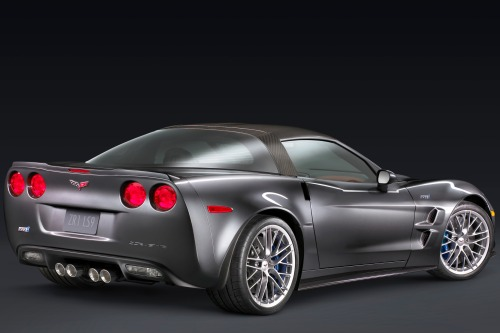
    2009 Corvette ZR1: The Era’s Most Pinnacle American Sports Car

     2009 Corvette ZR-1


    Summary

  • Corvette’s supercar moment: The 2009 ZR1 marked Corvette’s return to the ZR1 nameplate and was designed to compete directly with the world’s best supercars.
  • A supercharged powerhouse: Its hand-built 6.2-liter LS9 V8 produced an impressive 638 horsepower and 604 lb-ft of torque, making it the most powerful production Corvette at the time.
  • Serious performance: The ZR1 could hit 60 mph in 3.4 seconds, run the quarter-mile in 11.3 seconds at 131 mph, and reach a 200-mph top speed.
  • Race-bred hardware: An aluminum frame derived from the C6.R race car, Magnetic Ride Control, a close-ratio six-speed manual, and a high-performance clutch gave the ZR1 both incredible speed and track capability.
  • Built to stop: Massive Brembo carbon-ceramic brakes with six-piston front and four-piston rear calipers provided the stopping power needed for a 200-mph supercar.
  • Michelin performance: After testing multiple tire setups at Virginia International Raceway, GM selected Michelin Pilot Sport Cup tires for the ZR1 to maximize its track performance.
  • Supercar looks: A wide stance, massive 19-inch front and 20-inch rear wheels, functional rear spoiler, and transparent carbon-fiber hood gave the ZR1 the exotic appearance to match its performance.
  • Luxury meets performance: Buyers could outfit the ZR1 with leather, heated power seats, microfiber inserts, a Bose sound system, Bluetooth, head-up display, and other high-end options.
  • Supercar performance without the supercar price: With a $112,000 starting price, the ZR1 delivered Ferrari-, Lamborghini-, and Porsche-level performance for substantially less money and with far lower ownership costs.
  • Bottom line: The 2009 Corvette ZR1 proved that America could build a legitimate world-class supercar, combining 638 horsepower, 200-mph performance, sophisticated chassis technology, and exotic-car capability at a price that made the supercar dream far more attainable.


    2009 Corvette ZR1 Emblem

  • Corvette ZR1 Comeback


    Corvette has always made a big splash with their Z-Series sports cars. Badass Vettes such as the Z06, ZR1, and ZL1 received more power and torque, improved handling capabilities, and all-around upgrades for better track performance than just about any other vehicle General Motors was pushing on the market at the time (except the '14 and '15 Camaro Z/28).

    Chatter started around 2007 about a new version of the ZR1—a ZR1 that would be so performance-packed that it would earn supercar status, with its name mentioned alongside the likes of Ferrari, Porsche, and Lamborghini.


    This first 2009 ZR1 was auctioned off for a million bucks to Dave Ressler. He is also the owner of the oldest known Corvette in existence, #003. 


    6.2-liter LS9


    6.2-Liter LS9

    2009 ZR1 Motor and Transmission

    A 6.2-liter LS9 aluminum V8 with a Twin Vortices Series supercharger and a top-loaded intercooler powers the ZR1. Hand-built in Wixom, Michigan, this powerhouse motor puts out 638 horsepower at 6,500 rpm and 604 lb.-ft. of torque at 3,800 rpm.

    Sure, nowadays there are some stout performers that make more horsepower and torque, but not 13 years ago.

    Controlling all this power is a close-ratio six-speed manual gearbox and a high-capacity, high-performance clutch that makes anyone sitting in the driver's seat feel like they are driving a professionally built race car.

    Performance Stats

    This General Motors engine and transmission combination is responsible for the staggering numbers this Corvette puts down while going in a straight line. This ZR1 gets from 0–60 in 3.4 seconds while reaching 100 mph in a matter of 7 seconds. The Corvette has no problem covering the quarter-mile in 11.3 seconds at 131 mph.

    With a top speed of 200 mph, without a doubt, this was the most capable and powerful Corvette put into production.

    2009 ZR1 Corvette Suspension


    Frame and Suspension

    The ZR1 comes standard with an aluminum frame structure that weighs in at a mere 138 pounds. The frame was the exact frame used on the C6.R race car, giving it a power-to-weight ratio of 5.2 pounds per horsepower.

    The aluminum frame rides on a Magnetic Selective Ride Control suspension. The Magnetic Ride Control was the most sophisticated suspension of its kind. This ride-control system gives the driver two different driving modes to select: Sport ride control, ideal for the racetrack, and Touring mode, which is ideal for everyday driving.

    These modes can be easily switched back and forth in the cockpit with the push of a button. This may not seem like much of a wow factor today, but back in 2009, this convenience was just starting to become a top technology on American vehicles.

    Tires

    With all that power and such a capable suspension, you have to have some way of keeping the tires and wheels sticking to the ground, and in this department, GM spared no expense.

    When testing the Corvette at Virginia International Raceway, the stock Michelin tires were eventually replaced with a set of Michelin Pilot Sport Cup tires. With this change, the ZR1 was able to shred a considerable amount of time off each lap.

    And that's when the decision was made: the Michelins that performed the best would come on the best Corvette ever produced.


    Corvette ZR-1 Wheels

    Braking

    You can't have a vehicle with all that power and ability without having an effective way of stopping it. So massive Brembo carbon-ceramic 15-inch front and 15.5-inch rear vented, cross-drilled rotors were added.

    These rotors can withstand heat of 1,000 degrees Celsius before warping. The brake system includes six-piston calipers in the front and four-piston calipers in the rear.

    When this system all works together, it creates the stopping power you would need for a 200-mph supercar.


    Corvettes First Super Car


    The Looks Of A Supercar

    With a wider stance than the average Vette, the ZR1 is designed to take corners better and get around the track faster. Sporting 19x10-inch wheels in the front and 20x12-inch wheels in the back, the look of the ZR1 says nothing but supercar.

    All buyers had the option to choose the color of the wheels, which included a bright silver-coated finish, a deep black-coated finish, or a chrome finish. All three colors look great, depending on the look you are trying to achieve.

    There were nine color options for the exterior finish, all of which were in an exotic tint, helping give the ZR1 the supercar look that Corvette was ultimately after.

    The spoiler on the back is both functional and proportional-looking, and the see-through carbon-fiber hood really makes a supercar statement.

    Corvette ZR-1 Cockpit

    Interior Options For The ZR1

    When it comes to the interior, the ZR1 came with an abundance of options and colors. The buyer was able to request almost everything, from the steering wheel to the door panels, to be wrapped in rich leather. They also had the option of different model-specific badges to be placed on the inside of the vehicle.

    Power-adjustable, heated leather seats with microfiber inserts could be purchased for a better day-to-day driving experience.

    Corvette also offered a package called the 3ZR. This package included a nine-speaker Bose system, Bluetooth wireless technology, a head-up display, and SiriusXM satellite radio, making sure that ultimate convenience and comfort could be achieved.

    Blue ZR1 20009

    Price Tag And Gas Mileage

    With supercar looks, power, and track times to match, this ZR1 puts otherworldly supercars to shame when you compare price tags to performance.

    When brand new, the MSRP was $112,000, which was much cheaper than a higher-powered Ferrari, Lamborghini, or Porsche at the time.

    The ZR1 also rated surprisingly high in gas mileage for a 2009 sports car. With an EPA-estimated 14 city/20 highway mpg, the Corvette did better than most vehicles with an engine that size.

    The best thing about the ZR1 is that, for the first time ever, Americans who were in the market for a supercar could finally buy an American-built supercar—minus the outrageous cost of maintenance, luxury taxes, and everything else that comes along with owning an overseas supercar.


    .

    Tuesday, April 18, 2023

    Chevrolet Chevelle: The Muscle Car Legend

     1970 Chevelle


    Chevrolet Chevelle the Legend

    The Chevelle was one of the few muscle cars that Chevrolet put into production between 1964 and 1973. Outside of the '73 Chevelle, the muscle car enjoyed some great success through its strong run and continues to be celebrated by all kinds of car enthusiasts. From drag strips to car shows and car auctions, you'd be hard-pressed to go to any car event and not see a few awesome-looking examples.    

    Most Chevelles hold their value very well because they look great stock and when customized, and they are a very important part of the Muscle Car era. Read on to learn a little more about the Chevelle and how it etched its name in muscle car history. 


    '64 Chevrolet Chevelle

    1964 - 1967 Chevelle

    In 1963, when the Chevelle made its way into production for the first time as a '64, there were a of couple different motors to choose from. The largest and the most powerful of them all was a 300 horsepower 327 cubic inch small block. This really didn't hit the nail on the head for consumers, as it was a little underpowered for the power-to-weight ratio. 


    '67 Chevelle SS

    In 1965, Chevelle upped the ante with a 396 cubic-inch motor that produced the type of power that the public was waiting for. The new Z16, 396 V8 produced 375 horsepower. The engine pushed the Chevelle from 0-60 mph in 6.0 seconds and drop a quarter-mile time of 14.66 @ 99.8mph. 

    Minor Change In Style

    The 1966 Chevelle would see some body modification, and although the power rating stayed the same, times at the track would be cut from a 14.66 down to a 14.40 quarter-mile time. This was due to a solid lifter cam and bigger valves given to the 396 cubic inch motor. 

    More Changes For '67


    In 1967, Chevrolet would stick with the same body style for the muscle car but would make some performance changes. 

    Front-wheel disc brakes were factory installed to help stop the wider tires and new 14-inch rims. A new reworked bumper and blacked-out rear panel were also part of the new features the '67 had to offer. 

    Unfortunately, because of GM curb weight standards, it would experience less power and slower times at the track. The biggest engine offered was the L34 396, which only produces 350 horsepower and did 0-60 mph in 6.5 seconds with a quarter-mile time of 15.3 @ 94mph.

    1968-1969 Chevelle


    1968 Chevelle


    For 1968, Chevrolet would try something new with the Chevelle. A new body style would make its way off the production lines. This new look brought about a shorter wheelbase, a longer front end, and a shorten rear-deck lid, giving it a fastback look. Although the 1968 Chevelle got a new look, it received the same power sources as the previous year. 

    The Chevelle's suspension would still be a sore spot with lots of body roll—and slow shifting from the Muncie four-speed left a lot of complaints from consumers. But the one thing that did change was the consumer's choice of rear gears. The axle ratios ranged from 2.73:1 to a dealer-installed 4.88:1 drag Cogs gear ratio.

    Upping The '69's Power Output


    With consumers still having complaints about power, Chevrolet would up the ante again for the '69 Chevelle. Although the badges and the build sheets would say the Chevelle was built with a 396 cubic-inch motor that produced 375 horsepower, it was well known that the motors were bored out to 402 cubic inches. The deceit was mainly to meet emissions standards and to gain a horsepower edge. This plan really paved the way for what was to come in 1970.

    1970 Chevelle 


    454 LS6

    In 1970, Chevelle would see the most sufficient changes toward being a major contender in the muscle car world. Cosmetic changes included the first functioning cowl induction hood with racing hood pins. A newly styled front-end would be implicated, along with some new style rally five-spoke wheels. 

    But the biggest change came in the size of the motor. General Motors lifted the band against producing any motors over 400 cubic inches, giving Chevrolet the green light to build and produce a Chevelle with what would become one of the most popular motors ever made, the LS6 454. Along with the functioning cowl induction hood and the huge displacement, also brought about better-performing engine components that helped produce 450 horsepower and left plenty of room for upgrades.

    1971-1972 Chevelle 


    71-72 Chevelle


    Unfortunately, for 1971-72, the Chevelle would see some extremely harsh decreases in power. In response to GM's new rules that all engines must run on unleaded fuel and meet every EPA restrictive emission standard, the muscle car era was starting to become a thing of the past. There was one good thing about the years of '71-'72—although the big 454 motor's power was lowered due to EPA emissions standards, you could still order them, and if you knew what you were doing, upgrading them to make the power a 1970 455 did was not a huge task.

    The 1973 Chevelle No Longer Looked Like A Chevelle 


    1973 Chevelle


    For the last year of the Chevelle's existence, it got a completely new body style and the motors had even less power. These cars would be the least liked among the 9-year production run, and even to this day are not a big hit at drag strips, car shows, or auctions.

    1969 COPO Chevelle 


    1969 COPO Chevelle


    In 1969, Chevrolet offered one of the rarest Chevelles to date, the '69 COPO. The COPO was designed specifically for the drag strip. It came with a 427 cubic-inch powerplant that produced an underrated 425 horsepower and was capable of producing quarter-mile times of 13.3 @ 108mph. The COPO Chevelle was undoubtedly the fastest production Chevelle that Chevrolet ever produced. Like the other Chevrolet COPO Muscle Cars, this Chevelle has a cult following and draws big crowds and big numbers at auctions.  

    Chevelle hood pins


    The Reasons for Chevelle's Popularity 

    What makes the Chevelle so popular among consumers and muscle car fans? 

    The price, the size, the style, and the power. As a mid-size car, you could put your whole family in one and head to the grocery store, go shopping, come home, drop the family and the grocery off, and then head to the drag strip for some race time. 

    Gilmore Muscle Car Musume

    Saying Good-Bye to the Chevelle and Many Other Muscle Cars

    Although the Chevelle was canceled after 1973, it was not the only muscle car that got the ax. The GTO, Oldsmobile 422, the Plymouth Roadrunner, and many other muscle cars would see the same fate right around the same era due to the pursuit to find more fuel-efficient and economy-friendly cars. But the Chevelle and all of its Muscle Car brothers and sisters, still to this day are extremely popular among car enthusiasts.

    1959 Corvette: Unbeatable Purple People Eater MKIII

         Summary Born to stand out: The Corvette team painted their cars metallic purple with white trim so they could actually find them in th...