Thursday, May 2, 2024

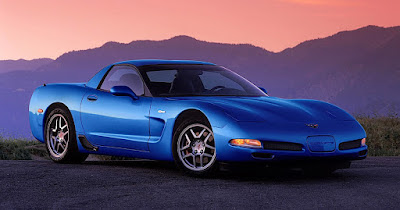
2001 Corvette Z06: The First Modern Day Z06


2002 Corvette Z06


Summary

  • The original Z06 was born for racing: The first Corvette Z06 arrived in 1963 as a road-course-focused package, with only 199 produced and sold.
  • It wasn't exactly a luxury Corvette: The C2 Z06 was all about performance, with a 327, four-speed transmission, upgraded suspension, massive brakes, and an optional 36.5-gallon fuel tank.
  • The Z06 name disappeared and came back swinging: The 2001 Corvette Z06 brought the legendary name back with a 5.7-liter LS6 V8 producing 385 horsepower and 385 lb-ft of torque.
  • The LS6 wasn't just an LS1 with a few tweaks: Corvette engineers redesigned the intake, cylinder heads, combustion chambers, camshaft, valve springs, pistons, and other components to build a serious high-performance V8.
  • The power had somewhere to go: A beefed-up clutch, larger driveshaft, revised M12 six-speed transmission, and shorter lower gears helped put the LS6's power to the pavement.
  • The suspension meant business: The FE4 setup brought revised shocks, a stiffer rear transverse leaf spring, and stiffer front and rear anti-roll bars.
  • The tires got serious, too: Wider Goodyear Eagle F1 SC tires and lightweight 10-spoke wheels gave the Z06 the hardware it needed for hard cornering.
  • Chevrolet went hunting for pounds: Titanium mufflers, lighter glass, and the elimination of run-flat tires helped bring the Z06's curb weight down to 3,118 pounds.
  • The Cobra R had a fight on its hands: Ford's Cobra R produced the same 385 horsepower and 385 lb-ft of torque, but the Z06 offered more street-friendly equipment while still delivering serious track performance.
  • The numbers backed up the attitude: The Z06 was capable of 0-60 mph in 4.3 seconds, a 12.7-second quarter-mile at 113 mph, a 170-mph top speed, and .98 Gs in cornering, according to the figures presented in the article.


2001 Corvette Z06 Emblem

The 2001 Corvette Z06 wasn't just another C5 Corvette. It brought the Z06 name back from the past, where track-focused attitude, serious hardware, and performance were the name of the game.

The 2001 Z06 was potent, had very little competition, and made it easy for Chevrolet to mock their Ford Mustang revivals.

So when and why did this Z06 phenomenon start?
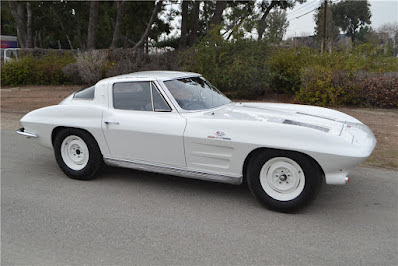

1963 Corvette Z06


1963 Corvette Z06

The first Z06 became available in 1963, and only 199 were produced and sold. The Corvette Z06's sole purpose was to be sold for road-course racing. These cars came equipped with a 327-cu.-in. (5.4-liter) engine, a four-speed transmission, beefed-up suspension, and a massive brake-system upgrade that included dual master cylinders. Buyers could also check the box for an optional 36.5-gallon fuel tank.

The thing about these C2 Corvette Z06s was that you didn't just walk into a dealership and buy one. You had to know which boxes to check on the order form if you wanted one of these race-ready RPO Z06 Corvettes. And, just like the 2001 Corvette Z06, you didn't get many luxuries with the car.

It was truly built for one thing:

Going fast.
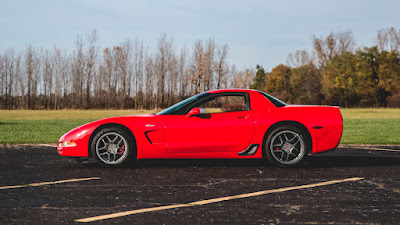

2001 Corvette Z06


2021 Corvette Z06

This Corvette was built to surprise and dominate the market. The Z06 was designed for the track and pushed the boundaries of what was really possible from a production car that could drive to the track, lay down better times than its competition, and then drive back home with the air conditioning kicking and the radio blasting.

  • 5.7-liter LS6 V8
  • 6-speed manual transmission
  • 385 horsepower and 385 lb-ft of torque
  • New FE4 suspension
  • Bose speaker system
  • Leather bucket seats
  • 17-inch front and 18-inch rear wheels wrapped in Goodyear Eagle F1 SC tires
  • Hardtop only
  • Brake coolers
  • Curb weight: 3,118 pounds
  • Fuel economy: 17 city / 26 highway

  • Z06 Engine Corvette

    Engine And Transmission

    The LS6 is essentially a more powerful version of Corvette's LS1 V8. The LS6 engine upgrades started with a redesigned intake manifold featuring better-flowing internal passageways. Reengineered cylinder heads created more flow through the intake and exhaust valves, while the combustion chambers were redesigned to reduce valve shrouding.

    All these upgrades led to a higher compression ratio, which then required a redesigned thin-wall cast-iron exhaust manifold system to provide a smoother exit for the exhaust gases.

    Of course, all that extra airflow wouldn't be worth much without a redesigned camshaft. Corvette engineers installed a beefier cam with more valve overlap and greater valve lift. Chrome-vanadium-steel valve springs and stronger pistons cast from a more durable alloy were also part of the engine's design for added toughness.

    And finally, the LS6 was engineered with windows cast into the internal crankcase walls to help air escape from underneath the burning-hot pistons.

    This new engine setup gave the Corvette Z06 385 horsepower at 6,000 RPM and 385 lb-ft of torque at 4,800 RPM, with a 6,500-RPM redline.

    Between all that power and the rear wheels was a beefed-up clutch with lighter pedal effort, a larger-diameter driveshaft, and a revised six-speed manual transaxle. The new M12 gearbox received shorter first-, second-, and third-gear ratios to better utilize the higher-revving LS6. All gears were 10 to 16 percent shorter except fourth gear, which remained the same.
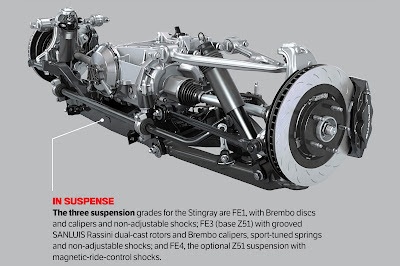
    Corvette Suspension

    2001 Corvette Z06 Suspension

    More power always means more changes all around. To accommodate the power of the LS6, Corvette went with a new FE4 suspension that included revised shock calibrations, a stiffer rear transverse leaf spring setup, and stiffer anti-roll bars for the front and rear.

    To add some ground support, each corner of the Vette received 1-inch-wider tires, bringing them up to 9.5 inches wide in the front and 10.5 inches wide in the back. New custom lightweight 10-spoke wheels were wrapped in Goodyear F1 Eagle tires: 265/40ZR-17s in the front and 295/35ZR-18s in the rear. The F1 Eagle SC tires were designed with more flexible sidewalls by doing away with the famous run-flat tire design. This permitted a half-degree more negative camber to keep the tread flatter during hard cornering for track use.

    To prove the Corvette was built for business, engineers found places around the car where they could shave pounds off the curb weight. Helping save weight was the deletion of the run-flat tire design, titanium mufflers, and lighter windshield and rear glass, all of which helped bring the Corvette’s curb weight down to 3,118 pounds, 38 pounds lighter than its original form. A lot of weight was saved with the titanium mufflers alone, but the added weight of the new suspension offset a lot of those weight savings. 
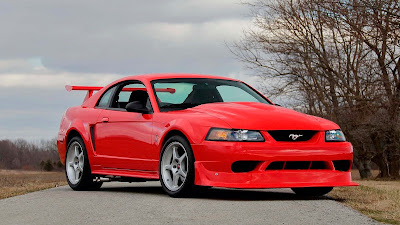
    2001 Cobra R

    Step Aside Cobra R

    The Cobra R was making some big waves at the track. Performance numbers were pretty impressive, and the Corvette Z06 was Chevrolet's answer to those performance numbers.

    The Cobra R and the Z06 were pretty close in performance numbers at the time (numbers for Z06 below). The Cobra R turned numbers out of its 5.4-liter that looked a little like this: 385 horsepower and 385 lb.-ft. of torque (the same as the Z06), 0-60 mph in 4.7 seconds, a quarter-mile time of 13.2 (Ford tested) and 12.9 (Motor Trend tested) with a top speed of 170 mph, and stops from 60-0 in 127 feet.

    Although the numbers were somewhat close, the Corvette beat out the Cobra R in other places. The Cobra R lacked air conditioning, an audio system, rear seats, sound dampening, and cruise control. The Corvette also lacked a back seat, but that's because it was never meant to have one; it wasn't a compromise. Also, because of the limited number of Cobra Rs that were built, the sticker price showed $55,5ish, but you couldn't buy one for under $75,000. The Corvette Z06 stuck pretty close to its price tag of just under $50,000 without a lot of limited edition inflation.
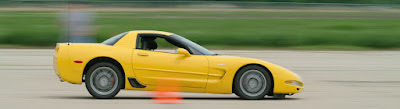
    2001 Corvette Z06

    Let's Go Over Some 2001 Corvette Z06 Numbers 

    The 2001 Corvette Z06's proof of superiority is in the numbers. A 0-60-mph time is recorded at 4.3 seconds, and a 70-mph to 0 stop takes only 152 feet. In a quarter-mile sprint, the Corvette can cover it in 12.7 seconds at 113 mph. Hitting 150 mph will only take you 28 seconds total, while a top speed of 170 mph is easily manageable. Although the top speed does suffer a little bit as the C5 Vettes will hit 175 mph, that's because of the Z06's closer transmission clutch gear ratios. 

    Hitting corners is another place where the Corvette Z06 shows no mercy to its competitors. Pulling .98 Gs in and out of corners is just what this sports car does, and that actually beats out all other sports cars out there, including the Viper GTS and the Ferrari 360 Modena, which are above the Corvette Z06's price bracket by a lot. 
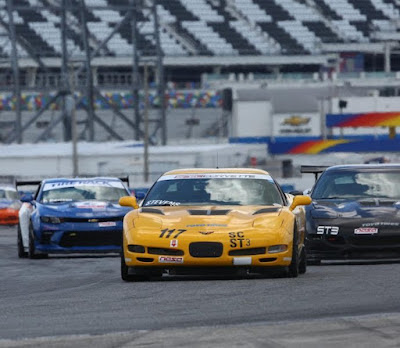

    Racing Z06 Corvette

    Z06 Performance Built

    Making sure everything was performance-built was what this Corvette was all about. Even both the dual mesh grilles in the front and the rear brake coolers in front of the rear wheel wells are completely functional.

    The 2001 Corvette Z06 is just like the new Z06s. Although classified as a sports car, it performs like a supercar compared to its competition.

    The Most Recent Z06 Corvette

  • C2 Z06 (1963): Introduced as a special performance equipment option package for the second-generation Sting Ray.
  • C5 Z06 (2001–2004): Revived and officially designated as its own distinct high-performance model variant with a fixed-roof design.
  • C6 Z06 (2006–2013): Powered by a massive 7.0L LS7 V8 engine featuring lightweight aluminum framing.
  • C7 Z06 (2015–2019): Equipped with a supercharged 6.2L LT4 V8 engine pushing 650 horsepower.
  • C8 Z06 (2023–Present): Shifted to a mid-engine platform featuring a high-revving, naturally aspirated 5.5L LT6 V8 engine. 

  • Wednesday, February 7, 2024

    Rare Chevrolet 454 SS Half-Ton Pick-Up From The Early '90s

       1990 Chevy SS


    Summary


  • Production: Only around 17,000 Chevy 454 SS trucks were produced between 1990 and 1993.
  • Big-Block Power: The 454 SS was the only way to get a factory 454-cu.-in. big-block in a half-ton Chevy pickup.
  • Performance: While it isn't a match for today's performance vehicles, the 454 SS delivered plenty of old-school muscle.
  • Hot-Rod Potential: Its truck platform makes it easy to customize with upgrades like a Cowl Induction hood, lowering springs, and aftermarket wheels.
  • Competition: The 454 SS went up against performance trucks like the GMC Syclone, GMC Typhoon, and Ford Lightning.
  • Collector Appeal: With relatively low production numbers and classic Chevy styling, these trucks have plenty of potential for collectors and old-school gearheads.


    Black Chevy Emblem


  • With only 17,000 produced between 1990 and 1993, these Chevy 454 SS trucks are some of the rarest Chevrolet C1500s of the '90s. In fact, purchasing one of these badasses was the only way you could get a 454-cu.-in. big-block stock in a half-ton truck.

    There is nothing really too special about these trucks. Let's face it: in this day and age, a higher-trim crossover could probably take it off the line and beat it down the quarter-mile. But the 454 SS was outfitted for a big-block, meaning a healthier 454 could be built and dropped in with no problem.

    Also, it's a truck, and you can always do some cool stuff to a truck. A Cowl Induction hood, lowering springs, rims, etc.—with the right imagination, you can turn a 454 SS truck into a showstopper without hurting its original value.


    Power and Specifications

    • 230–255 horsepower
    • 385–405 lb.-ft. of torque
    • HD 4-speed automatic transmission
    • 3.73:1–4.10 rear-end ratio
    • 10 mpg city
    • 500 lbs. max payload
    • Dual exhaust
    • Bilstein shocks
    • 7.7-second 0–60 mph
    • 15.9 seconds at 87 mph — 1/4 mile
    • Colors: Black / Summit White / Victory Red


    Chevrolet 454 SS


    The Chevy 454 SS trucks had some serious competition in the early '90s—the GMC Cyclone, Typhoon, and the Ford Lightning. But for Chevy, this was their way of showing everyone that people still craved a big-block, even if it wasn't the fastest truck on the market.

    You might come across one of these sweet Chevys for sale with a nice price tag on it. They are not very sought-after by vehicle collectors right now, so if you find one in good shape, it might not be a bad investment. They have the potential to be nice little street cruisers with a lot of old-school power. And for you old-school gearheads, that might be a class you'd fit right into.


    Thursday, November 9, 2023

    1966 Chevrolet Corvair Yenko Stinger: Rare And Cool


    1966 Chevrolet Corvair Yenko Stinger

    Summary


  • Yenko’s road-racing experiment: Long before his famous Camaro, Nova, and Chevelle drag cars, Don Yenko was focused on road-course racing and looking for a lighter alternative to the increasingly heavy Corvette.
  • Enter the Corvair Corsa: Weighing roughly 500 pounds less than a Corvette, the rear-engine Corvair Corsa gave Yenko the lightweight platform he needed to build a serious competition car.
  • A major performance makeover: Yenko added forged pistons, ported heads, a high-performance distributor, lightweight flywheel, limited-slip differential, quicker steering, upgraded suspension and brakes, an oil cooler, and other racing hardware.
  • Built for the SCCA: To qualify for SCCA competition, Yenko needed to produce at least 100 road-legal Stingers and paint them in the required American racing colors of white and blue.
  • A race against the clock: With the 1966 racing season approaching and only about a month to meet the production requirement, Yenko and his crew worked seven days a week through December to finish the cars in time.
  • Four levels of power: Every Stinger used a 165-cubic-inch (2.7-liter) flat-six with four carburetors, but buyers could choose from approximately 160, 190, 220, or 240 horsepower, allowing the car to compete in different racing classes.
  • Serious chassis upgrades: The Stinger wasn’t just about horsepower. Yenko improved the brakes, suspension, steering, gearing, and weight distribution while removing the rear seats to help meet sports-car regulations and reduce weight.
  • A very different Yenko: Unlike the big-block muscle cars Yenko became famous for, the Stinger was a lightweight, rear-engine road racer designed to attack corners rather than simply dominate the drag strip.
  • The Corvair safety debate: The Stinger’s rear-engine layout even proved beneficial in one memorable crash involving Yenko’s daughter, who credited the car’s design with helping protect her during a collision.
  • Bottom line: The 1966 Yenko Stinger was Don Yenko’s early masterpiece—a lightweight, highly modified Corvair that transformed an unconventional compact into a legitimate SCCA road-racing weapon and helped establish Yenko’s reputation long before his legendary muscle cars.


  • 1966 Corvair Stinger Emblems


    Everyone should know about the iconic late-'60s and early-'70s Yenko drag cars that dominated the tracks—Camaro, Nova, and Chevelle. But would you be alarmed to know that Don Yenko was working his high-performance magic long before those muscle cars came along?

    Don Yenko had his eyes on a different type of racing before he built his horsepower-heavy drag cars. From the late '50s to the mid-'60s, he was into road-course racing. He first raced Corvettes professionally, but he was getting beaten pretty consistently by the Shelbys. Don realized the reason was simple: the Corvettes had become just too heavy to compete.


    Corvair Corsa


    Enter The Corvair Corsa

    The Corvair Corsa weighed 500 pounds less than the Corvette, making it a very viable candidate for some of Yenko's genius power upgrades. So in true Don Yenko fashion, he went to the drawing board and came up with the blueprint needed to retrieve the success he was looking for. 

    The Corvair Corsa weighed 500 pounds less than the Corvette, making it a very viable candidate for some of Yenko's genius power upgrades. So, in true Don Yenko fashion, he went to the drawing board and came up with the blueprint needed to get the success he was looking for.

    Yenko Upgrades for the Corvair

    • Forged Pistons
    • Ported Cylinder Heads
    • High-Performance Distributor
    • Stiffer Suspension
    • Cadillac Dual Master Cylinders for Brakes
    • Lightweight Flywheel
    • Four-Speed Manual
    • Limited-Slip Differential (3.89 Rear Gears)
    • Added Oil Cooler
    • Quicker Steering Ratio
    • Removed Rear Seats (making it eligible to be labeled a sports car and saving weight)
    • Front Spoiler
    • Rear Fiberglass Engine Cover w/Spoiler
    • Aftermarket Steering Wheel


    Time To Get In Sync With SCCA Regulations 

    It turns out that the SCCA didn't have too much of a problem with the new Corvair race car entering competition. Instead of giving Don Yenko a hard time, the SCCA's two biggest requests for giving the car SCCA homologation (stamp of approval) were to have at least 100 road-capable Yenko Stingers produced and to have the car painted white and blue.

    White and blue were the American colors used to identify American cars on the race course, as every country had its own color codes to follow.

    Needing to have all 100 cars completed by January 1, 1966, to compete in the 1966 season—and already being in late November—gave Don just one month to complete the project. Don and his men worked long hours, seven days a week, all through December, with one exception: Christmas.

    Despite the grips and grinds of the overworked workers, they proudly finished the quota in time.


    Covair Yenko Engine Bay


    Four Separate Power Levels

    All Stingers came with a 165-cu.-in. (2.7-liter) flat-six engine setup with four carburetors that offered four different Yenko power options. The base Yenko option came with roughly 160 horsepower. From there, it went up a level to 190 horsepower, then leveled up to 220 horsepower, and, for the big dog of them all, you could get one with 240 horsepower.

    The different options were mainly so the Yenko Stinger could qualify to race in all road-course classes.


    Interesting Fact 

    Yenko's daughter received a Stinger to drive when she first got her driver's license. Two weeks into driving, she had an unfortunate accident that sent her headfirst into a utility pole.

    Because the engine was in the rear and the spare tire was in the front trunk, the Corvair basically bounced off the pole instead of crushing the front end and sending the engine into the front seat.

    For a car that has been dubbed "unsafe at all speeds," Yenko's daughter calls it the car that is "safe at all speeds."


    Friday, October 6, 2023

    1970 Buick GSX Stage 1 455: Ten Things To Know About The Torque Monster Muscle Car

     
    1970 Buick GSX

    From 1970 to 1972, Buick sold its rare GSX muscle car to the public, finally getting an edge over its other A-body competitors. The Chevelle SS, GTO Judge, and Olds 4-4-2 weren’t quite their enemies, but Buick needed to bring something to the table to compete with them. The GSX and the GSX Stage 1 did that and more for Buick. Hosting more power and torque, better times at the racetrack, a sportier suspension, and a more comfortable interior with better materials, these classic cars put Buick at the top of the muscle car list.


    1970 Buick GSX Spoiler

    With eye-catching stripes, a front and rear spoiler, a hood tach, and the GS ram-air hood, the GSX was definitely a car that would get you noticed when driving down the road. And if you felt like you weren’t getting noticed enough, a pedal-to-the-metal action to activate Buick's massive torque offering would burn the tires off with ease—letting everyone around you know that your Buick GSX meant business. Tough to drive when you lack traction, but fun to drive if you knew what you were doing.

    All the muscle cars from this era were fun, but they were being produced on borrowed time. When the full weight of stricter emissions standards was imposed, the muscle car industry and its success in pleasing gearheads were over.


    10. The GS455 Stage 1 Didn't Draw Enough Attention

    1970 Buick GS455

    Although the Buick GS Stage 1 shared the same A-body structure as the GTO Judge, Chevelle SS, and the Oldsmobile 4-4-2, Buick just couldn't get its sales up because it couldn't shake the stigma of being a car that your grandmother would drive. So, midway through the 1970 production year, Buick came out with the stout, sporty-looking Buick GSX.


    9. The Buick GSXs Are Limited Edition


    White Buick GSX

    It may not seem like it because there is an abundance of GSXs out there, but many of them are clones. If you go to the GS Nationals in Kentucky, it’ll seem like there are way more than the numbers that are shown to have been produced. But thanks to companies like T/A Performance from Arizona, people have the opportunity to own an almost identical GSX without paying the price of a low-mileage, real GSX.


    Black and Gold Buick GSX

    Nowadays, with the way technology is, it is very hard to tell the difference between a real GSX and a clone without an official build sheet. But to put the numbers in perspective, there were 678 Buick GSXs built in 1970, 124 built in 1971, and only 44 built in 1972. Sure, building a clone for a good price as an average car guy is a good thing, but for the serious car collector, it makes their super-rare, numbers-matching GSX seem a little less important or rare when you can’t tell the difference between a real one and an imposter.


    8. Automobiles to "Light Your Fire" Buick's Slogan


    Buick "Light Your Fire"

    Depending on who you ask, either the Buick slogan campaign helped both Buick and the Doors or it helped Buick and hurt the Doors. The Slogan comes from a famous Doors song, “Come on, Baby, Light My Fire.” GM paid the touring band $75,000 for the use of the words in print, radio, and TV ads. 

    The new GSX sport appearance package and the 1966 song lyrics were a campaign to bring the fire that the GSX needed to help Buick shake the grandma’s church-going, grocery-getting reputation 
    it acquired in the past.


    Black and Green Buick GSX

    On tour at the time, minus Jim Morrison, the Doors had no problem with the idea, but Morrison was furious. Apparently, Morrison was so enraged that he threatened to set a Buick on fire on stage during their next concert. He wanted his bandmates and the band’s label, Elektra, to cancel the contract, but the damage had already been done.


    7. Underrated Horsepower and Torque Rating


    GS Buick 455 Stage 1 Engine Bay

    It was widely known that the advertised 360 horsepower and 510 lb-ft of torque were underrated by a lot. Of course, Buick wanted to let people know, but then they would have to worry about being restricted and ultimately forced to eradicate the building of the powerful GSX Stage 1 455 in 1970.


    It was widely known that the advertised 360 horsepower and 510 lb-ft of torque was underrated by a lot. Of course, Buick wanted to let people know, but then they would have to worry about being restricted and ultimately forced to eradicate the building of the powerful Stage 1 455 in 1970.

    Most people, including NHRA, claimed that the engine probably put out 400+ horsepower. Using the GSX's time in the quarter-mile and the weight of the car, experts who tested the Buick knew that there was more horsepower than what was being advertised.


    6. Motor Trend Names the 1970 Buick GSX “The Quickest American Production Car”


    Buick GSX Moving Fast

    Although the 1970 Buick GSX was named the quickest, the 1971 and ’72 GSXs fell victim to the emission laws and received lower-compression V8 engines. In fact, you were even able to order your GSX with a 350, 400, or a 430 cu.-in. motor, unlike in 1970, when a 455 cu.-in. engine was your only option. You still got the sporty look, but the power the Buick had was starting to take a huge hit. The only good thing for Buick was that everyone else in the industry had to follow the same emission rules and regulations, making your typical car guy very sad.


    1970 Buick GSX


    5. The Ram Air Hood and Housing Never Really Functioned


    455 Stage 1 Buick Engine

    In theory, the ram-air hood on the Buick GSXs should have helped whatever powerplant you had under the hood gain about 8% horsepower; at least that’s what Buick was claiming. Unfortunately, it didn’t. In fact, most experts who tested the ram-air system claim to have noticed no difference. Even worse, in race testing, experts noticed that the housing and the scoops themselves were too oddly shaped and even restricted flow.

    Taking the whole ram-air system off and letting the carburetor breathe without the ram-air housing actually promoted a little better performance. These air-cleaner housings do look cool, but they don’t serve up any extra horsepower gains.


    4. There Was an Internal Ban on Large Buick cu.-in. Engines


    Buick Engine Dyno

    Lifting the large-engine ban was a no-brainer for Buick because they weren’t just competing against their A-body siblings, but they also had to throw down with Fords and Hemis. Buick knew that if they were going to keep up with all the other muscle cars, a 400 cu.-in. engine just wasn’t going to cut it. They also knew they were going to have to make more changes than just engine displacement upgrades.


    3. Heavy-Duty Suspension, Disc Brakes, Wheels, and Tires


    1970 Buick GSX

    To add to the performance of the GSX, Buick made sure that the suspension could handle the power. A front anti-roll bar was included, along with stronger shocks and rear lower control arms. All the suspension bushings were upgraded to stiffer, high-performance bushings. Also included was a quick-ratio steering gearbox to give the driver a better road feel.

    For the brake system, there were a few different options. There were 11-inch ventilated rotors in the front with single-piston calipers as long as you ordered the Stage 1 455 GSX. In the rear, there were upgraded drum brakes, and power assist was optional. On different orders, you might have received drum brakes all the way around.


    2. Find That GSX Build Sheet


    GSX Build Sheet

    Finding the build sheet for a GSX is a big deal. What the build sheet says will give you an idea of how much you should be paying for a particular vehicle. Even if a true GSX is a little beat up, paying big bucks for one isn't uncommon, and it could still be very well worth the money. But if you pay big bucks for a GSX, and it’s really just a Skylark in disguise, you can lose big money.


    Buick GSX Build Sheet

    There is no particular place to look for a build sheet. Buyers have mentioned finding them in all kinds of different places. If the owner hasn’t found one yet, you can try looking under the carpet, in the rear seat cushion springs, under the dash, or on top of the gas tank, in between the sound deadener. That is the most common place to find a lost build sheet.


    1. The Little Extras That Make the GSX Different From the GS


    1970 Buick GSX

    There were some other features that you would get with the GSX that you wouldn’t get with lower-trim level Buicks. Color-matching mirrors and headlight bezels added to the colorful look of the GSX. The rear spoiler was an option on some GS Buick 455s but with the GSX package, it was standard.


    Buick GSX Spoiler

    Other features were a standard heavy-duty cooling system, the option of a close-ratio four-speed or three-speed manual, or a TH400 automatic transmission. For the rear gear ratio, if you order a Stage 1 package, you would get bumped up to a positraction 3.64:1 axle that would help you burn the tires and create smoky hole shots whenever you wanted to.

    GSX Grille

    Oldsmobile Cutlass 442: The 1991 Cutlass Calais Quad 442 W41 That Deserves A Second Look!

    Summary  Forgotten Performance: The 1991 Oldsmobile Cutlass Calais Quad 442 W41 was a legitimate performance coupe that often gets overlook...