Wednesday, August 28, 2013

2018 Trans Am and Firebird Speculations


2018 Trans Am-Firebird

There is a lot of fluff about if GM will ever come back with a Trans Am or a Firebird, but that is just what it is, fluff. If GM does decide to bring it back there would be a lot of car enthusiast very happy with their decision. But if they are planning on making this type of move, they are defiantly keeping a very tight lid on what they're going to do and when.


There is one fact that has been made very clear by GM. If they do bring back the Trans Am and Firebird, they will not be bringing back the Pontiac line. All production would be under the authority of GM and the Pontiac name would not even be used for the very well loved sports cars. One last thing that is pretty well-known about the situation is that they would probably be produced alongside if not in the same factories as the Camaros, and would be sold at Chevrolet dealerships where Camaros are sold.


Build Your Own Trans Am/Firebird

If you are someone who does not want to wait for GM's decision and you must have one, there is an alternative. Companies like Trans AM Depot and a few others that can be easily found on the Internet, build awesome looking prototypes of Trans Ams, Firebirds, Hurst and Firehawks that can be customized personally and purchased by private owners.


The process is really cool, brand new Camaros are purchased than ground effects, bumpers, spoilers interior and whatever else that needs to be replaced is replaced with prototype parts for the unique styling that replicas what a new Trans Am would probably look like if GM was to start making them again. The nice thing about these projects are that they're made from new Camaros, that should be enough to ensure that the cars that you will be purchasing are a great American Motor product.

Saturday, August 17, 2013

2015 Cadillac Escalade

Image result for 2018 escalade

The Cadillac division of General Motors' has announced that it will unveil its next-generation Escalade SUV in New York City on October 7, it will be going on sale in 2014 as a 2015 model. According to Auto Blog who's reporters have caught glimpses of the new Cadillac, the Escalade is anticipated to have a much more aggressive and more flashy look than that of its current model. It will have longer lines, thin headlines and an egg-crate grill, but the inside is where the real upgrades are expected to take place.


The powertrain is expected to go a little bit like this: At launch, a 6.2-liter V-8, rated at roughly 420 horsepower and 450 pound-feet of torque should be offered. But you can expect more powertrain options to be offered further down the road.

When it comes to the interior it looks like the new cabin is where Cadillac will set itself apart as a luxury brand. The Escalade boast a CUE infotainment system accessorized with a large touch screen and roomy interior, like always, but this time they will implicate a much needed electronically motorized 3rd row. 

Not unveiling the Escalade at the Texas State Fair is the first time for a vehicle of it's kind, but GM seems confident that New York City is the place that is most appropriate for the launch when considering the Cadillac’s customary consumer base. And that clientele seems to be pretty happy with what the Cadillac has had to offer so far, demonstrated by the fact that Escalade sales are only down 5 percent this year even though consumers are aware that a new model will soon be launched.

Despite the current Escalade debuting back in March 2006, sales for the SUV, including its extended-length ESV and pickup-version EXT variants, have stayed roughly flat in 2013. But Cadillac has still sold more than 12,500 Escalades through July, or nearly as many as the Infiniti QX56/QX80 and Land Rover Range Rover combined. Escalade sales are nearly triple the also-aging Lincoln Navigator, which at one point was its most direct competitor. The sales lead may eventually diminish as the Escalade EXT and the Chevrolet Avalanche sibling won't likely return . Through July, the EXT still accounted for 10.6% of all Escalade sales.

Like Ford, now that the U.S. automaker has been able to resurrect such significant success with its fuel-efficient compact cars and full-sized pick-up turcks, GM is ready to turn its attention to its luxury brands and make sure its recent progress is sustainable across the board. The Cadillac ELR is also poised to go on sale in early 2014, and reflects the brand’s future design strategy with its sleek lines, aggressive stance, and a crisp, modern look. The ELR is also a hybrid vehicle and features a 1.4-litre engine, good for about 84 horsepower, and an electric motor that provides its 295 pound-feet of torque.


Saturday, July 27, 2013

Cadillac's Turbo Technology

Where is Cadillac Today?                        


Cadillac has been a leading luxury auto brand since 1902. Today Cadillac is growing globally, driven by an expanding product portfolio featuring dramatic design and technology. More information on Cadillac appears at www.cadillac.com. Cadillac's media website with information, images and video can be found at media.cadillac.com.


No More Turbo Lag

Turbocharging increases power and performance with efficiency, but the delay in the delivery of power – known as “turbo lag” – has historically been its key limitation.

That’s about to change.

Cadillac’s first-ever Twin-Turbo, available on the 2014 CTS Vsport midsize luxury sedan and XTS Vsport full-size luxury sedan in the U.S. this fall, kicks turbo lag to the curb with a unique combination of smaller turbochargers, top-mounted throttle body and shorter air pathways.

The Cadillac Twin-Turbo V-6’s patented air flow design, which eliminates circuitous heat-exchanger tubing, makes the most of engine packaging efficiency to improve torque response time over other air flow designs.


Rated at 420 horsepower on the all-new 2014 CTS Vsport and paired with Cadillac’s first eight-speed transmission, the Twin Turbo is one of the most power-dense engines in the midsize luxury sedan segment, rated at an SAE-certified 420 horsepower and 430 lb.-ft. of torque.

Air flow routing volume is reduced by more than 60 percent when compared with a conventional design that features a chassis-mounted heat exchanger. The water-to-air cooler system achieves more than 80 percent cooling efficiency with only about 1 psi flow restriction at peak power for fast torque production.

“By creating a very short path from the turbos to the throttle body, the compressors are able to draw air directly from the inlet box and send pressurized air through the intercooler immediately,” said Richard Bartlett, Cadillac assistant chief engineer for the 3.6L engine. “This gives the driver a more immediate feeling of power on demand.”

Using two smaller turbochargers rather than a single larger turbo also helps ensure immediate performance because smaller turbochargers spool up quicker to generate horsepower-building air pressure that is fed into the engine. An integrated charge air cooling system also contributes because the compressors blow through very short pipes up to the intercooler.

The single centrally located throttle body atop the engine controls the air charge from a pair of turbochargers after the temperature is reduced in the intercooler. This design fosters more immediate torque response and reduces complexity by eliminating the need for a pair of throttle bodies.

Together smaller turbochargers, top-mounted throttle body and shorter air pathways help sustain peak torque over a broad range – 1,900 to 5,600 rpm – for a confident feeling of power in almost all driving conditions, such as accelerating or overtaking traffic on the highway.

“The Cadillac Twin-Turbo intercooler design builds on our experience with the 6.2L supercharged engine used on the current CTS-V Series,” Bartlett said. “That means more performance for drivers without sacrificing efficiency.”


Friday, May 31, 2013

2017 Chevy Silveradro and GMC Sierra: Ready for Advertisement


You can't doubt that GM is ready for some major advertising. The all-new Chevy Silverardo and GMC Sierra are ready for some exposure. With a V-8 that boasts better fuel economy than the Ford EcoBoost technology and better sturdier builds all-round, GM is ready.


In the lure of the coming of GM's new trucks, stock prices and work productions have seen a definite rise. This is something that the GM corporation really needs. GM has even cut back on the summertime shut down to keep production up.

Image result for 2017 chevy silveradoLater this winter is when we can expect to see the money spent on advertisements. This is a big push for GM as their truck sales are reportedly 60% of GM's profits.

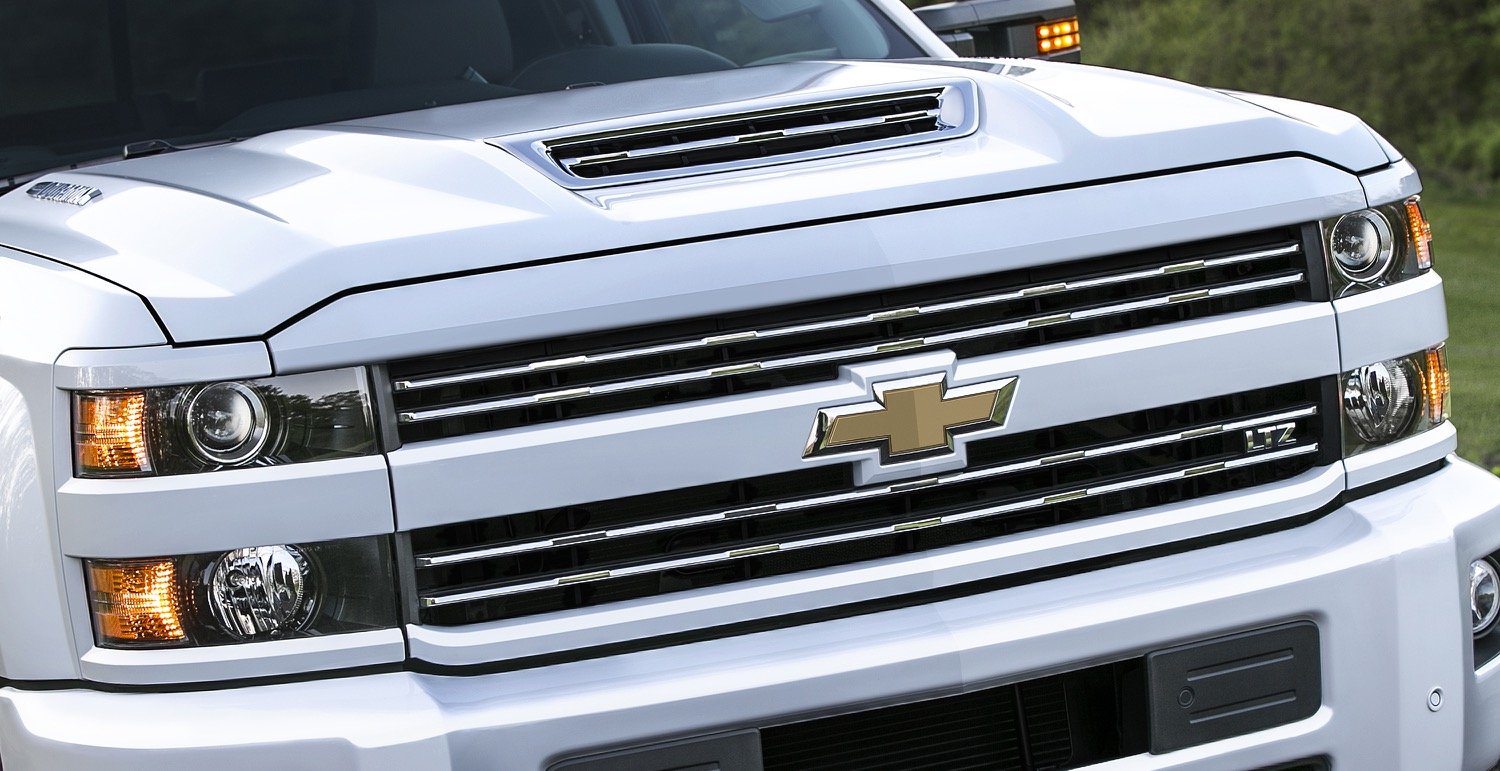
The new hoods do serve a purpose and looks great too. The GM trucks should bring enough work for everyone. Factory workers will have to be trained, GM engineers have been rehired to help make sure the new technology will be worked incorrectly and everyone in the GM spectrum should see a sufficient amount of work increases. GM and everyone hopes, especially Detroiters, that this increase in work will help the slowly improving economy. 


Wednesday, May 22, 2013

Corvette Stingray or Camaro ZL1: Which is a Better Buy

 Corvette or Camaro

It's tough to say which is a better buy?


But I think it's safe to say they're both completely Bad Ass!

Awesome power.

Awesome styling.

Awesome reputation. 

And well, Chevrolet's Greatest Hits.

So, which one?

The Vette looks awesome, and lets face it, who would not want to be seen in a American icon. I think when you drive in a Vette it gives you a certain amount of confidence. It puts you in a different class of car guy. Plus, this Corvette could very well be one of the Baddest Ass looking Corvettes ever made.


When it comes to Camaro, there is plenty of prestige there as well. Pretty much all the technology available to today's muscles cars is implicated on it, and lets not forget it has its legendary status as well. And, there is too more reasons not to over-look the Camaro: less pricey and more spacious.  

So which one would I choose, doesn't mater.

So which one should you choose? I guess that just depends on what kind of Bad Ass you want to be.

With the Woodard Dream Cruise right around the corner, it should be interesting to see just how many ZL1s and Stingrays flood the streets, possibly maybe even a brand new COPO or two, they are out there. Also another thing that might be interesting to see, is since the Woodard Dream Cruise is such a media attracting event, maybe Chevrolet will feel a little ambitious and give us a little sneak peak at the new Z28s.

Regardless, it's a good summer to be a Chevrolet fan.


Sunday, May 5, 2013

2020 Camaro Speculations

 2015 Camaro's Future

With Ford Mustang hard at work for more fuel efficient sports cars for the future. The competition for Chevrolet is on, and why not the federal fuel standards are only going to get tougher. We all ready know that Mustang is building smaller and lighter sports cars and flirting with hybrid options. One can only speculate that Chevrolet has already been hard at work doing the same. 


What Will the Camaro Be?

The next iteration of Chevrolet’s recently reborn sporty/performance car, which is currently outselling archrival Ford Mustang. Confirmation came in early 2010 from a director of Grant Thornton LLP, a consultant to parent General Motors, and from industry-analysis firm CSM Worldwide. Those sources say the redesigned Camaro will launch in calendar 2014, doubtless as a 2015 model, and will move to the rear-wheel-drive Alpha platform that underpins Cadillac’s new ATS premium-compact car, due in mid- to late 2012 as a 2013 entry. Today’s fifth-generation Camaro uses a cut-down version of the Zeta 1 architecture developed by GM’s Holden branch in Australia and which featured on the 2008-09 Pontiac G8 large sedan.


Like the car it will replace, the 2015 Chevrolet Camaro will be offered as a coupe and convertible with powertrain choices ranging from mild to wild. Reporting by website GM Inside News (GMI) suggests overall size and weight may be little changed, even though a smaller, lighter Camaro would seem almost mandatory in light of escalating federal fuel-economy standards and growing consumer preference for more fuel-efficient vehicles of all kinds.

According to GMI, the Alpha program originated in late 2004 as another Holden project, but languished until 2007, when Cadillac decided to develop the platform for a long-desired challenger to the likes of Audi A4, BMW 3-Series, and Mercedes-Benz C-Class. However, as GMI notes, the project suffered “mission creep” as Cadillac decreed more and more changes that “quickly turned a light, sporty platform on its head…” Among the conditions imposed by the luxury brand were space for V6 engines as well as the intended 4-cylinder units; engineering to accommodate optional all-wheel drive; and a larger “Alpha +” platform for the next-generation of Cadillac’s CTS premium-midsize sedan. 

As a result, says GMI, “Each addition has caused another issue to engineer around, thus causing the Alpha program to exceed GM’s mass requirements...by nearly 500 pounds. It is unclear how heavy Alpha products will be, but every independent Alpha source…has indicated that the final curb weight could push 4,000 pounds unless GM puts the program on a [crash diet] before launch.” GMI goes on to cite company insiders and supplier sources as saying “the Alpha program has been a near-constant stream of drama and problems for GM, which were compounded by the company’s June 2009 bankruptcy. Even today, as the program nears its final stages...problems are still being worked out.” Among those are a planned multi-link front suspension that no longer works as intended with the accumulated flab and is being given the band-aid treatment rather than a full do-over.

 
GMI reports that engineers are “now struggling to reduce Alpha’s mass by a quarter-ton,” a huge amount for a new platform at such a late design stage. “One source has indicated that GM is willing to throw all sorts of new composite technologies at the body, structure, and powertrain to achieve that goal [for both] the Cadillac Alpha cars and the sixth-generation Camaro.”


The Camaro's Speculations


With so many issues still unresolved, it’s anyone’s guess at this point (June 2011) how the 2015 Chevrolet Camaro will turn out. Regardless of how many pounds are pared from the platform, we suspect the exterior package will be downsized to some degree, possibly close to that of the current Ford Mustang or even a bit smaller, perhaps on the order of the original 1967-69 or 1982-92 Camaros.

As for engines, several sources suggest that the 2015 Chevrolet Camaro will be offered with a base 4-cylinder or two, possibly small-displacement jobs with GM’s eAssist “mild hybrid” electric drive and available turbocharging; one or more optional V6s, likely based on the company’s ubiquitous 3.6-liter twin-overhead-cam design and also perhaps with eAssist and forced induction; and a smaller but more-efficient V8 than today’s 6.2-liter, something on the order of 5.0-5.4 liters, again with eAssist likely and perhaps optional supercharging. The V8 would likely be the same basic mill being rumored for Chevrolet’s next-generation C7 Corvette sports car and should be virtually all-new with the possible exception of retaining overhead-valve cylinder heads for reasons of lower cost and easier under-hood packaging, not to mention hallowed “Chevy small block” tradition. Whatever the final choices, all engines will doubtless maximize mpg with measures such as direct fuel injection, “double” variable valve-timing (intake and exhaust), and low-friction internal components.

Likewise, transmissions for the 2015 Chevrolet Camaro will be chosen to provide a competitive balance among performance, fuel economy, and refinement. There’s talk of new 7-speed manual and automatic designs for V8 and up-level V6 models, but we think it more likely that GM will stick with its current 6-speed transmissions, at least for 2015-16.

Other aspects also can’t be confirmed, doubtless because they’re still a long way from decided. Even so, logic suggests the 2015 Chevrolet Camaro will mimic the current car with a 4-wheel independent suspension (though doubtless redesigned), standard 4-wheel disc brakes, and good-size wheels and tires. Steering assist will probably go from conventional engine-belt-driven hydraulic to electrohydraulic or pure electric, again to maximize mpg.

Styling? It’s almost sure to retain Camaro’s traditional long-hood/short-deck proportions and the current models’ wide stance, but surfacing and details will hinge on the final exterior size and on whether sales trends suggest the need for a big departure from today’s aggressive sharp-edged look. We know Ed Welburn, GM’s Vice-President of Global Design, is an avid Camaro fan, so his Camaro team will likely strive to blend familiar elements with fresh touches--and to improve aerodynamics as another aid to fuel economy.


Camaro Expectations


GM has been working hard to update and upgrade Chevrolet’s car line, starting with the new-for-2008 Malibu midsize sedan. The reborn Camaro is part of that effort and is evidently seen as no less important to the brand’s sales and image than mainstream products like Malibu and the new Cruze compact sedan. Remember that Chevy’s ponycar was resurrected after six years in limbo to start sale on the very eve of GM’s historic 2009 bankruptcy. As noted, the fifth-generation has lately been outselling traditional foe Ford Mustang--adding convertibles for 2011 has no doubt helped--and management undoubtedly hopes the sixth-generation will do as well or better. Even so, market conditions and buyer tastes are always changing, so it will be interesting to see if the next Camaro resonates with the public as much as the current one seems to. Of course, a lot will depend on what happens to Mustang with its upcoming redesign, expected in 2014-15 in time to mark the model’s 50th anniversary.


The New Camaro's Chances


There is no mistaken, despite the many factors now conspiring against affordable sporty/performance cars, the 2015 Chevrolet Camaro is going to happen. Too bad we don’t yet know much about precisely what will happen, but we do know somewhat of what will happen. 

One can only hope that are American Sports Car does not turn into some that mimic those annoy Rice Burners/Tuner cars!


This is a really cool Q/A interview with Chief Engineer of the brand new Z/28, Al Oppenheiser

 New Trans Am and Firebird speculations


Friday, May 3, 2013

The 2014 Indianapolis 500 Pace Car

 2014 Corvette Stingray

Indy 500 Pace Car

2014 Corvette Indy 500 Pace Car


When the 2014 Stingray was introduced at the North American Auto Show it made a huge buzz,
and now to keep that buzz going it will appear as the Pace Car for the Indy 500.
Chevrolet also got the honors for the festival car with their Special Edition Hot Wheels Convertible Camaro.
This is a nice boost for Chevrolet and their sports car division.

Wednesday, May 1, 2013

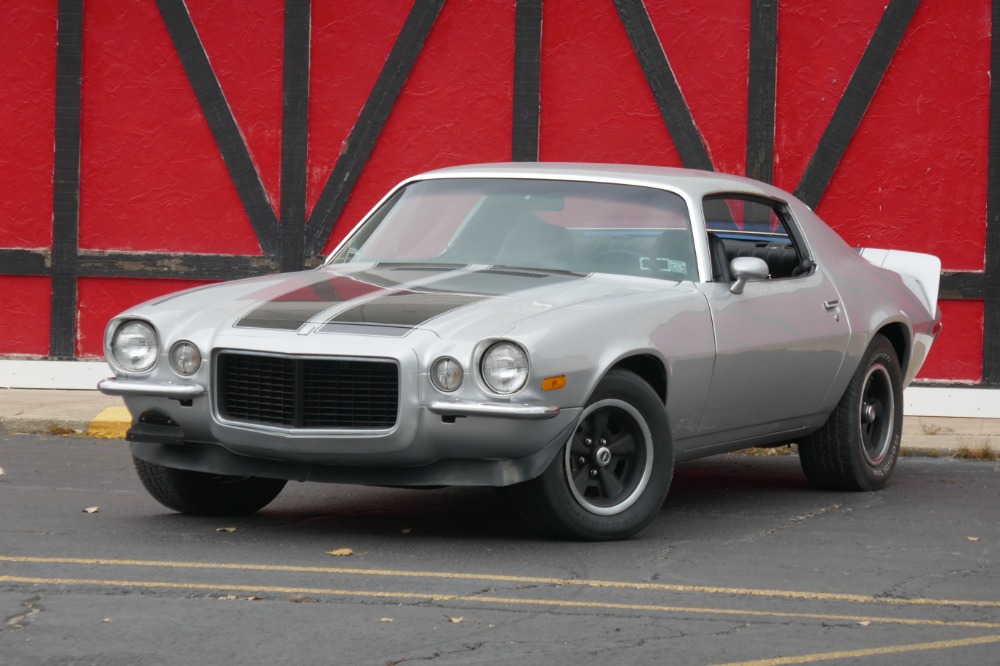
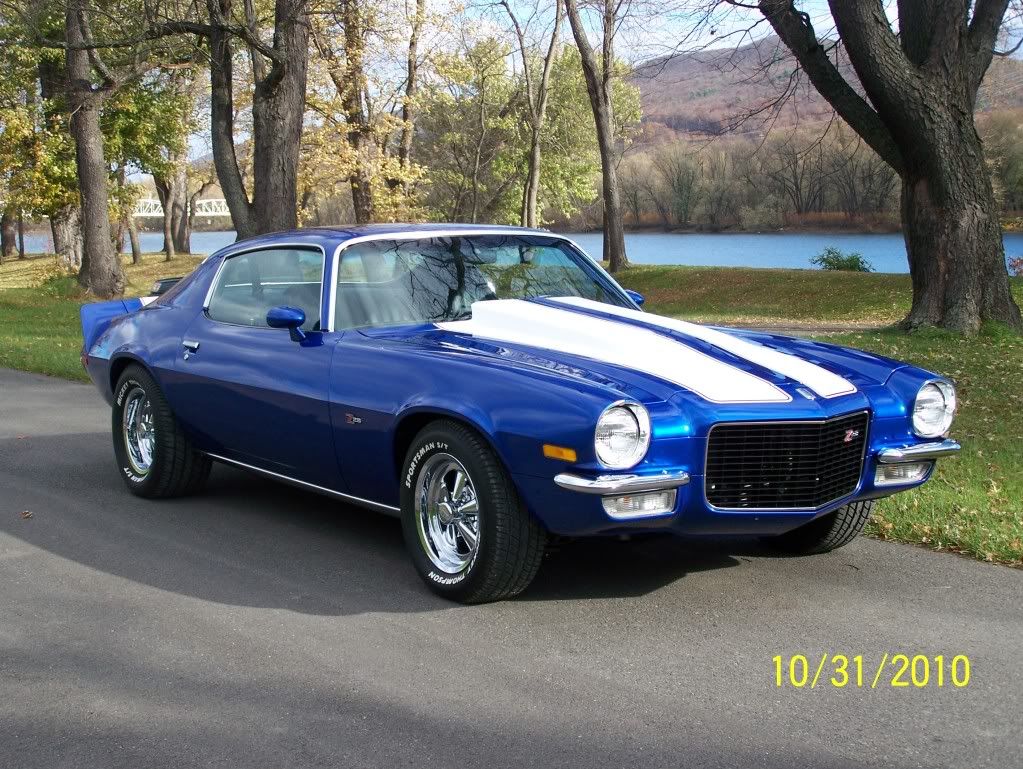
1970-1973 Split Bumper Camaro RS


Image result for split bumper camaro

Redirect


Thursday, April 25, 2013

Legend of the Chevelle

 Image result for 1964 chevelle ss

Redirect

http://www.gmpowerhouses.com/2021/08/legend-of-chevelle-quick-overview.html

Tuesday, April 23, 2013

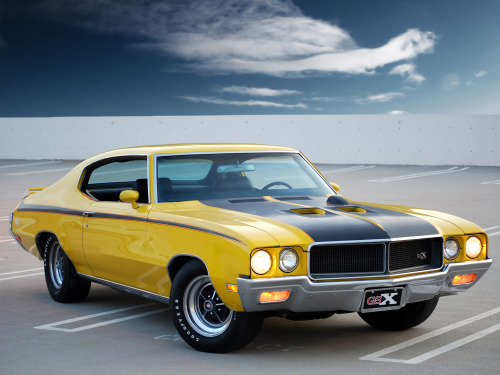
Buick's Legendary Stage 1 GSX


For a lot of years, like most Buicks, the 1970-1972 Buick GS has been passed-over as a legitimate powerhouse, being mistakenly overshadowed by other GM cars sharing the same counterparts, like the GTO, Chevelle and 4-4-2. Buick always had that stereo type of the car your Grandmother takes back and forth to the grocery store.

However, in 1970, Buick wanted to put an end to that stereo type and in February, introduced the GSX, which put the Buick on par with Chevrolet's LS-6, Pontiac's Judge, and Oldsmobile's W-30. 


Dressed in yellow or white, with spoilers fore and aft and special emblems, much like the GTO Judge the year before, the Buick fit right in with the psychedelic look so popular at the time. However, what nestled beneath that sinister hood was an engine with the highest torque rating of any American car, until the Dodge Viper eclipsed it in 2003. In 1970, the Buick 455 produced 510-lb.ft. of torque at 2,800 rpm and 350hp at 4,600 rpm. The more powerful Stage 1 produced the same torque rating, but had 10 more horsepower in 1970. At least that's what the advertisements claimed. More realistic numbers place the GSX Stage 1's horsepower at somewhere between 390 and 395hp. One Buick expert said the number is more likely 400 or better, but no one would admit to it so as to keep Ralph Nader off their backs.

There were 678 GSX cars built in 1970 and available in only Saturn Yellow and Apollo White. Of this number, 491 were yellow and 187 were white, according to the GSX Registry. Of the 678 cars, 199 had four-speed manual transmissions and 479 were optional automatics. And 278 had standard 455 engines, while the other 400 were Stage 1 powered. In 1970, the GSX package cost $1,195 and included much more than the special stripes. The Stage 1 engine was an extra $115. Also in the package were: A hood tach; stiffer shocks and suspension pieces; heavy-duty cooling; power front disc brakes; and G60x15 tires on Buick Rallye chrome-plated wheels. Other GSX specific standard equipment included: Power front disc brakes; 3.42:1 ratio positive-traction rear end; special front stabilizer bar; heavy-duty front and rear shocks; and heavy-duty rear anti-roll bar.

Information is lacking on 1971 and 1972 models, which are more rare than the 1970 car, but ironically less valuable in the collector market. During these years, the cars were built the entire model year and the GSX option could come on any GS from a 350-powered version to a Stage 1 and could be ordered in five colors and various trim options. Having said this, these cars can be difficult to document. In 1971, Buick built 124 GSXs and in 1972, only 44 were built. The VIN will be the same as a GS of each year respectively. The 1971 GSX included: body side stripes, hood paint and GSX emblems, rear spoiler only, painted headlamp bezels, black rocker molding stripe, and six exterior colors were available. Despite the GSX's performance DNA, most luxury options, including air conditioning were available, even with the Stage 1 engine. Buyers could order a four-way tilt power bucket seat, carpet savers and handy mats, power windows, power door locks, cruise control, tilt wheel, AM radio with 8-track mounted under the dash, custom shoulder belts, heavy-duty air cleaner, tinted glass and even speed alert so you wouldn't try to outrun the man in blue.     


The engine is the heart and soul of any car and the GSX is no exception. The Buick 455 held the crown for the most torque of any American mass-produced muscle car at the time (only Cadillac's 501 eventually out-twisted the 455, and that was only available in a three-ton land barge), and even though this engine had fewer horsepower than its other GM siblings, the Buick delivered amazing punch. 

In 1970, 60 mph came in the GSX in just 5.8 seconds, not bad for a car weighing 3,874 pounds, wearing bias-ply rubber. The GSX could cover the quarter-mile in 13.38 seconds at 105.5 mph, according to a 1970 Motor Trend report. If the car had an automatic transmission, it weighed 3,919.7 pounds and, if Stage 1-equipped, add another 2.4 pounds. At the time, the car was called "the quickest American production car." 

The Stage 1 option cost $199 and came with a higher-lift camshaft and slightly richer jets in the 750-cfm Quadra-Jet, even if the primaries and secondaries were the same for both engines: 1.375 inches and 2.250 inches. The bore and stroke of the 455 was 4.3125     inches by 3.90 inches and the Stage 1 had slightly higher compression of 10.5:1 in contrast to the 10.0:1 of the standard 455. The base engine produced 350hp and the Stage 1 had 360hp. 

Valve size was 2.120 inches on the intake side and 1.745 inches for exhaust for the Stage 1. Base 455 valves were 2.005 and 1.630 inches respectively. Probably the biggest internal difference is the hydraulic camshaft and its specifications. The standard 455 had a lift of 0.3891 inches intake and 0.4602 exhaust vs. 0.490 inches both intake and exhaust for the Stage 1. The duration for the standard engine was 290 degrees intake and 322 degrees exhaust. The Stage 1 had 316 degrees intake and 340 degrees exhaust. The overlap was 67 degrees for the base engine and 90 degrees for the Stage 1. In 1971 and 1972, a 350-cu.in. engine was standard in the GSX, with the two 455s optional. 


Specifications
Wheelbase, inches: 112.0
Weight, lbs: 4,000
Number built: 687
Base price: $4,880

Top Available Engine
Type: ohv V-8
Displacement, cid: 455
Fuel system: 1 x 4bbl.
Compression ratio: 10.5:1
Horsepower @ rpm: 360 @ 4600
Torque @ rpm: 510 @ 2800

Representative Performance
0-60 mph, sec: 6.5
1/4 mile, sec. @ mph: 13.8 @ 101
  
Muscle Car enthusiast's dream.  


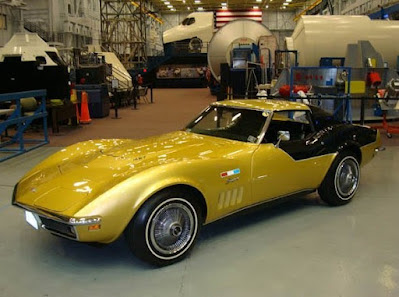
1969 Corvette Stingray "AstroVette" Apollo-Themed

   Summary NASA + Corvette: GM connected the Corvette brand with NASA astronauts through cars, publicity, and an executive lease program. T...