Sunday, May 26, 2024

Indianapolis 500 Corvette E-Ray Pace Car And The Rest Of The Corvettes That Served Indy


2024 E-Ray Corvette Pace Car for the Indy 500

Summary

  • Corvette and Indy go way back: Corvette has paced the Indianapolis 500 21 times since 1978, more than any other car.
  • The E-Ray brings a new trick: The 2024 E-Ray combines a 6.2-liter V8 with electric all-wheel drive to make 655 horsepower.
  • Supercar numbers: With a 0–60 MPH time of 2.5 seconds and a 10.5-second quarter-mile, the E-Ray is seriously quick.
  • A long line of legends: From the 1978 Corvette to the mid-engine C8s, Indy has used some of Corvette's most memorable performance models as pace cars.
  • Celebrity drivers: Jim Rathmann, Chuck Yeager, Morgan Freeman, Colin Powell, Lance Armstrong, Patrick Dempsey, Jeff Gordon, Dale Earnhardt Jr., Danica Patrick, and others have all taken Corvette pace cars around the Brickyard.
  • 2024 adds another chapter: Ken Griffey Jr. got the keys to the E-Ray as Corvette continued its long-running relationship with the Indianapolis 500.

  • Indy 500


    Sunday, May 26, 2024, we will once again see a Corvette running laps as the pace car for the Indianapolis 500. But this won't be just any Corvette—it will be the all-new 2024 Corvette E-Ray, Corvette's first electrified, all-wheel-drive Corvette.

    This will mark Corvette's 21st time pacing the Indy 500 since 1978, more than any other car in history. Add in all 35 appearances by Chevrolet vehicles that have paced the event since 1948, and Chevy is by far the leader when it comes to this legendary honor.

    How Does the E-Ray Corvette Stack Up to Its Siblings?

    The Electric All-Wheel Drive (eAWD) E-Ray is the quickest production Corvette to ever roll off the assembly line at the Corvette Plant in Bowling Green, KY.

    Using a 6.2-liter powerhouse V8 running in tandem with an electric motor that adds an additional 160 horsepower and 125 lb.-ft. of torque to the front wheels, this Corvette puts down a combined 655 horsepower.

    2024 Corvette E-Ray Indy 500

    What do these numbers mean while the Corvette is in motion? How about 0–60 MPH in just 2.5 seconds? If you decide to keep the pedal to the metal, you'll cover the quarter-mile in just 10.5 seconds. The E-Ray can also drive on its electric motor alone for up to four miles at speeds of up to 45 MPH when Stealth Mode is selected.


    Who's Going To Be Driving The E-Ray Pace Car?

    Ken Griffey Jr. Driving the Indianapolis 500 Pace car.

    Piloting the E-Ray at the Indy 500 will be famous former MLB outfielder and All-Star Ken Griffey Jr. If you haven't heard of this guy, even if you don't watch sports, you must have been living under a rock for the past 35 years. All you have to do is punch his name into a search engine, and you'll find a mountain of awards and accomplishments—Gold Glove Awards, All-Star selections, hitting titles, and plenty more.


    Here's A Run Down Of The Past Corvettes To Take The Indy Honor

    1. May 26, 1978—the 62nd Annual Indianapolis 500 was the first time Corvette graced Indy fans with its presence. It was driven by American race car driver Jim Rathmann.


    1979 Corvette Pace Car


    2. May 25, 1986—the 70th Indianapolis 500 chose this 1986 Corvette because it was the first convertible Corvette put into production in ten years. It was driven by General Chuck Yeager, one of America's finest fighter pilots and the first person to break the sound barrier.


    1986 Corvette Pace Car


    3. May 28, 1995—the 79th running of the Indianapolis 500 brought one of the more colorful Corvette Pace Cars to the track. This 1995 Corvette Pace Car was equipped with a five-point safety harness, an onboard fire suppression system, a special "halo" roll bar, and a special strobe-light setup for extra eye appeal. This year, the Corvette was driven by former Chevrolet manager Jim Perkins.


    1995 Corvette Pace Car


    4. May 24, 1998—the 82nd running of the Indianapolis 500 brought even more colorful action. Driven by American race car driver and team owner Parnelli Jones, this Corvette was hard to miss with Radar Blue paint, eye-catching graphics, and bright yellow seats with matching wheels.


    1995 Corvette Pace Car


    5. May 25, 2003—the 86th Indianapolis 500 celebrated the 50th anniversary of Corvette production by once again putting a Corvette at the front of the pack. Actor Jim Caviezel got the honor of driving this special Corvette, complete with a big "50th" badge on the hood.


    2003 Indy 500 Corvette Pace


    6. May 30, 2004—the 88th running of the Indianapolis 500 saw Corvette make its first back-to-back appearance. This was also the first time Chevrolet and Corvette decided not to make replicas of the Indy Pace Car. Morgan Freeman took the reins this year, pacing the IndyCar field around the track. The Corvette's patriotic color scheme made this pace car one of the more iconic ones.


    2004 Indy 500 Corvette Pace


    7. May 29, 2005—the 89th Indianapolis 500 saw its first sixth-generation Corvette leading the IndyCar field. This wasn't just the first time the sixth-gen made it to Indy; it was also the first time the general public was introduced to the car beyond renderings, pictures, and spy photos. General Colin Powell, former U.S. Secretary of State, was put in the driver's seat for pace car duties.


    2005 Corvette Indy 500 Pace Car


    8. May 28, 2006—the official pace car of the 90th Indianapolis 500 was the 2006 Corvette Z06. Back to a patriotic color scheme, the 505-horsepower sports car was driven by seven-time Tour de France winner Lance Armstrong.


    2006 Corvette Z06 Indy 500 Pace Car


    9. May 27, 2007—the 91st Indianapolis 500 brought Corvette back for pace car duties. Team owner and actor Patrick Dempsey took on the duties in this Atomic Orange LS2-powered, 400-horsepower machine.

     
    2007 Corvette Indy 500 pace car

    10. May 25, 2008—the 92nd running of the Indianapolis 500 would see two pace cars for the first time. First, there was a 2008 Corvette Z06 engineered to run on E85 ethanol fuel. Then there was another pace car dressed in a black-and-silver color scheme to celebrate the anniversary of the first Corvette Indy 500 car, which debuted 30 years earlier. Both pace cars were driven by legendary racer Emerson Fittipaldi.


    Indy 500

    11. After a little break from the action, Corvette returned to Indy. May 27, 2012—the 96th running of the Indianapolis 500—saw its first sixth-generation ZR1. This car took Americans by storm with supercar-like performance. Famous Emmy Award-winning television cook and personality Guy Fieri received the honor of driving this LS9-powered beast around the track—too bad he wasn't able to reach its 205-MPH top speed in pace-car mode.

    2013 Indy 500 Corvette ZR1 pace car

    12. May 26, 2013—the 97th running of the Indy 500 brought the all-new seventh-generation Corvette Stingray. San Francisco 49ers head coach Jim Harbaugh was asked to take on pace car duties for the year, and he happily obliged.


    Corvette Pace Car q


    13. May 24, 2015—the 99th running of the Indianapolis 500 brought NASCAR superstar Jeff Gordon to the driver's seat of the 2015 Corvette Z06 Pace Car. Gordon won his first NASCAR race in Indianapolis before going on to become a legend in the sport. Although he wouldn't be going as fast as he's used to on the track, this supercharged, 650-horsepower sports car was certainly capable of high speeds.

    2015 Indy 500 Corvette Pace Car


    14. May 28, 2017—the 101st running of the Indianapolis 500 saw the new 2017 Corvette Grand Sport take over pace car duties. This was the first year the Indy 500 Corvette Pace Car didn't change much in its color scheme from the year before, but the Vette itself was different. Actor Jeffrey Dean Morgan took the wheel and paced the IndyCar field around the famous track.


    2017 Corvette Grand Sport Indy 500


    15. May 27, 2018—the 102nd Indianapolis 500 pace car would be another ZR1, but this 2019 Corvette ZR1 would boast 755 horsepower, a 0–60 time of 2.85 seconds, and a top speed of 212 MPH. This powerful supercharged Corvette would be driven by Victor Oladipo, an Indiana University and Indiana Pacers basketball player.


    2019 Corvette ZR1 Pace Car


    16. May 26, 2019—the 103rd running of the Indianapolis 500 saw another 2019 Corvette take on pace car duties. Following the previous year's '19 ZR1 pace car, the Corvette Grand Sport took center stage. Getting to have some non-competitive fun on the track was Dale Earnhardt Jr., who paced the IndyCar field.


    2019 Corvette pace car


    17. On to the unveiling of the mid-engine Corvette. It was a long-time coming, and that made it an obvious choice to become the official Pace Car for the 2020 Indianapolis 500. GM President Mark Reuss was honored to be the driver who paced the track for this Indy 500.


    Corvette Mid-Engine


    18. May 30, 2021—the 105th Indianapolis 500 brought another mid-engine Corvette to the pace car role. Its white exterior with yellow accents and black wheels made the Corvette stand out. Chosen to take this beautiful ride around the track was legendary open-wheel racer Danica Patrick.


    2021 Corvette Pace Car


    19. May 29, 2022—the 106th running of the Indianapolis 500 brought a masterpiece: the 2023 Corvette Z06. This 70th-anniversary Vette was powered by a naturally aspirated, flat-plane-crank 5.5-liter V8. This sports car was a beast all on its own. Chosen to pilot this Corvette was former IndyCar driver and three-time podium finisher Sarah Fisher.


    2023 Corvette Z06 Indy 500 pace car


    20. May 28, 2023—Corvette paced the Indianapolis 500 with its first-ever convertible hardtop Z06. This badass-looking ride is something anyone can fall in love with. So who got to drive this fine sports car on the big day? Tyrese Haliburton, an Indiana Pacers basketball point guard.


    2023 Corvette Z06


    Update:

    Indy 500 2025 Corvette Pace Car


    21. May 25, 2025— For this year, it's Michael Strachan who gets to have his turn in the driver's seat at Indy. Pacing around the innovative Chevrolet Corvette ZR1, this amazing piece of machine promtoes a 5.5L twin-turbo engine with 1,064 horsepower and a top speed of 233 mph.


    2026 Corvette ZR1X Indy 500 Pace Car


    22. May 24, 2026—The 2026 Chevrolet Corvette ZR1X hybrid hypercar was an obvious choice for the Indy 500 Pace Car. Dominated all of its competitors by combining a 5.5L twin-turbo V8 and a front-axle electric motor to make a total of 1,250 horsepower, this Corvette is and will stay a beast among the pack for a long time. The lucky pilot was Indiana University head football coach Curt Cignette. 

    And the Corvette years of domination keep ticking!


    Thursday, May 2, 2024

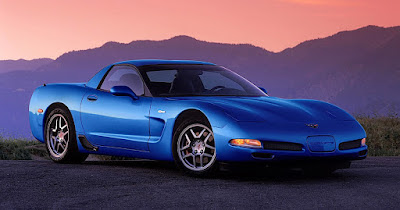
    2001 Corvette Z06: The First Modern Day Z06


    2002 Corvette Z06


    Summary

    • The original Z06 was born for racing: The first Corvette Z06 arrived in 1963 as a road-course-focused package, with only 199 produced and sold.
    • It wasn't exactly a luxury Corvette: The C2 Z06 was all about performance, with a 327, four-speed transmission, upgraded suspension, massive brakes, and an optional 36.5-gallon fuel tank.
    • The Z06 name disappeared and came back swinging: The 2001 Corvette Z06 brought the legendary name back with a 5.7-liter LS6 V8 producing 385 horsepower and 385 lb-ft of torque.
    • The LS6 wasn't just an LS1 with a few tweaks: Corvette engineers redesigned the intake, cylinder heads, combustion chambers, camshaft, valve springs, pistons, and other components to build a serious high-performance V8.
    • The power had somewhere to go: A beefed-up clutch, larger driveshaft, revised M12 six-speed transmission, and shorter lower gears helped put the LS6's power to the pavement.
    • The suspension meant business: The FE4 setup brought revised shocks, a stiffer rear transverse leaf spring, and stiffer front and rear anti-roll bars.
    • The tires got serious, too: Wider Goodyear Eagle F1 SC tires and lightweight 10-spoke wheels gave the Z06 the hardware it needed for hard cornering.
    • Chevrolet went hunting for pounds: Titanium mufflers, lighter glass, and the elimination of run-flat tires helped bring the Z06's curb weight down to 3,118 pounds.
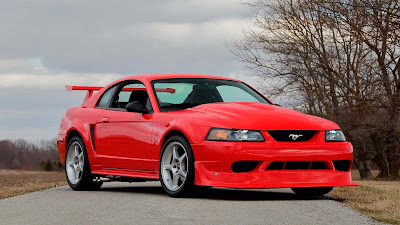
    • The Cobra R had a fight on its hands: Ford's Cobra R produced the same 385 horsepower and 385 lb-ft of torque, but the Z06 offered more street-friendly equipment while still delivering serious track performance.
    • The numbers backed up the attitude: The Z06 was capable of 0-60 mph in 4.3 seconds, a 12.7-second quarter-mile at 113 mph, a 170-mph top speed, and .98 Gs in cornering, according to the figures presented in the article.


    2001 Corvette Z06 Emblem

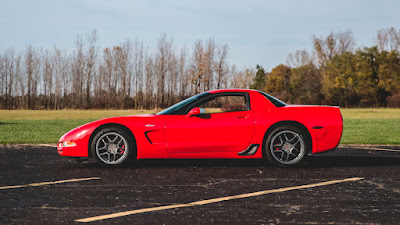
    The 2001 Corvette Z06 wasn't just another C5 Corvette. It brought the Z06 name back from the past, where track-focused attitude, serious hardware, and performance were the name of the game.

    The 2001 Z06 was potent, had very little competition, and made it easy for Chevrolet to mock their Ford Mustang revivals.

    So when and why did this Z06 phenomenon start?


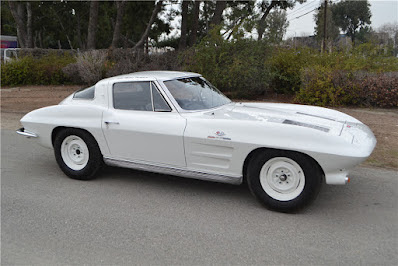
    1963 Corvette Z06


    1963 Corvette Z06

    The first Z06 became available in 1963, and only 199 were produced and sold. The Corvette Z06's sole purpose was to be sold for road-course racing. These cars came equipped with a 327-cu.-in. (5.4-liter) engine, a four-speed transmission, beefed-up suspension, and a massive brake-system upgrade that included dual master cylinders. Buyers could also check the box for an optional 36.5-gallon fuel tank.

    The thing about these C2 Corvette Z06s was that you didn't just walk into a dealership and buy one. You had to know which boxes to check on the order form if you wanted one of these race-ready RPO Z06 Corvettes. And, just like the 2001 Corvette Z06, you didn't get many luxuries with the car.

    It was truly built for one thing:

    Going fast.


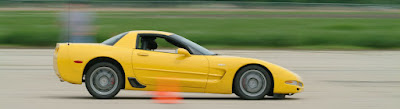
    2001 Corvette Z06


    2021 Corvette Z06

    This Corvette was built to surprise and dominate the market. The Z06 was designed for the track and pushed the boundaries of what was really possible from a production car that could drive to the track, lay down better times than its competition, and then drive back home with the air conditioning kicking and the radio blasting.

  • 5.7-liter LS6 V8
  • 6-speed manual transmission
  • 385 horsepower and 385 lb-ft of torque
  • New FE4 suspension
  • Bose speaker system
  • Leather bucket seats
  • 17-inch front and 18-inch rear wheels wrapped in Goodyear Eagle F1 SC tires
  • Hardtop only
  • Brake coolers
  • Curb weight: 3,118 pounds
  • Fuel economy: 17 city / 26 highway

  • Z06 Engine Corvette

    Engine And Transmission

    The LS6 is essentially a more powerful version of Corvette's LS1 V8. The LS6 engine upgrades started with a redesigned intake manifold featuring better-flowing internal passageways. Reengineered cylinder heads created more flow through the intake and exhaust valves, while the combustion chambers were redesigned to reduce valve shrouding.

    All these upgrades led to a higher compression ratio, which then required a redesigned thin-wall cast-iron exhaust manifold system to provide a smoother exit for the exhaust gases.

    Of course, all that extra airflow wouldn't be worth much without a redesigned camshaft. Corvette engineers installed a beefier cam with more valve overlap and greater valve lift. Chrome-vanadium-steel valve springs and stronger pistons cast from a more durable alloy were also part of the engine's design for added toughness.

    And finally, the LS6 was engineered with windows cast into the internal crankcase walls to help air escape from underneath the burning-hot pistons.

    This new engine setup gave the Corvette Z06 385 horsepower at 6,000 RPM and 385 lb-ft of torque at 4,800 RPM, with a 6,500-RPM redline.

    Between all that power and the rear wheels was a beefed-up clutch with lighter pedal effort, a larger-diameter driveshaft, and a revised six-speed manual transaxle. The new M12 gearbox received shorter first-, second-, and third-gear ratios to better utilize the higher-revving LS6. All gears were 10 to 16 percent shorter except fourth gear, which remained the same.

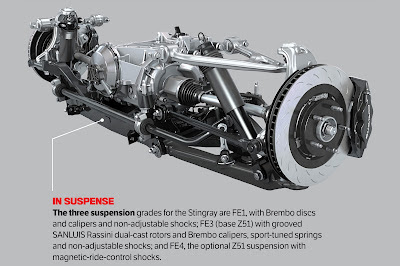
    Corvette Suspension

    2001 Corvette Z06 Suspension

    More power always means more changes all around. To accommodate the power of the LS6, Corvette went with a new FE4 suspension that included revised shock calibrations, a stiffer rear transverse leaf spring setup, and stiffer anti-roll bars for the front and rear.

    To add some ground support, each corner of the Vette received 1-inch-wider tires, bringing them up to 9.5 inches wide in the front and 10.5 inches wide in the back. New custom lightweight 10-spoke wheels were wrapped in Goodyear F1 Eagle tires: 265/40ZR-17s in the front and 295/35ZR-18s in the rear. The F1 Eagle SC tires were designed with more flexible sidewalls by doing away with the famous run-flat tire design. This permitted a half-degree more negative camber to keep the tread flatter during hard cornering for track use.

    To prove the Corvette was built for business, engineers found places around the car where they could shave pounds off the curb weight. Helping save weight was the deletion of the run-flat tire design, titanium mufflers, and lighter windshield and rear glass, all of which helped bring the Corvette’s curb weight down to 3,118 pounds, 38 pounds lighter than its original form. A lot of weight was saved with the titanium mufflers alone, but the added weight of the new suspension offset a lot of those weight savings. 

    2001 Cobra R

    Step Aside Cobra R

    The Cobra R was making some big waves at the track. Performance numbers were pretty impressive, and the Corvette Z06 was Chevrolet's answer to those performance numbers.

    The Cobra R and the Z06 were pretty close in performance numbers at the time (numbers for Z06 below). The Cobra R turned numbers out of its 5.4-liter that looked a little like this: 385 horsepower and 385 lb.-ft. of torque (the same as the Z06), 0-60 mph in 4.7 seconds, a quarter-mile time of 13.2 (Ford tested) and 12.9 (Motor Trend tested) with a top speed of 170 mph, and stops from 60-0 in 127 feet.

    Although the numbers were somewhat close, the Corvette beat out the Cobra R in other places. The Cobra R lacked air conditioning, an audio system, rear seats, sound dampening, and cruise control. The Corvette also lacked a back seat, but that's because it was never meant to have one; it wasn't a compromise. Also, because of the limited number of Cobra Rs that were built, the sticker price showed $55,5ish, but you couldn't buy one for under $75,000. The Corvette Z06 stuck pretty close to its price tag of just under $50,000 without a lot of limited edition inflation.

    2001 Corvette Z06

    Let's Go Over Some 2001 Corvette Z06 Numbers 

    The 2001 Corvette Z06's proof of superiority is in the numbers. A 0-60-mph time is recorded at 4.3 seconds, and a 70-mph to 0 stop takes only 152 feet. In a quarter-mile sprint, the Corvette can cover it in 12.7 seconds at 113 mph. Hitting 150 mph will only take you 28 seconds total, while a top speed of 170 mph is easily manageable. Although the top speed does suffer a little bit as the C5 Vettes will hit 175 mph, that's because of the Z06's closer transmission clutch gear ratios. 

    Hitting corners is another place where the Corvette Z06 shows no mercy to its competitors. Pulling .98 Gs in and out of corners is just what this sports car does, and that actually beats out all other sports cars out there, including the Viper GTS and the Ferrari 360 Modena, which are above the Corvette Z06's price bracket by a lot. 


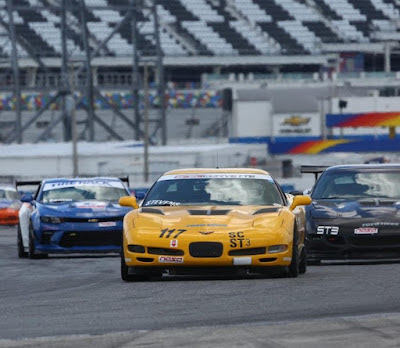
    Racing Z06 Corvette

    Z06 Performance Built

    Making sure everything was performance-built was what this Corvette was all about. Even both the dual mesh grilles in the front and the rear brake coolers in front of the rear wheel wells are completely functional.

    The 2001 Corvette Z06 is just like the new Z06s. Although classified as a sports car, it performs like a supercar compared to its competition.

    The Most Recent Z06 Corvette

  • C2 Z06 (1963): Introduced as a special performance equipment option package for the second-generation Sting Ray.
  • C5 Z06 (2001–2004): Revived and officially designated as its own distinct high-performance model variant with a fixed-roof design.
  • C6 Z06 (2006–2013): Powered by a massive 7.0L LS7 V8 engine featuring lightweight aluminum framing.
  • C7 Z06 (2015–2019): Equipped with a supercharged 6.2L LT4 V8 engine pushing 650 horsepower.
  • C8 Z06 (2023–Present): Shifted to a mid-engine platform featuring a high-revving, naturally aspirated 5.5L LT6 V8 engine. 

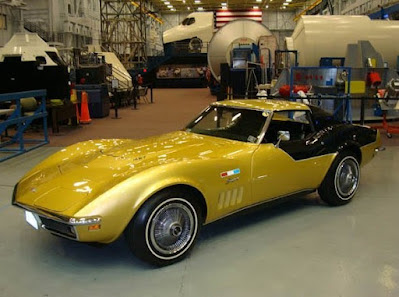
  • 1969 Corvette Stingray "AstroVette" Apollo-Themed

       Summary NASA + Corvette: GM connected the Corvette brand with NASA astronauts through cars, publicity, and an executive lease program. T...