Showing posts with label Yenko Camaro. Show all posts

Friday, May 15, 2026

The Chevrolet Camaro: Sports Cars That Rocked Generations.

Few cars have shaped American performance culture quite like the Chevrolet Camaro. From drag strips and road courses to Hollywood movies and late-night street races, the Camaro has remained one of the most respected names in the muscle car world.

Here’s a look at some of the most legendary Camaros ever built and why enthusiasts still obsess over them today.


1967 Camaro — The Beginning of a Legend


What Camaro Do You Think Is The Hottest? 1967 Camaro


The first-year Camaro instantly gave Chevrolet a serious competitor in the pony car wars. Designed to battle the Ford Mustang, the 1967 Camaro arrived with aggressive styling, endless engine options, and a performance attitude that immediately connected with young enthusiasts.

What made the ’67 Camaro so important was its versatility. Buyers could build anything from a stylish cruiser to a street-dominating big-block monster. It became the foundation for decades of Camaro performance and helped launch Chevrolet into a new era of muscle car dominance.

Performance Highlights

  • Available inline-six and V8 engine options
  • Optional 396 cubic-inch big-block V8
  • Aggressive long-hood, short-deck styling
  • Excellent aftermarket support even today
  • One of the most customizable muscle cars ever built


1969 Camaro Z/28 — Road Racing Royalty


1969 Camaro Z/28

The 1969 Chevrolet Camaro Z/28 is one of the most respected muscle cars in history. Originally built to compete in Trans-Am racing, the Z/28 focused less on straight-line drag racing and more on handling, balance, and high-revving performance.

Its legendary 302 small-block V8 became famous for screaming RPMs and race-inspired engineering. Today, the ’69 Z/28 is considered one of the most collectible Camaros ever produced and remains a symbol of Chevrolet performance.

Performance Highlights

  • High-revving 302 cubic-inch V8
  • Four-speed manual transmission
  • Improved suspension tuning
  • Front disc brakes
  • Inspired directly by Trans-Am racing


COPO 427 Camaro — The Factory Drag Racer


1969 Black COPO Camaro

The COPO Camaro was Chevrolet’s secret weapon during the peak muscle car era. Officially, GM restricted engine sizes in midsize and pony cars, but clever dealers found a loophole through the Central Office Production Order system.

The result was a brutally powerful Camaro stuffed with the monstrous 427 big-block V8. These cars became legends at drag strips across America and are now among the rarest and most valuable Camaros ever built.

Performance Highlights

  • Massive 427 cubic-inch big-block V8
  • Built specifically for drag racing
  • Extremely limited production numbers
  • Lightweight performance-focused setup
  • Serious collector value today


Yenko Camaro — Dealer-Built Muscle Madness


1969 Yenko Camaro Blue


The Yenko Camaro became legendary thanks to performance dealer Don Yenko, who transformed Camaros into street-legal race cars. Yenko Camaros packed brutal horsepower and aggressive styling that terrified competitors on both the street and strip.

These cars became icons because they represented the wild west era of American horsepower before emissions regulations and insurance crackdowns changed everything. 

Performance Highlights

  • Tuned 427 big-block power
  • Performance suspension upgrades
  • Distinctive Yenko striping and badging
  • Extremely rare production numbers
  • One of the most collectible dealer muscle cars ever


1969 Camaro ZL1 — The Unicorn Camaro


1969 Camaro ZL1-Bad In Black

The 1969 Chevrolet Camaro ZL1 is often considered the holy grail of Camaros. Only a handful were built, making it one of the rarest and most expensive muscle cars ever produced.

Its all-aluminum 427 engine delivered outrageous performance for the era. The ZL1 shocked the automotive world by combining lightweight construction with race-ready horsepower.

Performance Highlights

  • All-aluminum 427 V8
  • Factory-built drag racing monster
  • Ultra-lightweight engine design
  • Extremely low production numbers
  • Six-figure collector car status


1970–1973 Split-Bumper RS/SS — Peak Camaro Styling


1970–1973 Split-Bumper RS/SS


The second-generation Chevrolet Camaro RS/SS introduced smoother body lines, better handling, and arguably the most iconic Camaro front-end design ever created.

The split-bumper setup became an instant classic and helped define 1970s Camaro styling. These cars balanced muscle car aggression with sports car-inspired handling characteristics.

Performance Highlights

  • Distinctive split front bumper design
  • Available big-block and small-block V8s
  • Improved chassis balance
  • Better cornering than earlier Camaros
  • One of the most recognizable Camaro designs ever


1970½ Camaro — The Handling Revolution


1970 1/2 Camaro


The 1970½ Camaro represented a major shift in Chevrolet engineering philosophy. Instead of focusing only on straight-line speed, Chevrolet developed a car that could genuinely compete in corners.

This Camaro earned respect because it blended muscle car power with true sports car handling. Many enthusiasts still consider it one of the best-driving classic Camaros ever made.

Performance Highlights

  • Improved suspension geometry
  • Better weight distribution
  • Enhanced steering feel
  • Aggressive low-slung body design
  • Strong small-block and big-block engine options


1985–1990 IROC-Z — The King of the 1980s


Black 1985–1990 IROC-Z


The Chevrolet Camaro IROC-Z became the ultimate symbol of 1980s performance culture. Named after the International Race of Champions series, the IROC-Z combined bold styling with improved handling and fuel-injected V8 power.

For an entire generation, the IROC-Z was the dream street machine. It dominated posters, music videos, and cruising scenes everywhere.

Performance Highlights

  • Tuned Port Injection V8 engines
  • Lowered performance suspension
  • Distinctive ground effects and wheels
  • Improved aerodynamics
  • One of the hottest performance cars of the 1980s


1996 Camaro SS — Modern Muscle Returns


1996 Camaro SS

The 1996 Chevrolet Camaro SS helped bring serious performance back to the Camaro lineup during the 1990s. Built with help from SLP Engineering, the SS package added more power, aggressive styling, and improved exhaust performance.

It represented the rebirth of modern Chevrolet muscle and became a favorite among street racers and performance enthusiasts.

Performance Highlights

  • LT1 V8 performance
  • Functional hood scoop design
  • SLP performance upgrades
  • Strong acceleration capabilities
  • Aggressive fourth-gen styling


1998 Camaro SS — LS1 Power Changed Everything


1998 Camaro SS


The 1998 Chevrolet Camaro SS introduced the legendary LS1 engine platform to Camaro fans. This lightweight aluminum V8 transformed the Camaro into one of the fastest American performance bargains of its era.

The LS platform would go on to become one of the most influential performance engine families ever created.

Performance Highlights

  • LS1 aluminum V8 engine
  • Massive aftermarket tuning potential
  • Excellent power-to-weight ratio
  • Strong drag racing reputation
  • Affordable high-performance platform


1998 Camaro SS — LS1 Power Changed Everything


2002 Camaro SS 35th Anniversary

The 2002 Chevrolet Camaro SS 35th Anniversary marked the end of Camaro production before its temporary discontinuation. Enthusiasts immediately recognized these cars as future collectibles.

This generation closed the chapter on classic rear-drive F-body performance before the Camaro disappeared for several years.

Performance Highlights

  • Special anniversary appearance package
  • LS1 V8 performance
  • Collector-focused production
  • Strong performance value
  • Final year of fourth-generation production


2014–2015 Camaro Z/28 — The Track Monster

2015 Camaro Z28

The modern Chevrolet Camaro Z/28 revived the legendary Z/28 name with an all-out track-focused mission. Inspired partly by the aggressive heritage of the 1969 Z/28 and boosted by Camaro popularity from the Transformers films, this Camaro became an instant icon.

Instead of focusing purely on horsepower numbers, Chevrolet engineered the Z/28 to dominate road courses with incredible suspension tuning, aerodynamics, and braking performance.

Performance Highlights

  • Naturally aspirated 7.0L LS7 V8
  • Track-focused suspension tuning
  • Massive carbon-ceramic brakes
  • Extreme aerodynamic package
  • Nürburgring-tested performance


2016–2024 Camaro ZL1 1LE — The Ultimate Camaro


2016–2024 Camaro ZL1 1LE


The Chevrolet Camaro ZL1 1LE represents the absolute peak of factory Camaro performance. Combining supercharged power with race-ready handling, the ZL1 1LE became one of the fastest American cars ever produced.

Its track capability shocked the automotive world by outperforming exotic sports cars costing far more money. Many enthusiasts consider it the greatest Camaro ever built.

Performance Highlights

  • Supercharged 6.2L LT4 V8
  • Over 650 horsepower
  • Advanced aerodynamic package
  • Multimatic DSSV suspension
  • Extreme track-day capability
  • Nürburgring-level performance engineering


All Good Things Must Come To An End 


Four Generation of Camaros


The Camaro legacy stretches across generations of American performance culture. Whether it’s a rare big-block drag car, a road-racing Z/28, or a modern supercharged track weapon, every era of Camaro brought something unique to the muscle car world.

From the streets of the late 1960s to modern racetracks, the Camaro remains one of Chevrolet’s greatest performance achievements and one of the most beloved American cars ever created.

Thursday, December 31, 2020

Difference Between the Yenko Camaro and COPO Camaro


Difference Between the Yenko and COPO 

Most people probably know about how badass the Yenko and the COPO Camaros are, but how many people know where the names come from and what’s the difference between the two. Of course, if you are a diehard Camaro fan with a lot of knowledge of the first generation Camaros, you probably know some or all of the facts, but just in case you don’t, here is a little bit of education.


The Yenko

In 1967, Don Yenko, owner of Don Yenko Chevrolet, contacted General Motors and ordered 54 Camaros straight from the factory with a special mission in mind. That special mission was to convert those Camaros into Yenko drag strip-ready IHRA/NHRA Stock and Super Stock Camaro competitors.


(How many Yenko Camaros were built and sold from 67 through 69 is really unknown. The same goes with COPO Camaros; ask ten different experts and you're likely to get ten different answers).


When these Camaros first showed up at the Yenko Dealership, the first order of business was to take out the existing 396-cu.-in. engines and replace them with 427 big-blocks. Although a lot of numbers swirled around about how much horsepower they produced, it was estimated around 425-450-hp (depending on who you asked). Along the way, Yenko also had all Yenko labeled Camaros beefed up with other goodies like traction-bars and 3:73-positraction rear-ends. 


There was only one problem with Team Yenko’s plan to turn the Camaros into drag strip-ready Camaros, they were not allowed to race in the IHRA/NHRA Stock or Super Stock classes. These classes were strictly for cars that had no engine changes or any other big mechanical changes after they left the factory. They were not banned from all drag racing, just the Stock and Super Stock classes that the Yenko Team was aiming for, so eventually the Yenko program was canned. 


A lot of people think that the reason Yenko stopped the program was because of the inability to race in their intended classes. That was part of the reason, but most of the reasons were because Yenko was losing money on the pulled 396 motors and rear-ends they could not seem to get rid of and the program was losing even more money since GM would no longer warranty the Camaros if they were modified after they left the factory. That either fell in the hands of the owner or Yenko himself.


69 COPO Camaro   

It’s true, the name strikes fear in the hearts of racers who dare to pull up next to one in the staging lanes. They dominated the Stock and Super Stock classes for a long time.


COPO stands for (Central Office Production Order) and this program was invented specifically to put competitive Camaros in those Stock and Super Stock classes. If you ordered a Camaro from the central office, the build sheet would go to the factory, and when the Camaro rolled off the factory line complete, whatever you asked to be installed would be installed and considered stock. With that being said, there was nothing IHRA or NHRA could do about excluding the cars from racing in stock classes.


Ultimately, it was Fred Gibb and Don Yenko that pushed Chevrolet into making this program happen. Chevy saw the need for competitive Camaros in these classes for the use of sponsorship and of course bragging rights. They were Camaros, they were stock, and they were Mustang and Mopar eaters for a long time at the track. The 427 big-blocks made 425-hp and 460-lb.-ft. of torque, they took home a lot of trophies.  

Last Note 

A lot of people believe the COPO division was designed for the 69 ZL1-Camaro and then squashed, and then brought back in 2013 for the Camaro again. But the General Motors COPO Division has been around since GM made fleet vehicles e.i. cop cars, taxis, tow trucks, etc. All vehicles that are ordered specially from a corporation, charity, a government, or something like that are considered specialty-made vehicles or COPO vehicles. (It wasn’t just a program made up for one of the baddest Camaros ever produced, the Camaros just stole the spotlight). 


Wednesday, January 10, 2018

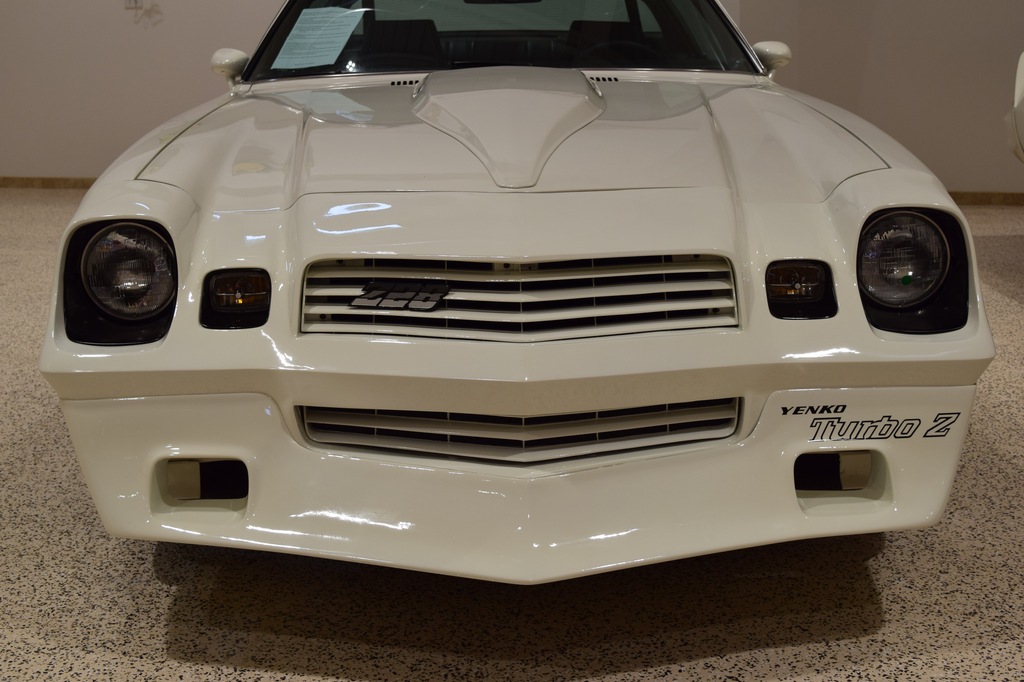
Yenko Camaro: Rare 1981 Turbo Z

 1981 Camaro Yenko Turbo Z


1981 Camaro Yanko Turbo Z


Car enthusiasts, including knowledgeable Camaro enthusiasts, may believe one of two things: the last Don Yenko specialty car was the 1971 Chevy Nova Yenko, or it was the 2010 Chevy Camaro Yenko, but neither one of these beliefs would be true.

2010 Chevy Camaro Yenko - Not A True Yenko
The 2010 Chevy Camaro Yenko is in fact not a true Don Yenko car at all. Chevy obtained the rights to use the Yenko name on the 2010 Yenko Camaro, but that does not make it a Don Yenko car. Instead, unlike true Don Yenko cars that were customized at his dealerships, the 2010 Yenko Camaro is just a special edition factory produced Camaro, the Yenko franchise had nothing to do with it.

Stage I & II 1981 Camaro Yenko Turbo Z
The 1971 Chevy Nova Yenko may be the last memorable Yenko specialty car, but there is a true Yenko edition that came after the ‘71 Nova. The very rare Stage I & II 1981 Camaro Yenko Turbo Z may not have come out in the muscle car era when cars were known for their power, but like most of Yenko’s cars, these Camaros would be customized to be much more powerful than what they were when they were ordered from the factory.


Image result for 1981 Camaro Yenko

Thanks to emission regulations, the 1981 350-ci.-in. Camaro Z-28 was choked down to a mere 175 horsepower, not nearly enough to be called a muscle car anymore. Don Yenko decided that one of his last adventures in car building would be to give the Chevy Camaro some much needed modern power that could be respected.


1981 Yenko Camaro Stage I & II
There was 19 Stage I & II Yenko Camaros built at Don Yenko dealerships. Three of those were the Turbo Z Stage II Camaros making them some of the rarest Camaros in existence. All 19 of these Camaros are still considered extremely rare and came with an abundance of visual and performance upgrades.

Not only did the 1981 Yenko Camaro come with enough performance upgrades to knock off about three seconds from its original Z28 quarter-mile time, it also came with all of the luxuries that could be ordered from the factory like leather, air condition, tilt steering wheel, and more. The only thing it did not come with was a radio - in place of the radio was a “Yenko Turbo Z” plate.


Chevy 350 cu-in. Turbo


1981 Yenko Camaro Upgrades:

  • 7 PSI. Turbocharger Added to the 350 cu.-in. Engine 
  • 350 Turbo Trans
  • G80 Positraction
  • 3.08:1 Rear Gears                      
  • Koni Shock Absorbers
  • Stiffer Stabilizer Bars 
  • IROC Front Spoiler
  • Turbo Z Logo Specific Decals and Floor Mats
  • Leather Racing Steering Wheel

Image result for 1981 Camaro Yenko

So how much horsepower does this turbocharged 1981 Camaro Yenko produce? Well, no one is for sure, but experts estimate that it is probably somewhere around 210-225 horsepower.


Heading To Mecum Auto Auction
If you were thinking about shopping for one of these rare Camaros, especially the 1-of-3 Stage II editions, have fun finding one


But....


The upcoming Mecum Auto Auction does offer you a chance to bid on a Stage II. The week of Jan. 5-14, 2018, Mecum will have one of these rare gems rolling across the auction block - expect a price tag around $140,000.00.  

Friday, November 7, 2014

2015 Yenko Camaro: 700-HP it's Really Back


Unless you have been living under a muscle car rock for the last 40 years, you probably know about the Yenko/SC Camaros of the late 60's. They were very rare sought-after muscle cars that used the Corvette 427-cu.-in. powerplant to produce legendary Camaro power. Thanks to Don Yenko and the help of his dealership, they not only put the badass Corvette motors in them, but they also added cool visual effects that help the Yenko Camaros of the 60's standout and still draw huge prices on auction blocks today.

With the end of production of those Yenkos Camaros – probably didn't leave to many Camaro enthusiasts left that thought they would ever see another Yenko Camaro in production let alone a 21st century Yenko/SC Camaro. But General Motors had a few tricks up their sleeve when they bought the rights to the Yenko name in 2009 and moved forward in 2010 by unveiling a Yenko/SC prototype. It was pretty obvious after the enthusiasm that the Yenko prototype created it would only be a matter of time that we would see an actual production push of these bad boys.

At the 2014 SEMA show, Chevrolet unveiled a 2015 Yenko/SC Camaro that was built to tell the world that there would be a Yenko Camaro going into production. It was a joint project that involved the SLP company. A company that has joined up with Chevy many times in the past for high-performance specialty cars.

The new Yenko/SC will be much like the old – packed with all kinds of goodies and visual upgrades. Those upgrades start with an Eaton TVS 2300 supercharger stacked on a GM LS7 7.0-liter engine that packs a monster 700hp punch. Backing that will be either an automatic transmission or a manual trans with a dual-disc clutch assembly.

Visually the Camaro has a heritage style front-grille to go with an RTM cowl-induction hood. Yenko hood and body graphics are added with exterior 427 badges and Yenko door sill plates. To top all that off will be a badass looking black ZL1 rear-spoiler and five-spoke rims with a gunmetal finish and sYc center caps.

Only 50 of these Camaros will be produced this year and they will have to be ordered from SLP. So if this sounds like something you desperately want -- then you better order soon.