Showing posts with label Chevrolet. Show all posts

Wednesday, May 6, 2026

IVESTMENT: 2002 Camaro SS 35th Anniversary Edition


2002 Camaro SS 35th Anniversary


The year 2002 marked the end of an era for the fourth-generation Chevrolet Camaro. After decades of tire-smoking performance, aggressive styling, and fierce rivalry with the Pontiac Firebird and Ford Mustang, Chevrolet sent the Camaro off with a special tribute model —the 2002 Camaro SS 35th Anniversary Edition. It celebrated 35 years of Camaro history while also serving as a farewell to the legendary F-body platform before production stopped later that year.

For Camaro enthusiasts, the 35th Anniversary SS represented everything the fourth-generation car had evolved into: bold styling, strong LS1 V8 power, and unmistakable street presence. The car combined the already potent SS package with unique anniversary-only appearance upgrades that made it one of the most recognizable Camaros ever built.

Today, the 2002 Camaro SS 35th Anniversary Edition has become one of the most collectible modern Camaros, especially among fans of late-model muscle cars and LS-powered performance machines.

LS1 350 Engine


Engine – Powertrain

Under the hood sat Chevrolet’s legendary 5.7-liter LS1 V8 engine. By 2002, the LS1 had already earned a reputation for durability, easy aftermarket tuning, and impressive real-world performance. In SS trim, the engine produced a factory-rated 325 horsepower and 350 lb-ft of torque.

The SS package itself was engineered through SLP Engineering, which added performance upgrades beyond the standard Z28 Camaro. Functional forced-air induction helped feed cooler air into the LS1, while a freer-flowing exhaust system improved both performance and sound. The result was a Camaro capable of low-13-second quarter-mile times right off the showroom floor.

Transmission choices included the BorgWarner T56 six-speed manual or the 4L60e four-speed automatic transmission. Enthusiasts typically favored the six-speed because it unlocked the car’s full tire-burning potential and delivered a more engaging driving experience.

The suspension setup remained true to the F-body formula with rear-wheel drive, four-wheel disc brakes, and available traction control. Even by today’s standards, the 35th Anniversary SS remains a surprisingly quick and capable muscle car.

2002 Camaro SS 35th Anniversary Edition Convertible


Special Edition Designs Inside and Out

What truly separated the 35th Anniversary Edition from a regular Camaro SS was its unique appearance package. Chevrolet gave the car exclusive styling treatments that made it instantly recognizable.

Every official 35th Anniversary SS was finished in Bright Rallye Red paint with silver checkered-stripe graphics stretching from the front fascia across the hood and onto the rear spoiler. The graphics paid tribute to Chevrolet’s racing heritage and gave the car a factory custom look unlike anything else on the road.

Coupe models came with removable T-tops and a body-color roof halo, while convertibles featured a black soft top. Special “35th Anniversary” badging appeared throughout the exterior, helping distinguish the package from ordinary SS models. Silver-painted SS wheels further added to the aggressive appearance.

Inside, Chevrolet continued the anniversary theme with embroidered 35th Anniversary logos stitched into the seatbacks. The black leather interior gave the car a clean and sporty atmosphere, while power accessories and upgraded audio systems made the Camaro comfortable enough for daily driving.

The interior design of the fourth-generation Camaro has always been somewhat controversial, but the anniversary touches helped elevate the cabin beyond the standard layout. Collectors especially appreciate original cars that still retain their factory floor mats, anniversary embroidery, and untouched trim pieces.

Indy 500 2002 Camaro SS 35th Anniversary Edition


What Else Made the 35th Anniversary Edition Different?
Beyond the appearance package, the 2002 model year itself made these cars historically important. It was the final production year for the Camaro before Chevrolet discontinued the model until its return in 2010. The last fourth-generation Camaro rolled off the assembly line in August of 2002, closing the chapter on the F-body platform.

Because of that, the 35th Anniversary SS became more than just another special edition—it became a sendoff car.

The limited production numbers also increased collectibility. Certain combinations, especially six-speed manual convertibles and low-mileage T-top coupes, are now highly desirable among collectors and LS enthusiasts alike. Some ultra-rare versions even received additional tuning packages through SLP or specialty performance companies such as GMMG.

Another major factor in the car’s popularity is the LS1 platform itself. The engine responds extremely well to modifications, making these Camaros favorites at drag strips, car shows, and street performance events. Even simple bolt-on upgrades can wake the car up considerably, which helped cement the fourth-generation SS as one of the best bang-for-the-buck performance cars of the early 2000s.

2002 Camaro SS 35th Anniversary Edition Rear End


Leaving Its Mark

The 2002 Chevrolet Camaro SS 35th Anniversary Edition perfectly captured the spirit of the Camaro legacy as the fourth-generation era came to a close. It combined proven LS1 performance, aggressive SLP styling, and exclusive anniversary details into one unforgettable package.

More than two decades later, these cars still command attention everywhere they go. The Bright Rallye Red paint, silver anniversary stripes, and rumbling LS1 V8 remain unmistakable symbols of early-2000s American muscle. For many enthusiasts, the 35th Anniversary SS represents the final true evolution of the original F-body Camaro formula before the model disappeared from showrooms for nearly a decade.

The Final F-Body


Whether preserved as a collector piece or driven hard like Chevrolet intended, the 2002 Camaro SS 35th Anniversary Edition remains one of the most iconic farewell models in muscle car history.

Tuesday, February 4, 2025

First 1967 Camaro Commercial Broadcast In 1966


Back in 1966, the American people were introduced to a sports car that would see five decades of success. That sports car was the Camaro, and to this day has just as much power and influence in the high-performance auto motor industry as the day it first went on sale on Sept. 29, 1966.


After the Mustang was introduced in 1964, Chevrolet had to come up with a sportier, tougher two-door sports car than its current two-door sports car at the time, the Corvair. So under the code name XP-836 and then soon after named the Panther for temporary identification, Chevy went to work.

For the year 1967, Chevy decided to name the soon-to-be iconic sports car, the "Camaro". This obscure word comes from the French-English dictionary meaning "friend". They added eight different engine setups including a SS 350 option and a stout 427 option. Even though the Z/28 did not come along till the next year, on the day of September 29th, 1966, the Camaro hit the road for the first time. Five decades later, this sports car is still a noticeable piece of automobile history no matter what year or model you are driving. 

Thursday, November 9, 2023

1966 Chevrolet Corvair Yenko Stinger: Rare And Cool


1966 Chevrolet Corvair Yenko Stinger

Everyone should know about the iconic late 60s and earlier 70s Yenko drag cars that donated the tracks—Camaro, Nova, and Chevelle. But would you be alarmed to know that Don Yenko was working his high-performance magic long before those muscle cars came along? 

Don Yenko had his eyes on a different type of racing before he built horsepower heavy-drag cars. In the late 50s to the mid-60s, he was into road course racing. He first was racing Corvettes professionally but was getting beat pretty consistently by the Shebly. Don realized the reason was the Corvettes had become just too heavy to compete. 

Corvair Corsa


Enter The Corvair Corsa

The Corvair Corsa weighed 500 pounds less than the Corvette, making it a very viable candidate for some of Yenko's genius power upgrades. So in true Don Yenko fashion, he went to the drawing board and came up with the blueprint needed to retrieve the success he was looking for. 

Yenko Upgrades For The Corvair

  • Forged Pistons
  • Ported Cylinder Heads
  • High-Performance Distributor
  • Stiffer Suspension
  • Cadillac Dual Master Cylinders for Brakes
  • Light Weight Flywheel
  • Four Speed Manual
  • Limited-Slip Differential (3.89 rear gears)
  • Added Oil Cooler
  • Quicker Steering Ratio
  • Removed Rear Seats (making it eligible to be labeled a sports car and save on weight)
  • Front Spoiler
  • Rear Fiber Glass Engine Cover w/Spoiler
  • Aftermarket Steering Wheel

Time To Get In Sync With SCCA Regulations 

It turns out that the SCCA didn't have too much of a problem with the new Corvair race car entering the competition. Instead of giving Don Yenko a hard time, the SCCA's two biggest requests to give the car the SCCA homologation (stamp of approval) were to have at least 100 road-capable Yenko Stingers produced and to have the car painted in white and blue. White and blue were the American colors used to identify American cars on the race course, as every country had its own color codes to follow. 

Needing to have all 100 cars done by January 1st, 1966 to compete in 1966—already being late November gave Don one month to complete the project. Don and his men worked long hours, seven days a week, all through December with the expectation of one day, and that was Christmas. Despite the grips and grimes of the overworked workers, they proudly finished the quota in time.  

Covair Yenko Engine Bay


Four Separate Power Levels

All Stingers came with a 165 cu.-in. (2.7-liter) flat-six engine setup with four carburetors that offered four different Yenko power options. The base Yenko option came with roughly 160 horsepower, from there it went up a level to 190 horsepower, then leveled up to 220 horsepower, and for the big dog of them all, you could get one with 240 horsepower. The different options were mainly so the Yenko Stinger could qualify to race in all road course classes. 

Interesting Fact 

Yenko's daughter received a Stinger to drive when she first got her driver's license. Two weeks into driving, she had an unfortunate accident that sent her headfirst into a utility poll. Because of the engine being in the rear and the spare tire being in the front trunk, the Corvair basically bounced off the poll instead of crushing the front end and sending the engine into the front seat. For the car that has been dubbed "unsafe at all speeds," Yenko's daughter calls it the car that is "safe at all speeds." 


Friday, September 22, 2023

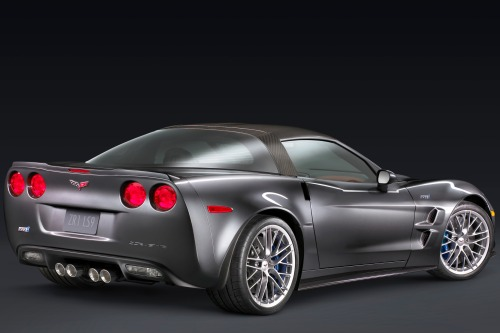
2009 Corvette ZR1: The Era’s Most Pinnacle American Sports Car

 2009 Corvette ZR-1


Corvette ZR1 Comeback

Corvette has always made a big splash with their Z-Series sports cars. Badass Vettes such as the ZO6, ZR1, and ZL1 would receive more power and torque, handling capabilities, and all-around upgrades for better track performance than any other vehicle General Motors was pushing on the market at the time (expectation 14 and 15 Camaro Z28). 

Chatter started around 2007 about a new version of the ZR1, a ZR1 that would be so performance-packed it would give it a supercar status that would have its name mentioned in the likes of Ferrari, Porsche, and Lamborghini. 


This first 2009 ZR1 was auctioned off for a Million bucks to Dave Ressler. He is also the owner of the oldest known Corvette in existence, #003. 


6.2-liter LS9


2009 ZR1 Motor and Transmission

6.2-liter LS9 aluminum V8 with a Twin Vortices Series supercharger and a top-loaded intercooler powers the ZR1. Hand-built in Wixom, Mi., this powerhouse motor puts out 638 horsepower at 6500 rpm and 604-lb.ft. of torque at 3800 RPMs.

Sure, nowadays there are some stout performers that make more horsepower and torque, but not 13 years ago. 

Controlling all this power is easy with a close-ratio six-speed manual gearbox and a high-capacity, high-performance clutch that makes anyone sitting in the driver's seat feel like they are driving a professionally-built race car. 

Performance Stats

This General Motors engine and transmission combination is responsible for the staggering numbers that it puts down while going in a straight line. This ZR1 gets from 0-60 in 3.4 seconds while reaching 100 mph in a matter of 7 seconds. The Corvette has no problem covering the quarter-mile in 11.3 seconds at 131 mph. With a top speed of 200 mph, without a doubt, this was the most capable, powerful Corvette put into production.  

Frame and Suspension

The ZR1 comes standard with an aluminum frame structure that weighs in at a mere 138 pounds. The frame was the exact frame used on the C6.R race car, giving it a power-to-weight ratio of 5.2 pounds per horsepower. 


The aluminum frame rides on a Magnetic Selective Ride Control suspension. The Magnetic Ride Control was the most sophisticated suspension of its kind. This ride-control system gives the driver two different driving modes to select—Sport ride-control, ideal for the racetrack, and Touring mode, which is ideal for everyday driving. These modes can be easily switched back and forth in the cockpit by the driver with a push of a button. This may not seem like much of a wow factor today, but back in 2009, this convenience was just starting to become a top technology on American vehicles. 

Tires

With all that power and such a capable suspension, you have to have some way of keeping the tires and wheels sticking to the ground, and in this department, GM spares no expense. When testing the Corvette at the Virginia International Raceway, the stock Michelin tires were eventually replaced with a set of Michelin Pilot Sport Cup tires. With this change, the ZR1 was able to shred a considerable amount of time off of each lap. And that’s when the decision was made, the Michelins that performed the best would come on the best Corvette ever produced.


Corvette ZR-1 Wheels

Braking

You can't have a vehicle with all that power and ability without having an effective way of stopping it. So massive Brembo Carbon Ceramic 15-inch front and 15.5-inch rear vented cross-drilled rotors were added. These rotors can withstand heat of 1000 degrees Celsius before warping. The brake system includes six-piston calipers in the front and four-piston calipers in the rear. When this system all works together, it creates the stopping power you would need for a 200 mph supercar.


Corvettes First Super Car


The Looks Of A Supercar

With a wider stance than the average Vette, the ZR1 is designed to take corners better and get around the track faster. Sporting 19x10-inch wheels in the front and 20x12-inch wheels in the back, the look of the ZR1 says nothing but supercar. All buyers would have had the option to choose the color of the wheels, which include a bright silver coated finish, a deep black coated finish, or a chrome finish. All three colors look great, depending on the look you are trying to achieve. There are nine color options for the exterior finish, all of which are in an exotic tint, helping give the ZR1 the supercar look that Corvette is ultimately after. The spoiler on the back is both functional and proportional-looking, and the see-through carbon fiber hood really makes a supercar statement.


Interior Options For The ZR1

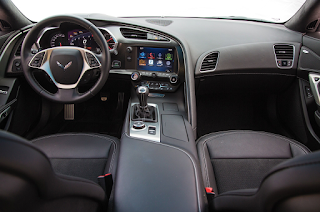
Corvette ZR-1 Cockpit
When it comes to the interior, the ZR1 came with an abundance of options and colors. The buyer was able to request almost everything from the steering wheel to the door panels be wrapped in rich leather. They would also have the option of different model-specific badges to be placed on the inside of the vehicle.

Power-adjustable heated leather seats with microfiber inserts could be purchased for a better day-to-day driving experience. Corvette also offered a package called the 3ZR. This package included a nine-speaker Bose system, Bluetooth wireless technology, a head-up display, and a SiriusXM satellite radio, making sure that ultimate convenience and comfort could be achieved.

Blue ZR1 20009

Price Tag And Gas Mileage

With supercar looks, power, and track times to match, this ZR1 puts otherworldly supercars to shame when you compare price tags to performance. When brand new, the MSRP price tag was $112,000.00, which was much cheaper than a higher-powered Farria, Lambo, or Porsche at the time. The ZR1 also rated very high in gas mileage for a 2009 sports car. With an EPA-estimated 14 city/20 highway mpg, the Corvette did better than most vehicles with that size engine. 


The best thing about the ZR1 is for the first time ever, Americans who were in the market for a supercar could finally buy an American-built supercar, minus the outrageous cost of maintenance, luxury tax, and everything else that comes along with owning an overseas supercar.  


.

Sunday, December 26, 2021

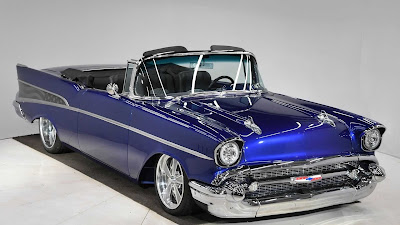
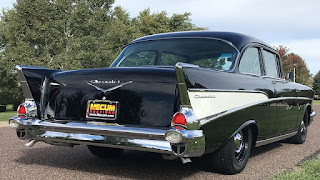
'57 Chevy: One Of The Most Influential And Iconic Cars Of All Time!


'57 Chevy Bel Air

How Did The 1957 Chevy Come About?

It starts with Chevy's need for change. For the first time since 1918, Chevrolet was willing to offer a V8 in its 1955 Chevy sedan, and with that V8, Chevy thought it would be a good time to get rid of the shoe-box look that they were recently using and try something different. 

Chevrolet Chief Designer, Ed Cole, wanted to get rid of the shoe-box look by 1956 and have a whole new look for 1957. Unfortunately, things didn't go as planned and the new look never launched forcing Cole and the design team to make do with the shoe-box style for one more year, but there were going to be big changes.

To help differentiate the '57 from '55 and '56 Chevy, Cole brought in Harley J. Earl, a famous automotive designer. Earl had already had huge styling successes under his belt that not only worked out for General Motors, but also influenced the automotive world as a whole. 


The changes Earl was making to the '57 Chevy would be widely ridiculed by Earl's co-workers, automotive experts, and anyone and everyone who just couldn't see his vision the way he did. 

'57 Chevy Dramatic Transformation

'57 Chevrolet

Some of the changes were: A new dashboard, a reshaped windshield, sealed cowl, and 15-inch rims to replace the 16-inch rims. Also, Earl decided to relocate the air-ducts to the headlights, which gave the car the big distinctive chrome look in the front. Then he added the iconic quarter-panel fins to the rear to help make the Chevy six inches longer, ultimately giving the Chevy the lowered look that everyone recognizes today.

1957 Chevy Fuel Injection


Other intriguing things that were new with the '57 were a lighter front-end, a bigger engine bay, and new drivetrain options that included a fuel-injection system and a three-speed Hydra-Matic transmission. A dual exhaust was offered with all V8 options for a little more horsepower but more so for the cool sound that it would give the Chevy. 

In commercials, magazine ads, and on billboards, the Chevy motto was always the same: "Chevy Puts The Purr Back Into Performance."

1957 Chevy; New York Times


A 1957 Chevrolet Coupe And Convertible For Everyone

Different trim options helped make the car more affordable for the average family and classy enough for those who wanted the feel of something a little more luxurious.

Trim Models Were As Followed:

Base: 150 Series
'1957 Base 150 Series


Base: 210 Series
'57 Chevy Based 210 Series


Del Ray: 210 Series
'57 Chevy Del Ray 210 Series


Base: Bel Air
'57 Chevy Bel Air


Convertible: Bel Air
1957 Chevy Convertible Bel Air


Nomad: Bel Air (station wagon)
1957 Chevy Nomad Bel Air


El Morocco: custom hand-built to mimic a Cadillac
1957 El Morocco


Each version was available in a two-door or four-door body style. The base "150" series with an in-line six was not only priced very well for consumers on a budget but also did very well when it came to gas mileage compared to the V8s. 

As you went up in models, you went up in comfort and class and, of course, in price. The Bel Air and Bel Air convertible was the most popular and expensive models, and in today's market, it is the most wanted by all collectors and car enthusiast alike, even if you're not a Chevy fan, you've probably wished you had a '57 Chevy at one point or another.

Choose Your '57 Chevy Options

Each version had options that could be ordered up to make the car more comfortable and luxurious. Some of those options were air-conditioning, power brakes, power steering, a padded dashboard, power windows, and power seats. Color schemes and chrome trim options were another way to show your impeccable taste in automobile selection.    

Also, a signal-seeking radio with a power antenna could be purchased along with a separate speaker that could be placed in the back, and at that time, that's what automotive companies called surround sound. The "Automatic-Eye" was another new option. The Automatic-Eye was attached to your dashboard and could detect on-coming traffic and dim your headlights automatically - high-tech for 1957.


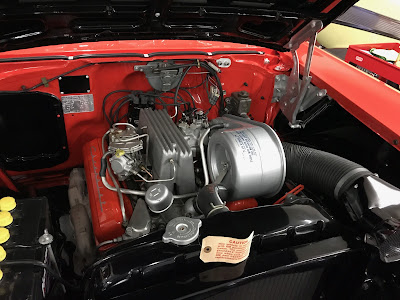
'57 Chevy Engine Bay


One of the things that played a part in making the '57 Chevy so desirable was the bigger engine bay it came with. This was important because it made room for the big-block engines that Chevy was making for racing at the time. As drag racing became more popular and going fast was the thing to do, having a '57 Chevy that could accommodate Chevy's big-block engines with virtually no fabrication required was a huge plus to the go-fast racing enthusiast.

Even without the big blocks, you could still make plenty of power by opting for what Chevy called the Power-Pack (283 cubic-inch engine with solid lifters, a 4 barrel carb, and dual exhaust), which would make 275 horsepower right off the showroom floor. 

Fuel-Injection '57 Chevy


Although the 283 cubic-inch motors would make 283-hp with fuel injection, that option was often overlooked by consumers at the time because very few people knew how to work on fuel injection setups. Even mechanics were having problems working on the new fuel-injection system. So, if you were buying the car to modify it and or race it, going with the carburated setup you already knew how to work on was a much smarter way to go.

The odd thing about these desirable collector cars is that in 1957, the sales of Ford's '57 Fairlane model ended up out-selling the Chevy. Maybe it was the 1957 Chevy's bold chrome front-end or the rear-fins that threw consumers off. Maybe it was the introduction of the fuel injection and the 3-speed Hydra-Matic transmission - both of which consumers were skeptical about. Whatever the case was, by the time the '80s rolled around, these were considered one of the most, if not the most, collectible cars around.

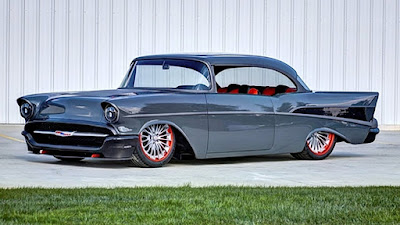
'57 Chevy Custom


Worth Every Penny

Nowadays, a meticulously restored '57 Chevy Bel-Air can go for around $100,000.00 or more, and a seller could catch even more for a convertible in the same condition. But if you are thinking about buying one, you will want to be careful and maybe even seek some professional help before doing so. There are a lot of replicas out there, and it can be very easy to be fooled.

Tuesday, July 13, 2021

1965 Corvette 427 Big-Block "Muscle Car Era" Begins

Corvette 427 Cu-in

Corvette 427 Big-Block

Back in 1965, Chevrolet decided to get innovative and give the public something they had been craving—a small sports car with a huge motor. Corvette would be the first sports car to drop a big-block motor into a sports car, and consumers were intrigued and loved it.

Making the 396 Bigger 

Chevrolet created a feasible 427 cu.-in. motor for the Vette by taking the already powerful Chevrolet 396 cu.-in. motor and machining the bore and stretching the stroke of the block to a larger 427 cu.-in. This is the same way the legendary Chevrolet 327 cu.-in. engine came about. The Corvette's original 289 block was bored and stroked to a 327. 


Related image
Big Block Hood


427 Big-Block Engines Were Available in Two Versions: 

  • L36 390 horsepower  
  • L72 425 horsepower 

Both engines were available choices given to consumers when ordering a Vette, and both engines performed sensationally depending on what kind of fun you were looking to have. 

The Extra Cost for the 427 Big-Block

  • The lower output L36: $185.00 Extra 
  • The higher output L72: $350.00 Extra


What Came With The High Output L72

The extra cost for the L72 would get you a better-structured motor that included: 

  • Four-bolt mains
  • Larger oil fitting ports 
  • Impact-extruded aluminum pistons (11.0:1) compression 
  • More aggressive solid lifter camshaft
  • Larger rectangular port cylinder heads 
  • Aluminum intake
  • Holly 780 CFM carburetor
  • Free-flowing exhaust manifolds
  • And a K66 transistorized ignition to help complement the other higher output parts. 

Although the L72 was rated at a massive 425 hp, it was a well-known fact the actual horsepower output was well above that publicized rating. The reason for Chevrolet's deception on horsepower numbers was to avoid unwanted backlash from the safety legislation. 

A Pleasing Power-to-Weight Ratio 

The 427 big-block Chevrolet motors were a tight fit for the Corvette, but the power-to-weight ratio was very pleasing for speed freaks. Plus, the much cooler big-block hood that came with the Corvette to make room for clearance, told people what was under the hood. Chevrolet would spend about six more years using a big-block powerplant as an option for Corvette consumers. 


All Good Things Must Come to an End!

After 1972, the change to bring about more fuel-efficient cars would change what kind of powerplants all muscle cars would receive. This new change would eventually spawn the end of an era, the "Muscle Car" era. 


Cross Fire Injection Corvette


Small-block 350s de-tuned and ready to do poor performance was what the American car enthusiast would have to put up with for power through the mid-'70s and '80s. In the late '80s and early '90s, change for more power started up again, and since then, there hasn't been much reason to complain. 


LS1 5.7-liter


The scary acronym EFI (Electronic Fuel Injection) has become a household name for all vehicle enthusiasts, and boosted and nitrous applications seem to run much better tuned by a computer than by backyard mechanics and their outdated techniques.