Monday, April 17, 2023

1991 GMC Syclone and 92-93 Typhoon: Factory-Built All-Wheel-Drive Drag Racing Success


GMC Syclone and Typhoon

Summary

  • Turbocharged Performance: The Syclone and Typhoon brought turbocharged V6 power and all-wheel drive to the GMC lineup.
  • Buick Connection: The idea was originally developed by Buick and drew heavily from GM's successful turbocharged V6 technology.
  • PAS Engineering: PAS helped turn the concept into two of GM's most memorable performance trucks.
  • Serious Speed: These trucks could run the quarter-mile in the 13s in stock form and became even quicker with aftermarket upgrades.
  • Collector Status: Limited production numbers helped make the Syclone and Typhoon highly sought-after performance trucks.


  • GMC Syclone and Typhoon


    Back in 1991, the dog days of the sad, slow, so-called economy-efficient sports cars were starting to come to an end. The Tuned-Port Injection (TPI) setups that General Motors was using in its sports cars were about to be replaced by a much more stout-performing LT1 350-cu.-in. engine.

    '91 GMC Syclone

    But before the change, the GMC truck division of General Motors made an interesting move to get involved in some of the performance hype GM was encouraging at the time. GMC signed a contract with an aftermarket performance company called PAS (Production Automotive Systems). PAS and GMC joined forces to create two of the fastest production trucks of their time: the '91 GMC Syclone pickup truck and the '92-'93 GMC Typhoon SUV.

    The PAS company was no stranger to this type of work. Pontiac called upon them to help build the now-famous.

    20th Anniversary 1989 Pontiac Trans AM

    1989 Turbo Trans Am 20th Anniversary Edition. Oddly enough, Pontiac kept it simple when building this sports car and went with what already worked for Buick by using the very successful 86 and 87 Grand National drivetrain setup. The turbocharged intercooled 3.8-liter V6 was already tormenting sports cars on the streets and at the track.

    A Turbocharged Truck Was Buick's Idea

    Originally, Buick came up with the idea for the turbocharged truck, but to avoid conflict with the GMC truck production branch, Buick handed the idea over to GMC. There was some hesitation to take on the project since Chevrolet already had a similar black regular-cab pickup truck on the market with a 454-cu.-in. engine.

    But some forward-thinking engineers and designers saw the potential in smaller engines. Assuming Buick could make it work in a G-Body grocery-getter with much success, doing the same in a small truck and an SUV should work just as well. To nobody's surprise, it did.

    Similar Buick Setup But A Bigger Engine For The Syclone and Typhoon

    The PAS company engineered a 4.3-liter Vortec engine equipped with a turbocharger and an intercooler to fit in both the Syclone and the Typhoon.

    To efficiently transfer engine
    '91 GMC Typhoon
    power to the wheels, both models would receive the four-speed 700R4 automatic transmission, the same transmission that many GM vehicles came with, including GM sports cars and the Buick turbo cars.

    The First Factory-Built All-Wheel-Drive Technology Used For Drag Racing Performance

    What made the Syclone and the Typhoon so unique compared to other trucks was that they used a very performance-efficient all-wheel-drive system. This technology helped these trucks, with an underrated and unofficial horsepower rating of 280, get down the quarter-mile with times that would stop the clocks somewhere in the high-to-mid 13-second range.

    Since the GMC 4.3-liter turbo technology was so similar to the successful Buick 3.8-liter turbo cars, aftermarket parts dealers and car enthusiasts knew exactly what easy upgrades could be made to make these trucks amazingly performance-efficient. I've personally seen Typhoons run in the high 10-second range, while lighter Syclones could stop the clocks in the 9s.


    GMC Syclone and Typhoon: Unbeatable Deal

    With great gas mileage, excellent performance, and the fact that they were limited-production vehicles, the GMC Syclone and Typhoon were, and still are, collector items for car enthusiasts.

    With production numbers of only 2,998 '91 Syclones, 2,500 '92 Syclones, and 2,200 '93 Typhoons built, the price tags on these rare trucks still stay in the $15,000 to $25,000 range for the ones that are still in good condition.

    Unfortunately, the PAS company in Troy, MI., which was responsible for the GMC Syclone and Typhoon's engineering and design, would go out of business sometime after GM decided not to move forward with any more specialized GMC vehicles.

    The decision to move forward without PAS-specialized vehicles was mostly due to the progression of the Corvettes, Camaros, and Trans Ams, along with the need to focus on new electric-vehicle technology.

    That may have sounded silly back then, but now, all auto companies have moved in the electric-vehicle direction, and GM predicts that by 2035, the only vehicles it will be producing will be all-electric vehicles. We'll see how that works out!

                 
    4.3-liter turbocharged intercooled


    Syclone and Typhoon GENERAL SPEC

    Type: V6 GMT300

    Disp.: 262 C.I. (4.3L)

    Transmission: 700R4

    Drive: All-Wheel Drive

    Syclone Horsepower: 280 Horsepower and 350 lb.-ft. of Torque

    MPG: 17 city and 19 highway

    Typhoon Horsepower: 285 Horsepower and 350 lb.-ft. of Torque

    MPG: 14 city and 17 highway

    These Are Very Fun Vehicles To Drive And Still Hold Thier Value Very Well!


    Saturday, March 4, 2023

    1951 Buick LeSabre Concept | Harley J. Earl Advanced Technology The World Wasn't Ready For

    1951 Buick LeSabre Concept


    Summary

  • Way Ahead of Its Time: The 1951 Buick LeSabre packed technology that looked decades into the future.
  • Harley Earl: GM's legendary Head of Styling designed the radical concept and drove it for years.
  • Supercharged V8: A 215-cubic-inch aluminum V8 made an impressive 335 hp.
  • Futuristic Features: Hidden headlights, automatic jacks, rain sensors, dual-fuel capability, and backup electrical power made this Buick seriously advanced.
  • Jet-Age Styling: The wraparound windshield, dramatic curves, and aircraft-inspired interior made the LeSabre unlike anything else on the road.


    1951 Buick LeSabre Concept


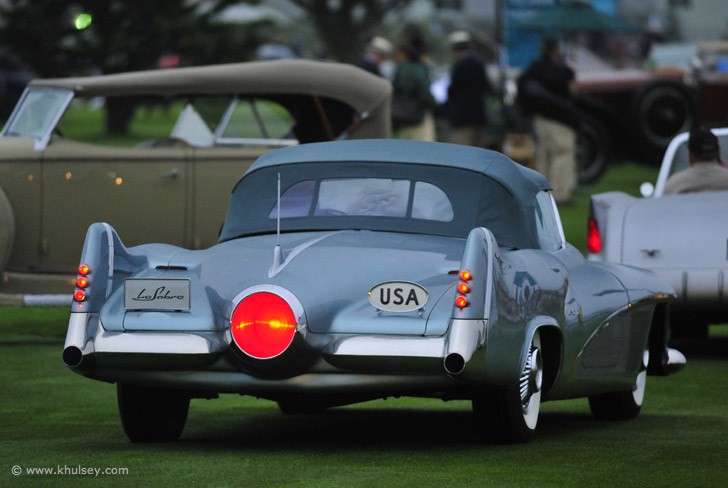
  • Back in 1951, this convertible Buick LeSabre was not just extreme-looking—it was way ahead of its time. It had technological advancements that weren't even thought of yet and would give us a sneak peek into the future of the automotive industry.

    Harley J. Earl was the lead designer of this beautiful piece of machinery. From 1927 to 1958, he was General Motors' Head of Styling and had his hands in the cookie jar of many breakthrough designs and technology projects that would change the auto industry for years to come.


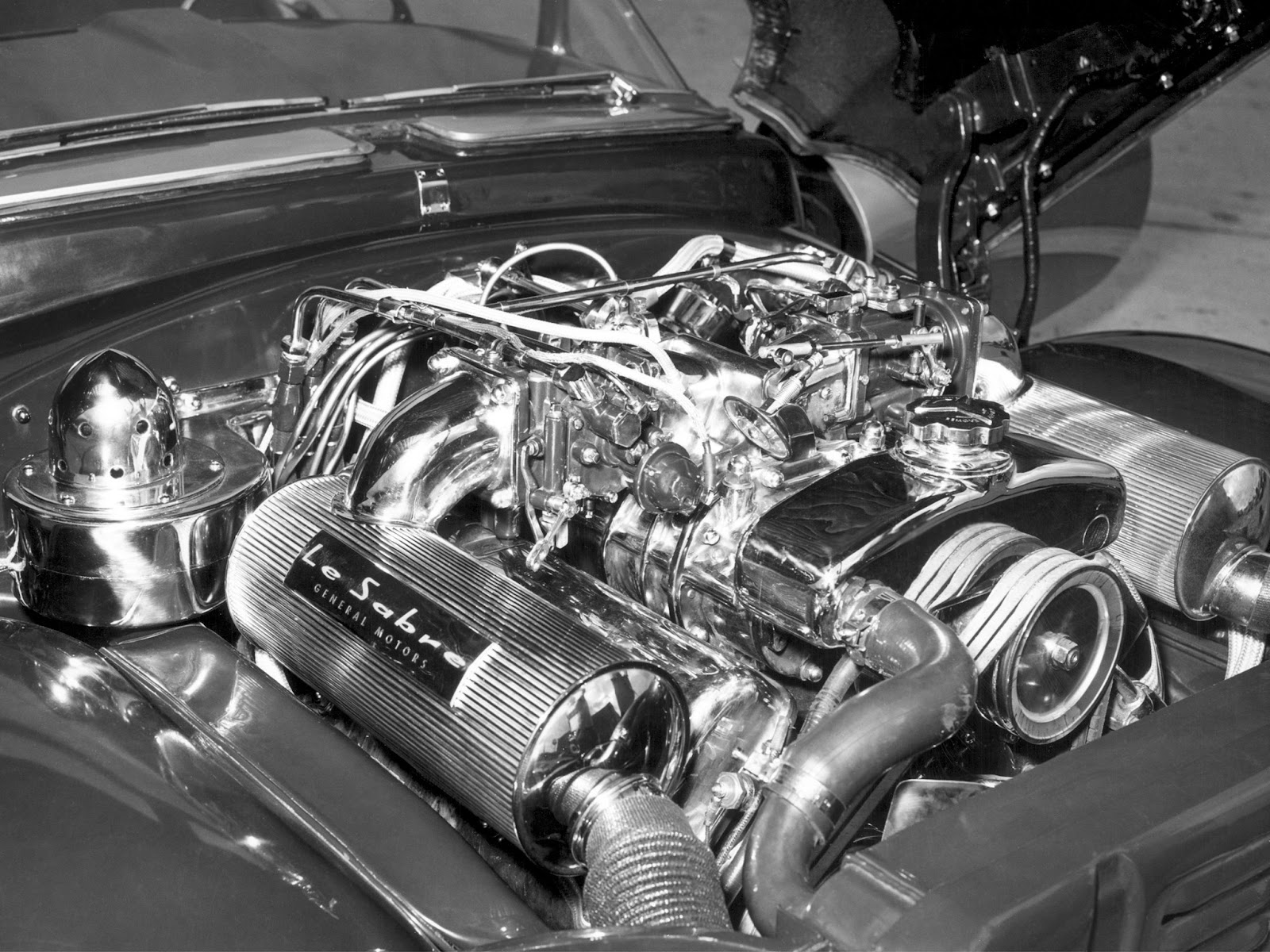
    One of the first things that really set this car apart was that it could function on gasoline and methyl alcohol. There were separate fuel cells for both sources and an easy way to switch between the two from the convenience of the driver's seat. It also had one of the first smaller engines that could produce high horsepower, much like what we see in today's vehicles. This Buick used a 215-cubic-inch V8 HEMI aluminum block topped off with dual carbs, aluminum heads, and a supercharger that produced 29.5 PSI. All these goodies made the engine good for 335 hp at 5,500 RPM. In 1951, that was an outstanding number for such a small engine.

    The styling was nothing short of artwork for this concept Buick. Earl designed the first wraparound windshield, which gave the driver a panoramic view of the road and surrounding areas. It also saw the likes of GM's first rear brake coolers, which used functioning rear scoops on the back quarter panels. The scoops were designed and positioned to cool the brakes and the battery located in the back.

    One of the very noticeable features that people hadn't seen too much of was the hidden futuristic headlights that would pop out from behind the grille with the flip of a switch. The Buick LeSabre also had a feature that, to this day, is only really used on Indy and Formula 1 cars. The automatic jack system was the first of its kind and allowed you to work under your car without a floor jack or jack stands.

    Maybe today, the feature doesn't sound like much, but think back to 1951 and the stock emergency jack that would be provided for you if you had an unfortunate flat tire. Remember, in '51, there were no cell phones to call AAA or a friend and no OnStar-type systems.

    Another feature that would really stun you back in 1951 was the automatic sensors that could recognize rain and put your ragtop and windows up without you being around to control them. The Buick even had a backup source of power, so if your battery died, you could still at least control features like the radio, windows, and ragtop.


    This concept was designed from Earl's imagination and his love for jet airplane designs. The sleek styling lines and flamboyant curves are what really set this Buick apart. The interior even showed a little bit of aeronautical passion, with a dashboard that included an altimeter, tachometer, and a compass.

    Earl adopted this 1951 Buick LeSabre as his own and drove it until he had about 50,000 miles on it before handing it over to the GM museum in the 1960s. Earl was a well-respected designer who became a legend along with his creations, like this one.

    Sunday, December 18, 2022

    1997 Camaro SS 30th Anniversary SLP Edition (LT4)


    1997 Camaro SS SLP


    Summary

  • Rare SLP Edition: Only a tiny number of 1997 Camaro SS 30th Anniversary models received the LT4 upgrade.
  • 330 HP LT4: SLP installed the Corvette-derived 5.7-liter LT4, rated at 330 horsepower.
  • Classic Looks: Arctic White paint and Hugger Orange stripes paid tribute to the 1969 Indy 500 Pace Car.
  • Serious Performance: A T56 six-speed, performance exhaust, Bilstein suspension, and Torsen differential helped these Camaros run 0-60 in 4.9 seconds and the quarter-mile in 13.3 seconds.
  • Rare Collector: The LT4 SLP cars are easy to confuse with regular 30th Anniversary SS models, making proper identification important.
  • 1997 Camaro SS 30th Anniversary SLP Edition


    Anniversary Editions are always fun. Special stripes, badges, and performance upgrades find their way onto a limited number of stock versions of a vehicle to celebrate a special year.

    Although anniversary editions usually see minor changes, that wasn't the case when it came to the 1997 Camaro SS 30th Anniversary SLP Edition. All of the 30th Anniversary Camaros (RS, Z/28, and SS) received an eye-popping color scheme and 30th Anniversary badges placed throughout the interior, but a few SS Camaros (100 in the U.S., six in Canada, and two prototypes) got much more than just a few minor upgrades and a cool-looking color scheme. Those few special Camaro SS models received a stout LT4 5.7-liter engine installed by SLP.


    1969 Indianapolis 500 Pace Card


    Where Did The Color Scheme for the Anniversary Edition Camaro Come From?

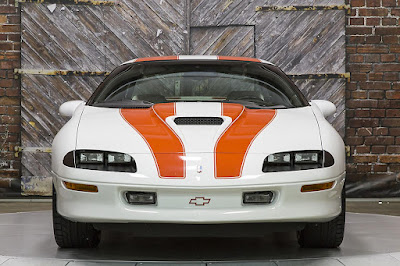
    The color scheme is a throwback to the 1969 Indianapolis 500 Pace Car Camaro. Just like in '69, the '97 30th Anniversary Camaro was painted Arctic White and accompanied by a set of Hugger Orange racing stripes that graced the hood, decklid, and roof of all the 1997 Anniversary Editions, unless it was a convertible.

    The All-Important 330 HP Badge

    They all may have looked the same and had the same embroidered badges on the seats and floor mats, but only a select few got to wear the all-important 330-hp badge indicating an LT4 under the hood.

    Almost all of the Anniversary Editions came with stock engines that matched their trim package, except for those few lucky SS Camaros that got to take the trip to SLP Engineering after they rolled off the assembly line.

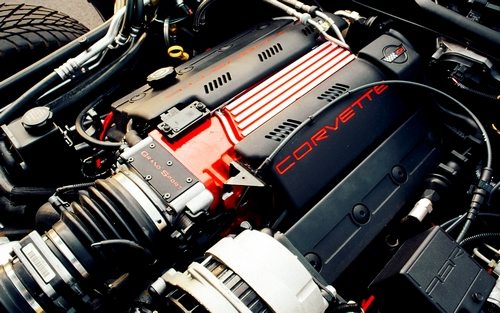
    SLP Engineering was able to get its hands on extra leftover LT4 motors that were used in the 1996 Corvette Grand Sport a year earlier. Before SLP bolted these LT4 motors into the Camaros, they broke each engine down and had them balanced and blueprinted.


    LT4 Camaro SS engine

    On paper, the LT4 was documented to produce 330 horsepower at 5,800 RPM and reached its maximum torque at 4,500 RPM. But many car enthusiasts and automotive professionals believe this 10.8:1-compression motor was definitely underrated.


    SLP SS Camaro


    More SLP Camaro Upgrades

    The 1997 Camaro SS with the SLP LT4 upgrade also received a Borg-Warner T56 six-speed manual transmission, a performance exhaust, a lightweight driveshaft, Bilstein sport suspension (optional level III Bilstein suspension package), and a Torsen limited-slip differential. 


    All those extras were good to get you from 0-60 mph in 4.9 seconds and down the quarter-mile in 13.3 seconds. 


    With the explosion of technology in the auto industry, that may not seem so amazing in this generation, but back in 1997, that was the fastest production American sports car on the market. There were no American sports cars at that time that could be bought from a dealer that went that fast.


    330 HP Badge SS Camaro


    Identifying a 1997 Camaro SS 30th Anniversary LT-4 SLP Edition

    So how do you tell if what you're looking at—or what you own—is one of these rare 30th Anniversary SLP LT4 SS Camaros? Regular SS 30th Anniversary Camaros are commonly mistaken for these very rare SLP Editions, and that's because they're easy to pass off as one.

    All of the SLP LT4 Editions rolled off the line and out of the factory as LT1 Camaros before being shipped off for the special treatment. That means even SLP LT4 SS Camaros will still indicate that they are LT1 Camaro SS models in the VIN.

    First, to either begin or end the discussion of whether it is a true SS or not, look at the trim options. If it's anything other than a white SS hardtop with Hugger Orange stripes, your SS is not an SS LT4 SLP Limited Edition.

    There are a few places on the Camaro that will definitely give you the information you want if it wasn't removed post-SLP treatment. Right above the rear bumper, on the opposite side of the SS emblem, a special-edition 330-hp badge will let you know if it's an LT4 SLP, but these can be easily applied to regular SS Camaros.

    To get to the bottom of your research, you want to look inside the driver's-side door and/or inside the glove box to find the RPO code. This should indicate if it has been in the hands of the SLP engineers. But if you're still not sure what you're looking at, you can always call SLP Engineering. They are sure to have records of which Camaros they got their hands on.


    1997 Camaro SS 30th Anniversary LT4 SLP Edition


    If you do have a true LT4 SS 30th Anniversary Camaro in your sights, you're looking at a true collectible. These cars will eventually sell on the Barrett-Jackson block like the COPO Camaros do right now. They're good-looking, powerful, rare, and fun to drive.

    Happy Hunting!


    Sunday, December 4, 2022

    The 1956 Corvette "The Real McCoy" That Saved The Brand

    1956 Corvette

    Summary

  • Corvette Almost Died: By 1955, Corvette sales had fallen to just 700 units, putting its future in serious doubt.
  • Duntov Steps In: Zora Arkus Duntov helped transform the Corvette with a stronger chassis and a focus on performance.
  • The Real McCoy: Project Corvette #6901 became a heavily modified prototype built to prove what the Vette could really do.
  • Racing Success: The Corvette set a 150.58-mph flying-mile record and later won its class at the 12 Hours of Sebring.
  • Corvette Takes Off: The racing success and Chevrolet's marketing helped boost sales, with 1957 production nearly doubling from 1956.

  • 1956 Corvette Logo


    Just about anybody in the world who knows a little about cars knows that the Corvette was the first American sports car and is now one of the most popular, fastest, and most recognizable American sports cars to date. But what a lot of people may not know is that this was not always true. In fact, by 1955, the Corvette almost saw its extinction.

    Rumors about the move to drop the Corvette flooded out of Chevrolet's top offices, with very sad sales numbers to back up what seemed to be a good idea. Their competition, the two-seater Ford Thunderbird, sold an astonishing 16,000 units in 1955. The Corvette? A depressing 700 units.

    Unfortunately for Ford, the same car that was taking so many sales away from the Corvette would actually be the inspiration for keeping the Corvette in the product lineup. The idea behind keeping the Vette and spending more money on a car that was obviously tanking was pushed by a few Chevrolet bigwigs, including former Corvette chief engineer Dave McLellan.

    McLellan released a statement concurring that if the Ford Thunderbird was doing so well, there was obviously a market for a two-seater sports car. With a solid change for the better and the right amount of marketing, the Corvette should be able to become a moneymaker.

    In an ironic twist, the very car that Corvette planned to piggyback off of—the Ford Thunderbird—had already made future plans to market the car differently by doing away with the two-seater style and making it a four-seater touring car. That left the American sports car market wide open for Chevrolet and its Corvette.


    Corvette 327

    "The Real McCoy"

    As wide open as the market was, the Corvette needed some changes for success, ideally in the form of performance and a new body style. When Zora Arkus Duntov took the reins as Corvette Chief Engineer, he was ready to make those changes, but he knew first that the chassis had to be redesigned to handle any horsepower upgrades.

    Once engineers updated and strengthened the chassis, Chevrolet engineers went performance and horsepower hunting. First, they ditched the boring and heavy two-speed Powerglide transmission and replaced it with an upgraded four-speed. They also took the original 265-cu.-in. motor and bored it out to a 307 that sported dual Carter carbs and a now-famous "Duntov High-Performance Cam."

    1956 Corvette Real McCoy

    Other upgrades were also included on the Real McCoy, like a very rare set of Halibrand magnesium knock-off wheels, special heavy-duty brakes with cooling scoops, heavy-duty shocks and sway bars, an upgraded high-capacity fuel tank, and more—all newly implemented to help achieve the Corvette performance desired.

    After all of those upgrades, top engineers slapped a new SR Prototype body on what was now known as Project Corvette #6901. The engineers called it "The Real McCoy" and decided it was ready to head to the racetrack.


    Daytona Speedway Record

    The first stop for the "Real McCoy" was the Daytona Speed Week for a two-way flying mile. This is where the Corvette would make its first milestone. At the time, the record for the Corvette class was 127 mph. With Duntov as the driver, the 255-horsepower Corvette sped to an average speed of 150.58 mph to crush the record.

    This was an extremely significant record because it occurred just weeks before the New York Motorama, where the Corvette would be on display to many potential buyers, most of whom had already heard the news of the record-breaking performance.


    12-Hour Sebring Race

    A few months after Daytona, the groundbreaking Corvette made its way to the famous 12-Hour Sebring Race. This race was designed only for the toughest of the tough—the fastest of the fast. Only cars like Jaguars, Bentleys, and Aston Martins graced the racetracks for these events.

    But with a chance to prove that the Corvette had changed and deserved respect alongside the other powerful sports cars, Chevrolet did not shy away. Instead, they joined in on the action.


    1956 12-hour of Sebring


    Race car drivers John Fitch and Walter Hansgen were brought on board to take on the challenging race. When the green flag dropped, the race was on. But early in the race, the Corvette experienced mechanical problems, so much so that they didn't think it would finish.

    In the end, not only did the Real McCoy Corvette finish, but it also finished first in its class and ninth overall. This was an incredible accomplishment, especially considering 60 cars entered the event, but only 24 crossed the finish line.

    With another huge milestone under Corvette's belt, Chevrolet exploited it by printing ads like "A Tough, Road-Gripping Torpedo On Wheels" and "The Most Remarkable Car Made In America Today."

    Those ads were meant to send a message: Corvette had finally arrived as a force in international sports car racing, and they proudly called this particular Vette "The Real McCoy."

    Between all of its accomplishments and Chevrolet's ad campaigns, the '56 Corvette sold 3,467 units, and in '57, they nearly doubled that with 6,339 sold.

    One of the main reasons the Corvette saw such selling success was that if Chevrolet raced the Vette in its respective class at the 12-Hour Sebring race, every part that was changed or modified for the race had to be documented and later made available to the public. This process made potential buyers very excited about being able to buy a Corvette and beef it up to run and look just like "The Real McCoy."


    Real McCoy Corvette at Mecum

    Auctioned Away For $2.3 Million


    In any event, if it weren't for the #6901 '56 PJ Prototype "Real McCoy" Corvette, and possibly the success of the Thunderbird, Chevrolet may have never gone forward with the Corvette. And the automobile industry would definitely not be the same today.


    Saturday, November 26, 2022

    Pontiac Firehawk Third and Forth-Generation: Which One Is On Your Wishlist

    2021 Pontiac Firehawk

    Summary

  • The Dark Years: Fuel prices, emissions regulations, insurance costs, and economic problems made high-performance cars scarce from the mid-'70s through the '80s.
  • The Firehawk Arrives: Pontiac teamed up with SLP to create the Firehawk, turning the Firebird into a much more serious performance machine.
  • The First Firehawks: The '91-'92 cars packed an L98 350 V8, 360 horsepower, a six-speed manual, upgraded suspension, Brembo brakes, and serious performance hardware.
  • Fourth-Gen Muscle: The Firehawk evolved with the LT1, improved suspension, ram-air induction, and eventually the Corvette LT4.
  • The LS1 Era: The '99-'02 Firehawks brought the new Formula/Trans Am body style, more horsepower, suspension upgrades, and Trans Am availability.
  • A Rare Breed: With low production numbers throughout its run, the Firehawk became one of the more collectible performance versions of the F-body.
  • F-Bodies Fade Away: The end of the Firehawk and Pontiac marked the end of an era, making these cars increasingly important pieces of Pontiac performance history.


    Pontiac Firehawk Logo

  • I think most automobile enthusiasts would agree that very few vehicles from the mid-'70s to the late '80s could be considered high-performance vehicles. Between higher-priced fuel due to oil shortages, the EPA clamp-down in search of better emissions, and sky-high insurance rates, there just wasn't much of a market for high-performance cars, especially with the U.S. bouncing in and out of recessions.

    But still, in the '80s, there were some well-performing cars that gave us gearheads some hope for a change—a light at the end of the tunnel that would get us out of an era that produced mostly disappointing sports cars and sad muscle car attempts. 


    So when did the tides start to change for the high-performance automobile industry? 


    Buick Grand National

    It is tough to pinpoint exactly when or where, but there were a few vehicles like the Buick Grand National, GMC Syclone and Typhoon, prototype 454 Corvette ZR-2, and some other impressive attempts to revive the high-performance auto industry.

    One very important contribution to that revival was the creation of the Pontiac Firehawk. Let’s take a look at how these cool cars got their start, what made them awesome, and how they evolved.


    92 Pontiac Firehawk

    The 1991 and 1992 Pontiac Firehawk 

    When Pontiac was ready to give its sports car a boost in the right direction, it looked to SLP. Starting in 1987, SLP had been a huge contributor to high-performance parts for vehicles of all kinds.

    Pontiac didn't just slap some SLP high-performance parts onto the soon-to-be Firehawk. Instead, the two companies joined together to create a new performance RPO code, B4U, better known as the Pontiac Firehawk.

    Built off the Firebird trim package, this Pontiac received an L98 350 V8 engine that pumped out 360 horsepower and 390 lb.-ft. of torque, thanks mostly to upgraded pistons, intake, exhaust, and a set of well-ported heads.

    Other upgrades included:

    • C4 Corvette ZF 6-speed manual transmission
    • Aluminum driveshaft
    • Limited-slip differential
    • 275/40-17 tires
    • Recaro front seats
    • Aluminum hood
    • Roll cage
    • Five-point harnesses
    • Stiffer bushings for the rear control arms
    • Brembo® brakes
    • Optional fuel cell

    Performance Results

    There are no official times that any one source can definitively tie down, but an easy 13-second quarter-mile at 106 mph seems to be about on target, along with a 4.6-second 0-60 mph time.

    Production Numbers

    Between the '91 and '92 third-generation Firehawks, a total of 25 were built. The first eight Firehawks were built as 1991 Pontiac Firehawks, and the last 17 were built as 1992 Firehawks.


    Fourth-Generation: Pontiac Firehawk 1993


    93 Pontiac Firehawk

    The first Firehawks were so well-received that there was no doubt Pontiac was going to carry the nameplate over to the fourth-generation Firebirds. Unfortunately, these Firehawks would receive fewer upgrades from the original '93 Firebird Formula. Most people believe it was to keep the Firehawk from taking too much away from the new-generation look and drivetrain.


    1993 Fourth-Generation Firehawk Upgrades


    With both the Camaro Z28 and Firebird Formula now receiving the new LT1 that Corvette started using just one year earlier, more power became a little more achievable. In stock form, the 5.7-liter LT1 engine made 275 horsepower. With some special Firehawk tuning, the LT1's power was boosted to 300 horsepower and 330 lb.-ft. of torque.


    Other Upgrades Included: 

    • Lightweight composite hood with functional CAI ram air
    • Firehawk graphics
    • Stainless exhaust tips
    • 17-inch x 8½-inch aluminum alloy wheels
    • P275/40ZR17 Firestone Firehawk tires
    • 201 Firehawks produced in 1993 with the RPO code of R6V


    1994 Pontiac Firehawk 


    1994 Firehawk

    These fourth-gen Firehawks would get an increase of 15 horsepower and an increase of 5 lb.-ft. of torque from the previous year. The increase was achieved thanks to a 3-inch dual system with a less restrictive muffler. You were also able to option up a Level II Bilstein suspension package for some great handling attributes and better launches. 

    1995 Pontiac Firehawk


    95 Pontiac Firehawk Convertible


    Although mostly unchanged from the previous year, Pontiac did make a move that made the Firehawk more desirable to a wider audience. For the first time, a Firehawk buyer had the option of purchasing one in a convertible configuration. In fact, 102 convertibles were said to have been built for '95.

    Unfortunately, although the convertible Firehawk received all the other performance upgrades as the other Firehawks, it could not be ordered with the Level II Bilstein Sport Suspension.


    1996 Pontiac Firehawk 


    1996 Pontiac Firehawk


    1996 was a low-production year for the Firehawk due to the interest SLP found in the WS6 Ram Air Pontiacs and Camaro SS. Only 41 were produced, but the nice thing was that the Firehawk performance package ended up costing less than it did the previous year.


    1997 Pontiac Firehawk 


    97 Pontiac Fire Hawk


    1997 was another special year for the Firehawks. Although it is unknown how many were produced overall, 29 were built with a Corvette LT4 engine. Since Corvette had moved on to the new and improved LS1 engine in '97, there were extra LT4 engines left over. Some of those engines went into the '97 Camaro SS SLP Edition, while others went into the Firehawk.

    Other than the bigger engine package, not much changed from '96 to '97 for the Firehawk.


    LT4 engine

    Some More Upgrades Through The Fourth-Generation Years That Could Be Ordered Depending On Year And Configuration Were:
    • Engine Oil Cooler Package
    • Performance Lubricants Package with synthetic rear axle lube, semi-synthetic power steering fluid, and premium-quality synthetic media engine oil filter
    • Torsen Limited Slip Differential (includes Performance Lubricants Package)
    • SLP Hurst short-throw shifter with H-shift knob
    • American Racing Equipment chrome-plated aluminum wheels
    • LT4 Engine Upgrade (only for '97)

    1998 Pontiac Firehawk 


    Firehawk


    No Firehawks were made in anticipation of a big entrance for ‘99.

    1999-2002 Pontiac Firehawk


    1999 Pontiac Firehwawk


    These-generation Pontiac Firehawks would get the brand-new Formula/Trans Am body style. Outside of their Firehawk emblems and sometimes different rims, there was one sure way you could tell a Firehawk apart from a Pontiac Formula or Trans Am, and that was the Ram Air induction.

    All Firehawks had distinctive Ram Air with two solid hood scoops for the induction system, whereas the Formula and Trans Am ordered with the WS6 Ram Air package had a hood that looked like it had four air inlets.

    The big changes for the '99-'02 Firehawks were the horsepower, a selection of suspension upgrades, and the chance to finally get a Firehawk in Trans Am trim. Thanks to the success of the LS1 engines, Firehawk Trans Ams were popping up all over the place, and they were mighty feared competitors on the streets.

    Horsepower changes for those years are as follows:

    • 1999 - 327 horsepower
    • 2000 - 330 horsepower
    • 2001 - 335 horsepower
    • 2002 - 345 horsepower


    99 Pontiac Firehawk Burnt Orange


    As The F-bodies Fade Away  

    It was sad to say goodbye to the F-bodies and Pontiacs in general. The Chevrolet Camaro came back to life, but it would soon disappear as well. It's gems like these that need to be preserved, and although it's hard to find a Firehawk for a good price, they are still out there and probably worth the high price tag that car enthusiasts are asking.

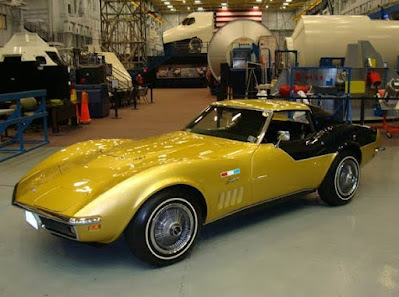
    1969 Corvette Stingray "AstroVette" Apollo-Themed

       Summary NASA + Corvette: GM connected the Corvette brand with NASA astronauts through cars, publicity, and an executive lease program. T...