Showing posts with label General Motors. Show all posts

Monday, May 24, 2021

Corvette ZR-2 "Big Doggie" 455: The C4 That Could Have Been

1989 Corvette ZR-2 with 455


Corvette ZR-2 "Big Doggie" 455

How do you beat a slew of Fox-Body 5.0 Mustangs that were seemingly dominated the roads in the late '80s? 

You take a 454 cu.-in. big-block engine and stuff into a C4 Corvette and call it "Big Doggie". 


"Big Doggie" ZR-2 Big-Block Corvette

I think everyone knew, by the time the C4 made its appearance in 1983 as a 1984 model, big-block enthusiast and all Corvette and sports car lovers alike knew big engines were officially going to be axed from GM's muscle/sports car line-up for a long time.

Not that there weren't plenty of signs through the 1970s that this was going to happen, but the '84 C4 clearly solidified that fact. With the absence of the Corvette in 1983 (in between the C3 and C4) some people might have been still holding out hope that there would be at least one powerful option for '84, but that was a no-go. 

The first C4 Corvette came out with a 5.7-liter Cross-Fire Injection TBI engine followed by a 5.7 Tune-Port Injection (TPI) engine later in the generation. Although Chevy called them legendary at the time, they weren't. Most people knew this, including some engineers at Corvette who wanted to build something people wanted.

Three Different Prototype C4 Corvettes with 454 cu.-in. (7.4-liter) Engines Were Built 

The project started at the GM Proving Grounds in Arizona, where Scott Leon and his crew decided to see if they could stuff a 454 cu.-in. engine in between the fenders of a C4 Corvette.   

They first started with a 1984 Corvette, and with just a few slight modifications, the big-block bolted onto the frame and in between the fenders. It was a tight fit, but one that fit nonetheless. 

Since the Corvettes by then were all using electronic fuel injection, Leon and the crew decided to go with a Tune-Port Injection setup bolted to a custom tunnel-ram manifold. Buick Grand National Injectors were used to keep fuel-flow efficient, and that was that, the first big-block was slammed into a C4 Corvette and ran super strong. 

Management Agrees to Go with a ZR-2 Prototype C4

With the success of the first built big-block C4, management started to see some promise in the idea and gave Leon and his crew a go-ahead to build a true prototype. So a 1986 Corvette 454 was born. This Corvette was built the same way as the '84 with an automatic transmission. 

  
After the second 454 C4 Corvette, Chevrolet got really serious about the idea, and a 1989 Roadster was grabbed for the final version, dub "Big Doggie". This Corvette had the Z51 performance suspension and a six-speed manual transmission. The convertible mechanism was taken out and a hard-top was bolted on to save weight, and then an orange paint job was applied. 


1989 Corvette Roadster ZR-2 455 "Big Doggie"

Although this ZR-2 could offer ZR-1 performance at about half the price, GM management was not looking to market the big-block Corvette. There were several reasons for not wanting to put the big-block Corvette into production, and one of those reasons included how much money had already been spent on marketing the ZR-1/LT5 campaign that included buying out The Lotus Group for their engineering and development satellite. 

The other reason why the ZR-2 had no chance for production is it had no chance of passing emission and fuel mileage requirements. 

Engine Specs: What is Known


This "Big Doggie" Corvette used Chevy's marine 454 short-block engine with a set of L88 aluminum heads, and although never dynoed, experts estimated horsepower at about 385, right around where the ZR-1 was at. But there was a huge difference, the big-block brought plenty more torque to the table, which also brought gas-guzzling numbers and safety worries. An all fiberglass frame with a big-block engine sent chills down the back of some uptight party-poopers.     

A New Idea for the Corvette 454 

Since GM had decided that there was no room for a big-block engine in the Corvette lineup, the next idea they came with was to make sure that all parts that were used for the ZR-2 were bolt-on parts that could be bought through the Chevrolet Performance Parts Catalog as a 454 ZR-2 swap kit. Unforantley, the idea never made it into the catalog. 

In the end, a very lucky few automotive journalists and development engineers got to drive "the C4 that could have been". And for those who did, they left no understated performance reviews. From all reports, the "Big Doggie" was super fast and super fun to drive.

1971 Corvette ZR2 

1971 ZR-2 455 Corvette


In 1971, Chevrolet offered a Corvette ZR-2 package (RPO) that offered a 454 cu.-in. LS6 engine. They also offered a ZR-1 packaged with a 350 cu.-in. engine. The way Chevrolet sold the Corvette Z-series was all power and little options. This made the cars less disable, and that caused Chevrolet to only have 8 ZR-1s and 12 ZR-2 Corvettes ordered and sold. 

This obviously means if you own one of these rare Corvettes, you might be sitting on a gold mine.  

What is the 1989 Corvette ZR-2 "Big Doggie" Worth

In June 2009, this "Big Doggie" Corvette drove across the Barrent-Jackson Auction Block - sold by General Motors - price $71,500. 

You might think that something this rare would go for more, but prototypes and concepts cars usually don't have a huge market for them. Like this 1989 Corvette ZR-2, most prototypes are sold with a No Manufacturer Statement Of Origin (MSO), no title, and only a partial VIN#, meaning you can't legally drive the "Big Doggie" on the road. 

But it would still be nice to own this 1989 beast of a Corvette ZR-2 with a big-block 454.   


Tuesday, May 18, 2021

2022 GMC Hummer EV Zero Emissions Truck and SUV

2022 GMC Hummer EV at Auto Show


Zero Emissions 2022 GMC Hummer EV


Let's go back and visit a little history from the Hummer. Most people know about the Hummer because of its odd shape and style making it hard to blend in with other Trucks and SUVs on the market. 

In 1998, General Motors bought the Humvee brand from AM General, who started marketing the Humvee in 1992. Unfortunately, the Humvee wasn't very marketable and that's what GM was going to do with it - change its name, change its style, and make it a marketable automobile. 

General Motors came out with a Hummer H1, H2, and an H3 and seen some sufficient success in certain areas of the US. A lot of that success came from its pop-culture status. The Hummer's name was used in many hip-hop and rap songs as well as made appearances in many of those hip-hop and rap videos. 

Through General Motors' rough patch of bankruptcy and bailouts, the Hummer nameplate took some right turns, left turns, and eventually ended up with GMC where the idea for the "GMC Hummer EV" was born back in 2020 to be revealed as a 2022 Hummer. 

2022 GMC HUMMER EV Truck


Hummer Trim Levels

  • Hummer EV2

  • Hummer EV2X

  • Hemmer EV3X

  • Edition 1  

The marketing plan GMC has for the Hummer is a little unorthodox. In 2022, they will release the most expensive version of the Hummer, the Edition 1. This trim level has all the bells and whistles and will cost you about $112,595. 

The rest of the Hummers will come out in 2023-24 ranging in price from $80,000 - $100,000. 

2022 GMC Hummer Performance

We'll stick to the Edition 1 since that is the first one that will be hitting the market. 

The Horsepower rating for the Hummer truck is 1,000 
The Horsepower rating for the Hummer SUV is 830
The Torque for both the truck and the SUV is an estimated 11,500 ft.-lb. 

Are you wondering how fast these 4.5-ton trucks and SUVs can get from 0-60 mph, well wonder no more. The Hummer EV truck will get you to 60 in about 3-seconds flat and the EV SUV can do it in about 3.5-seconds.

Hummer Features You Won't Find on Other Trucks and SUVs


Hummer Crabwalk 


This function can help you get around obstacles, make parking a little easier, and pop a few bystander's eyeballs out of their sockets. Like with most functions in the highly optioned Hummer, with a push of a button, you can activate this clever option. 


Hummer Extract Mode 


This mode is also unique to any other truck or SUV on the market. The Hummer can use its air-ride suspension to lift the Hummer up six inches in an attempt to clear dangerous obstacles or to get you out of obstacles you have come to get stuck in. 

These are amazing features for someone who likes to take on off-road challenges that are out of this world fun, complicated, and dangerous. 


Full Underbody Armor

Fully Underbody Armor "2020 GMC Hummer"


Skid Plates and Rock Slides are put in place to help the Hummer's vital parts under the vehicle stay safe when you are traveling over the rough terrain and in the watery and muddy pathways. In fact, you can submerge your Hummer in as much as 32" of water without having one performance or flooding problem. 


Inside the Hummer EV


13.4-Inch Touchscreen

Outboard Cameras for Interior Awareness 
The Hummer truck has 18 outboard cameras and the SUV has 17. Both Hummers have two water-proof underbody front and rear-facing cameras with self-washing systems with replaceable lens protectors. 


Hummer's 35-inch Tires
The 35-inch stock Goodyear Wrangler Territory tires are quite big, but there is an ability to upgrade from there and go up to a 37-inch tire with no aftermarket upgrades needed. 

2022 Hummer Suspension


Adaptive Ride Suspension 
The 2022 Hummer EV Adaptive Ride Control Damping suspension adjust seamlessly off-road based on shock-travel. The ride height can be adjusted 2 inches lower for better aerodynamics and 2 inches higher for better ride height.  

There is not much this suspension can't handle - it can put you in the comfort zone when driving around the city and can put you in a position to take on some of the most toughest terrains the off-road can throw at you. 

Changing Lanes with No Hands
That's right, the time has come. When we say this Hummer can do it all, we mean it. There are over 200,000 miles of compatible roads that will work with your Hummer and can do lane changing for you.

I've always believed if you can't change lanes on your own or don't want to put your hands on the steering wheel, you really shouldn't be in the driver's seat, but to each his own. 

Other Cool 2022 Hummer EV Features

The SUV will receive a power swing gate in the rear, fold-down flat rear seats for plenty of cargo room, plus cargo room under the floor in the rear cargo space. The multi-pro tailgate will come with the truck version for easy in and out access to the truck bed. 


2022 GMC Hummer EV Interrior Cargo Space


2022 Hummer Multi Pro Tailgate


The SUV will come with removable transparent sky panels, which can be easily and safely stored in the front storage space of the Hummer. 

The 800V DC fast charging Ultium batteries can charge up to 100 miles in 10 minutes. Real-world MPG is probably somewhere around 75 miles per gallon. That is actually an outstanding number when you consider the weight and the performance this Hummer has.

Unfortunately, if you don't have a DC charging station nearby, you can charge your Hummer at home with an adaptor, but charging times are considerably slower.


The Best EV Truck and SUV Ever


2022 Hummer EV interrior


If you have a need for being the King of the Road and King of the off-road, then these GMC Hummer EV trucks and SUVs are right up your alley. They have everything and more that other trucks and SUVs on the market just can't compete with. 

The Hummers are pretty expensive, but think of how much gas money you will be saving as opposed to if you were driving a gas-guzzling Hummer. 


Wednesday, May 5, 2021

Largest Tire In The World: Uniroyal Tire Of Detroit

Largest Tire In The World


Largest Uniroyal Tire in the World - Detroit

In a place like the "Motor City", it stands to reason it would have a landmark that proves its dedication to the auto industry. Weighing in at 12-tons and as tall as 80-feet, this real rubber tire is designed to withstand hurricane-force winds. 


You can see this amazing piece of rubber by taking I-94 in or out of Detroit. Just off to the side of the expressway, not far from the metropolitan airport, if you miss the largest tire in the world, you must have been sleeping. 


When and Why it was Built

The Uniroyal tire was built in 1964-65 by the architectural firm of Shreve, Lamb, and Harmon, the same company that designed the Empire State Building. It was used at the New York State Fair as a Ferris Wheel to help promote the Uniroyal product. 

Shipping the Big Uniroyal Tire to Michigan

In 1965, the huge Uniroyal tire was shipped from New York to Michigan in 188 pieces by rail. It was then put together and anchored into concrete in Allen Park off of Interstate 94 in a four-month period. 


Changing the Look of the Uniroyal Tire

The huge Uniroyal tire received a makeover three different times throughout the years, once in 1994, again in 1998, and once more in 2003. All three times the makeover included either new hub caps or new lettering on the sidewalls of the tire. 


Another Largest in the World

In 1998, Uniroyal had the largest nail in the world punctured into the tire. It was an advertising campaign for Uniroyal's new run-flat tires. The nail was eventually pulled out and sold on eBay for $3,000 to a businessman to raise money for the Historical Society. Ralph Roberts was the buyer and loaned out the nail to be put on display at local events. Allen Park originally received the nail when it was first pulled out and they were hoping to get about $100,000 for it, but it wasn't something too many people had too many uses for.    

Why the Uniroyal Tire was Placed Where it's At

Although just a myth, a lot of people believe it was placed on the side of I-94 heading into Detroit to let everyone know they were entering the "Motor City". Of course, now there's really no car factory action down in Detroit, but Detroit still holds the Autorama, the North American International Auto Show, and Indy Car Race Weekend at Belle Isle. 

Renaissance Center

On top of everything else, you can't miss General Motors headquarters down in the heart of Detroit. The Renaissance Center scrapes the sky with the GM logo on it for everyone to see. 


Thursday, December 31, 2020

Difference Between the Yenko Camaro and COPO Camaro


Difference Between the Yenko and COPO 

Most people probably know about how badass the Yenko and the COPO Camaros are, but how many people know where the names come from and what’s the difference between the two. Of course, if you are a diehard Camaro fan with a lot of knowledge of the first generation Camaros, you probably know some or all of the facts, but just in case you don’t, here is a little bit of education.


The Yenko

In 1967, Don Yenko, owner of Don Yenko Chevrolet, contacted General Motors and ordered 54 Camaros straight from the factory with a special mission in mind. That special mission was to convert those Camaros into Yenko drag strip-ready IHRA/NHRA Stock and Super Stock Camaro competitors.


(How many Yenko Camaros were built and sold from 67 through 69 is really unknown. The same goes with COPO Camaros; ask ten different experts and you're likely to get ten different answers).


When these Camaros first showed up at the Yenko Dealership, the first order of business was to take out the existing 396-cu.-in. engines and replace them with 427 big-blocks. Although a lot of numbers swirled around about how much horsepower they produced, it was estimated around 425-450-hp (depending on who you asked). Along the way, Yenko also had all Yenko labeled Camaros beefed up with other goodies like traction-bars and 3:73-positraction rear-ends. 


There was only one problem with Team Yenko’s plan to turn the Camaros into drag strip-ready Camaros, they were not allowed to race in the IHRA/NHRA Stock or Super Stock classes. These classes were strictly for cars that had no engine changes or any other big mechanical changes after they left the factory. They were not banned from all drag racing, just the Stock and Super Stock classes that the Yenko Team was aiming for, so eventually the Yenko program was canned. 


A lot of people think that the reason Yenko stopped the program was because of the inability to race in their intended classes. That was part of the reason, but most of the reasons were because Yenko was losing money on the pulled 396 motors and rear-ends they could not seem to get rid of and the program was losing even more money since GM would no longer warranty the Camaros if they were modified after they left the factory. That either fell in the hands of the owner or Yenko himself.


69 COPO Camaro   

It’s true, the name strikes fear in the hearts of racers who dare to pull up next to one in the staging lanes. They dominated the Stock and Super Stock classes for a long time.


COPO stands for (Central Office Production Order) and this program was invented specifically to put competitive Camaros in those Stock and Super Stock classes. If you ordered a Camaro from the central office, the build sheet would go to the factory, and when the Camaro rolled off the factory line complete, whatever you asked to be installed would be installed and considered stock. With that being said, there was nothing IHRA or NHRA could do about excluding the cars from racing in stock classes.


Ultimately, it was Fred Gibb and Don Yenko that pushed Chevrolet into making this program happen. Chevy saw the need for competitive Camaros in these classes for the use of sponsorship and of course bragging rights. They were Camaros, they were stock, and they were Mustang and Mopar eaters for a long time at the track. The 427 big-blocks made 425-hp and 460-lb.-ft. of torque, they took home a lot of trophies.  

Last Note 

A lot of people believe the COPO division was designed for the 69 ZL1-Camaro and then squashed, and then brought back in 2013 for the Camaro again. But the General Motors COPO Division has been around since GM made fleet vehicles e.i. cop cars, taxis, tow trucks, etc. All vehicles that are ordered specially from a corporation, charity, a government, or something like that are considered specialty-made vehicles or COPO vehicles. (It wasn’t just a program made up for one of the baddest Camaros ever produced, the Camaros just stole the spotlight). 


Sunday, July 28, 2019

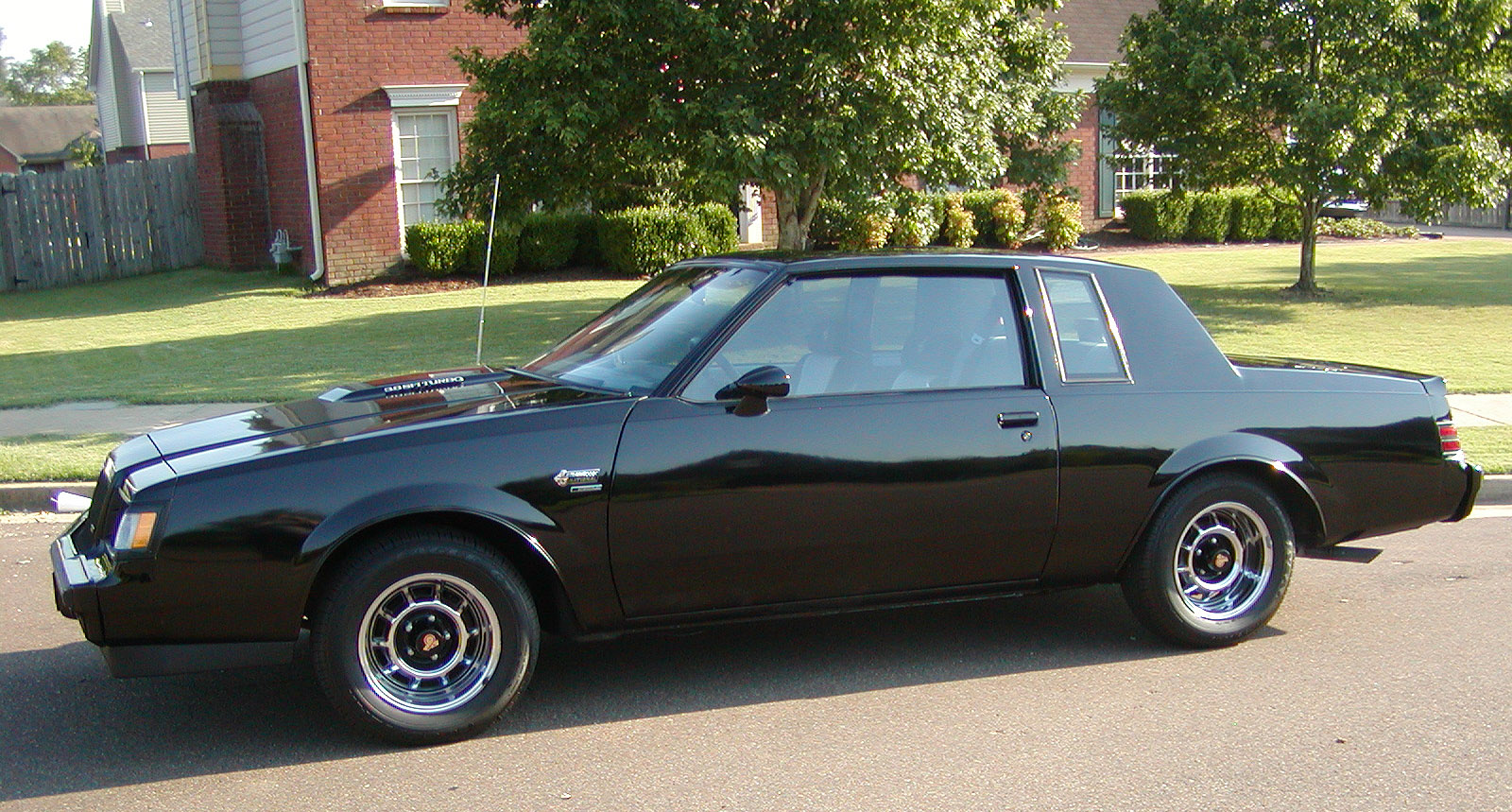
Buick Grand National: The First Muscle Car Since The Mid-70s

Related image


Buick Grand National


The Death Of High-Output Muscle Cars
In the late '70s and all of the '80s, American auto companies were being forced to come up with more fuel-efficient economy-friendly cars.


So what did this mean? 


This meant the Muscle Car era was over. Even cars like the high profile Corvette was suffering. For the most part, sports car styling was still very appealing, but their lack of performance issues was a big problem for consumers. 


Buick Was Ready To Change The Automotive Company
The Grand Nationals were produced between '84-'87 and had the same body type as the Regal. The GN was upgraded with a sportier interior, a high-performance turbo V-6, suspension upgrades, and exterior styling upgrades. 


The '84 and '85 Grand National was not quite the performer that the '86-'87 Grand National was. Due to a lack of an intercooler, the ‘84-’85 did not produce as much power, but they still came with a V-6 3.8-liter with a turbo that produced 200 horses, which was more horsepower than the Camaro was producing at the time.


'86-'87 Grand National: The Real Performer

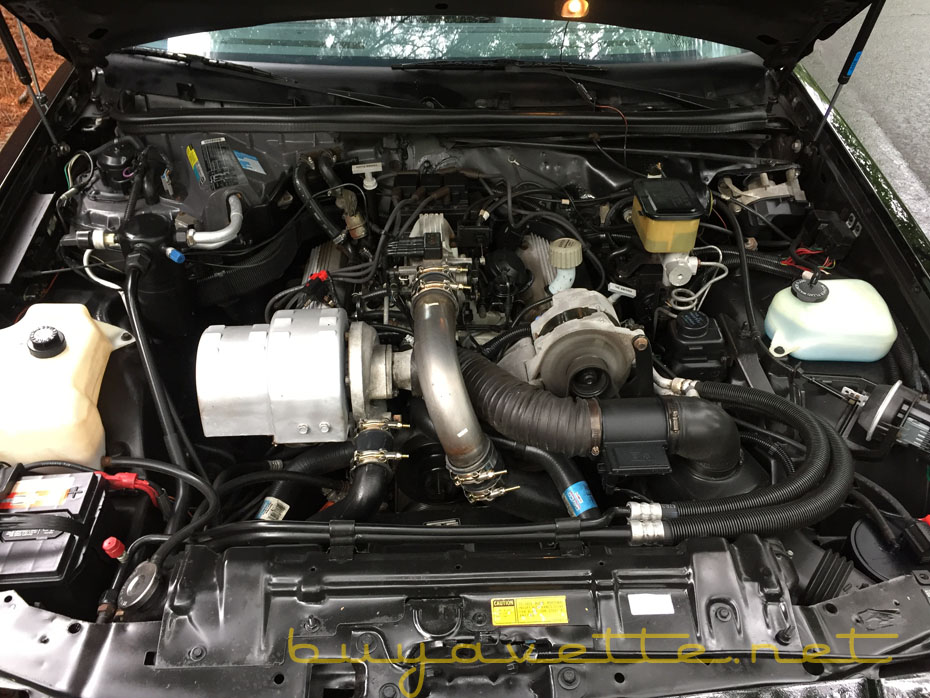
The '84-'85 Grand National was the launchpad that got the Grand National's name out there and paved the way for the '86 and '87 Grand National. Buick added an intercooler upgrade to the already stout turbo set-up making it capable of producing 235 horsepower and 355 lb-ft torque. This was impressive for a V-6 full-bodied car from the '80s, and even more impressive was the gains it was able to produce after a few minor affordable bolt-ons. 


Image result for 87 grand nationals engine


A 13-second pass in the quarter-mile was very common for these V-6 legends. This may not seem very fast by today's standards, but in the '80s, Camaros, and Mustangs were lucky to break into the 14-second range unless you were willing to dump a boatload of money into them. 


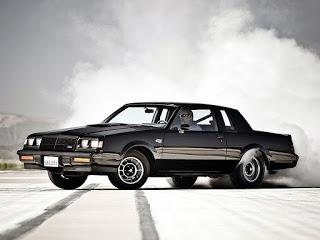
From 1986 to the early 1990s, the Grand National took no shame in leaving Corvettes, Camaros, Firebirds and Mustangs in their dust. Stock GM TPI and Ford 5.0 motors just did not hold a candle to what the Grand National brought to the table.


My First Personal Experience

Before my senior year of High School, before my dad and I built my first muscle car ('71 Buick Skylark 455) for my senior year, my dad owned an '87 Grand National. I got the joy of taking it to school a few times. With its grocery-getter body style, it was not too hard to lure the Camaros and Mustangs to the local drag race spot. 


The Grand National was running in the low 13's and the guys who drove the TPI's and 5.0's of our school had never even seen a 1/4 time-slip. But most of them guaranteed me that their cars were 12 and 11-second rides. Needless to say, that day they all got a rude awakening when a proven 13-second quarter mile car left them literally many car lengths behind. This left most of my friends dumb-founded. A quiet V-6 with interior room to fit five passengers comfortably beating up on their cool looking V-8 sports car. That day a lot of people found out what the meaning of a true sleeper was.   


The Buick Grand National Gave Hope
In the 1980s, the Grand National was just what the auto industry needed: a car that could promote good performance, reasonable gas mileage, and style and comfort. Not only did it bring those great things to the auto industry, but it also brought hope back to car enthusiasts. It brought the hope that soon the beloved Corvettes, Camaros, Mopars, and Mustangs would eventually bring back the power that they were once known for but in a more efficient technology-driven form.

Tuesday, November 13, 2018

Harley J. Earl: Four Important Contributions Given To The Automotive Industry

Harley J. Earl


Harley J. Earl


Harley J. Earl started his career at General Motors in the design department as Head of Design. After proving his skills to be invaluable, General Motors appointed him to become Vice President of the corporation.  


The move by GM made Mr. Earl the first-ever appointed top executive of a major corporation in American history. Every executive prior to Earl was grandfathered into their positions.


So what made him so desirable?


What made General Motors go so far out of character to appoint Mr. Earl and his abilities to a Vice President position?


Not only was Earl’s ability to design vehicles incredible, but he also had a knack that no one else did, he could tap into what the consumer wanted.  


Instead of designing vehicles that General Motors, Chrysler, and Ford deemed as profitable, he wanted to design and build vehicles that consumers wanted to see and drive. This idealism made General Motors nervous, but ultimately they trusted in Earl with good outcomes. GM saw the rise in public excitement, vehicle sales, and of course, profits.


Here are just four of Harley J. Earl’s important contributions to the automotive industry.    


Harley J. Earl


1. Freeform Sketching and Hand Sculpted Clay Models: Harley J. Earl was a coachbuilder by trade. By honing and adjusting his craft, he became a pioneer of car design by introducing the use of freeform sketching and hand-sculpting clay models. Bringing this skill to the industry helped create some of the finest bodylines that we’ve come to know and love today.


1954 Corvette


2. Chevrolet Corvette: Earl decided that America needed a real sports car, one that resembled the English and European sports cars that were getting built overseas after WWII.


With Earl’s already established reputation in the automotive industry, he didn’t think he would get too much pull from other executives by presenting the thought of taking on such a risky project as creating a sports car, and he didn’t.


He went to Chevrolet’s general manager, Ed Cole, with a secret project called “Project Opel." With complete confidence in Harley Earl, Mr. Cole gave him the okay with no hesitation. Not more than a year later, in 1953, America would get its first glimpse at what would become the most iconic American sports car ever built, the Chevrolet Corvette.  


Buick y-job 1938


3. First Concept Car: The 1939 Buick Y-Job was the first-ever concept car built. Earl recognized early the need to get the public's reaction to a vehicle's appearances and performance before one is put into production.


Under Earl’s supervision and direction, the General Motors styling division created something similar to what they hoped would become the next production car for Buick. With enough interest and feedback from the public, GM put a vehicle into production that turned out to be very successful. With such success with the “concept car”, to this day the concept is used every year by every large automotive corporation in the world. 


Automotive Tailfins


4. Tailfins: If you like the look of classic cars, then you know you like the look of tailfins. They’re stylish, they’re sexy, and the design of them are credited to Harley J. Earl. First appearing on the Frank Hershey 1948 Cadillac, they became an iconic look that was used throughout the 1950s and 1960s.


Automotive Tailfins


After the public accepted the look, Detroit car builders, especially Chrysler, competed to see who could design the most complex, biggest tailfins that could fit on the back of a car while still looking awesome.


Automotive Tailfins


An American Automotive Pioneer


Harley J. Earl


Some of the coolest inventions and designs the public gets to enjoy in the automotive industry today are credited to Harley J Earl. Without him, who knows if we would have the Corvette, the ‘57 Chevy, and concept cars among many other great things we get to enjoy credited to Earl. 


1951 Buick LeSabre


You don’t hear about him too much, but we should always remember one of the great pioneers of the automotive industry.


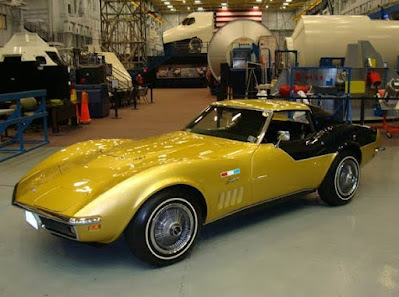
1969 Corvette Stingray "AstroVette" Apollo-Themed

   Summary NASA + Corvette: GM connected the Corvette brand with NASA astronauts through cars, publicity, and an executive lease program. T...