Tuesday, January 20, 2026

1963 Buick Riviera: The Birth of a Personal Luxury Icon

1963 Buick Riviera

Summary


  • Born from competition: The 1963 Buick Riviera was created to challenge luxury coupes like the Ford Thunderbird while giving Buick a stylish new halo car.
  • A unique beginning: The Riviera started as a Cadillac concept called XP-715 before being handed to Buick for development.
  • Timeless design: Clean body lines, a long hood, short rear deck, frameless glass, and hidden headlights gave the Riviera a sleek and sophisticated look.
  • Sporty luxury: The interior combined comfortable materials and upscale appointments with bucket seats, driver-focused gauges, and a cockpit-inspired layout.
  • Nailhead power: Buick offered a 401ci Nailhead V8 with 325 horsepower, while the optional 425ci V8 produced up to 340 horsepower.
  • Smooth performance: Rear-wheel drive and Buick’s Twin Turbine Dynaflow automatic delivered strong acceleration and effortless highway cruising.
  • A new direction for Buick: The Riviera helped move Buick away from the excessive styling of the 1950s toward a cleaner, more modern design philosophy.
  • Personal luxury pioneer: Its combination of American V8 power, European-inspired styling, and comfort helped establish the personal luxury coupe as an important market segment.
  • Collector favorite: More than six decades later, the 1963 Riviera remains highly respected for its distinctive styling, performance, and place in automotive history.
  • Bottom line: The 1963 Riviera proved that American luxury could be elegant, sporty, and powerful all at the same time.

  • 1963 Riviera Emblem


    How And Why The 1963 Riviera Was Conceived  

    The 1963 Buick Riviera didn’t just arrive on the scene—it made a statement. Buick built the Riviera in response to a growing market demand for upscale, performance-oriented personal luxury cars that blended European-inspired elegance with American power.

    In the early 1960s, General Motors noticed the success of cars like the Ford Thunderbird, which had moved away from its original sports-car roots and into a refined, stylish luxury coupe. Buick wanted a piece of that market, but rather than simply copying the formula, the division aimed to build something more sophisticated, bolder, and distinctly Buick.

    Originally conceived as a Cadillac concept called the XP-715, the design was eventually handed to Buick, which needed a halo car to elevate its image. The result was the Riviera—a premium personal luxury coupe designed to compete directly with the Thunderbird, Chrysler 300, and even European grand touring cars like Mercedes-Benz coupes of the era.

    1963 Buick Rivera Bodylines

    Riviera's Slick Looks And Style
    What truly made the 1963 Riviera special was its striking body style and unmistakable presence. The car featured a clean, sculpted design that broke away from the excessive chrome and tailfins of the 1950s, signaling a new design direction for American automobiles.

    The Riviera’s long hood, short rear deck, and crisp body lines gave it a low, wide, and aggressive stance. Its clamshell-style hidden headlights were a standout feature, seamlessly integrated into the front end and lending the car a sleek, almost futuristic look when the automatic headlights were closed.

    The subtle rear fender peaks, thin roof pillars, and frameless door glass enhanced the Riviera’s elegant profile. Unlike many luxury cars of the time, the Riviera looked sporty and purposeful rather than bulky. It was refined without being flashy, and bold without being overdone—a balance that helped cement it as one of the most beautiful American cars ever built.

    1963 Buick Riviera Interior

    1963 Riviera Interior Promotes Sporty Luxury

    Inside, the 1963 Riviera continued its mission of blending luxury with driver-focused design. The interior was more cockpit-like than most Buicks of the era, with a center console-inspired layout that made the driver feel engaged rather than detached. Bucket seats were standard, a clear nod to the car’s sporty intentions, and they provided excellent comfort for long-distance cruising.

    The dashboard was clean and modern, featuring deeply recessed gauges, tasteful chrome accents, and a wraparound design that emphasized width. Buick offered high-quality materials throughout, including plush vinyl or optional leather upholstery, thick carpeting, and carefully finished trim. 

    Even the smallest details—like the unique steering wheel design and toggle-style controls—helped distinguish the Riviera from other GM offerings. The cabin felt upscale and intentional, proving that performance and luxury didn’t have to exist in separate worlds.


    63 Buick Wildcat Engine


    Engine, Drivetrain, and Performance Highlights
    • Engine Options:
      • 401 cubic-inch “Nailhead” V8 producing 325 horsepower
      • Optional 425 cubic-inch "Nailhead" V8 with up to 340 horsepower
    • Transmission:
      • Standard Twin Turbine Dynaflow automatic
    • Drivetrain:
      • Rear-wheel drive layout
    • Performance:
      • Strong low-end torque, ideal for smooth acceleration
      • 0–60 mph times that rivaled many performance cars of the era
      • Confident highway cruising with excellent stability
    These powertrains gave the Riviera impressive straight-line performance while maintaining the refined driving experience Buick buyers expected. The Nailhead V8s were known for their durability and torque-rich power delivery, making the Riviera equally comfortable as a luxury cruiser or a high-speed grand touring car.

    1963 Buick Riviera Rear End


    Cruising Smoothly To The End

    The 1963 Buick Riviera stands as one of the most important and influential cars of the 1960s. It successfully redefined Buick’s image and helped establish the personal luxury coupe as a serious and competitive segment in the American automotive market.

    With its timeless design, well-appointed interior, and powerful V8 performance, the Riviera appealed to buyers who wanted style, comfort, and confidence all in one package. More than six decades later, the 1963 Riviera remains highly respected and sought after by collectors and enthusiasts alike—a true classic that represents the perfect intersection of American luxury and performance.


    Friday, November 28, 2025

    Buick Regal T-Type: Modest Beginnings To A Modest Legacy


    1986 Buick Regal T-Type

    Summary

  • Built for performance: The Buick Regal T-Type combined Buick’s traditional luxury with a sportier, turbocharged personality.
  • Turbocharged beginnings: The Regal received the T-Type treatment in 1983, featuring Buick’s 3.8-liter turbocharged V6.
  • Plenty of choices: Unlike the Grand National, T-Types were available in a wide range of colors, interiors, and configurations, including rare sleepers with bench seats and hubcaps.
  • Turbo power: By 1986, the turbo V6 produced approximately 235 horsepower and 330 lb-ft of torque with fuel injection and intercooling.
  • Sport-tuned drivetrain: A THM200-4R four-speed automatic, 3.42 rear axle, and Gran Touring suspension helped put the turbo power to the pavement.
  • Surprisingly quick: The 1986 T-Type could reach 60 mph in the low-6-second range, making it a serious performer despite its non-V8 engine.
  • A lighter alternative: Its lower curb weight helped the T-Type deliver performance that could rival—and sometimes exceed—the more famous Grand National.
  • Rare by comparison: Only 2,384 T-Types were produced for 1986, adding to the model’s appeal among collectors.
  • A true sleeper: The T-Type could look like an ordinary Regal while hiding enough turbocharged muscle to surprise unsuspecting drivers.
  • Bottom line: The Regal T-Type proved that Buick could blend luxury, subtle styling, and serious turbocharged performance into one of the most interesting American cars of the 1980s.
  • Buick Regal T-Type Emblem

    How The Buick Regal T-Type Came About

    The story of the Buick Regal T-Type begins in the early 1980s, a period when Buick was looking to fuse refined luxury with emerging performance sensibilities. The T-Type badge, introduced in 1981 on the Buick Riviera, stood for “Touring,” and marked Buick’s serious foray into sportier, performance-oriented trims. But it was in 1983 when the Regal—already a staple mid-size coupe—received the T-Type treatment, pairing its sleek G-body silhouette with a turbocharged 3.8-liter V6. The Regal T-Type quickly became the backbone of Buick’s turbocharged sport-touring legacy, bridging the gap between ordinary Buick sedans and the more aggressive Grand National models.

    The Many Types of Buick Regal — T-Type Trims, Colors & Interior

    Over its production run, the Regal T-Type existed in a few distinct forms, each catering to different tastes. Initially, from 1983 through 1986, the T-Type was offered as a distinct performance package,  meaning that a buyer opted not just for the turbo V6, but also for special suspension, wheels, and T-Type badging.  In 1987, that all changed: Buick broke out the options, separating the powertrain from the cosmetic and handling parts, giving rise to a “T-package” that could be added independently.

    In terms of exterior colors, the T-Type was quite versatile. While the Grand National often gets remembered for its all-black schema, the Regal T-Type could be ordered in most of the same colors as other Regals — even lighter shades. In fact, it was available in a wide variety of two-tone and single-tone liveries, giving buyers freedom beyond the all-dark look of its turbo siblings. For example, a limited “designer series” was introduced in 1986 (RPO code WH1) that came in a distinctive two-tone paint: black on the upper body, gray on the lower.

    Inside the T-Type Regals, there were also a variety of interiors. Standard equipment included front bucket seats and a center console with a center console-mounted shifter, contributing to a sporty yet comfortable cabin. Upholstery often leaned toward darker tones, but depending on the year and trim options, you could find contrasting interior schemes. T-Type models also featured a leather-wrapped steering wheel, along with full instrumentation that included a tachometer and a turbo boost gauge—essential components for a turbocharged ride. 

    There was even one T-Type produced that was a total sleeper. With bench seats, a column shifter, and granny wheels/hub caps, the only thing that would give its true identity away is the "T" badge on the fender, and when it starts putting car lengths on you in a drag race. Some other rare t-types came with moon roofs or t-tops—just many more options and configurations than you had with a Grand National.

    1986 Buick Regal T-Type Engine


    Drivetrain and Performance

    Under the hood, the Regal T-Type packed a serious punch for its era. From 1983 through 1986, the power came from Buick’s 3.8-liter turbocharged V6, initially carbureted and non-intercooled. The 1983 version produced around 190 hp and 280 lb-ft of torque, impressive numbers for the time. By 1984, Buick had upgraded to sequential fuel injection, boosting output to approximately 200 hp and 300 lb-ft.

    In its later years, especially by 1986, the engine became even more potent, thanks to intercooling and improved tuning, producing up to 235 hp and a substantial 330 lb-ft of torque. Power was sent through a THM200-4R four-speed automatic transmission, paired with a 3.42:1 performance rear axle.  To make sure all that power stayed manageable, the T-Type came standard with Buick’s Gran Touring suspension package, which featured stiffer springs, sport-tuned shocks, larger sway bars, and quicker-ratio steering—all helping the Regal handle more crisply than its more sedate siblings. And by most accounts, the T-Type was quicker than the Grand National by a little bit because it was lighter in curb weight. Thanks to this setup, the 1986 T-Type could sprint from 0 to 60 mph in the low-6-second range, putting it in surprising company for a non-V8 American car of the day.

    Production Numbers (Buick Regal T-Type)

    Here’s a breakdown of how many Buick Regal T-Types were built:
    1983
    3,732
    1984
    3,401
    1985
    2,100
    1986
    2,384
    1987(1)
    8,547 (with the “T-package,” including Turbo-T, Regal Limited, WE4)

    (1)Note: By 1987, Buick had shifted from calling these “T-Types” to offering the T-package separately, so these numbers reflect a broader category than earlier years.

    Black and Silver 1986 Buick T-Type


    Modest Beginnings To A Modest Legacy 

    The Buick Regal T-Type may not command as much attention as its flashier Grand National or GNX siblings, but it holds a distinct and meaningful place in automotive history. It embodied Buick’s vision of a performance-luxury car—one that could carry passengers in comfort while quietly packing serious turbocharged muscle. 

    With its combination of style, performance, and relative rarity, the T-Type remains a cherished classic for enthusiasts and collectors alike. Its legacy paved the way for Buick’s modern performance efforts and continues to resonate with fans of ’80s performance cars. Whether you’re drawn to its subtle blacked-out trim, its turbocharged heart, or the way it balances power and poise, the Regal T-Type is a reminder that performance doesn’t always have to look flashy.

    Sunday, September 14, 2025

    1969 Chevrolet Corvette ZL1: Only Two Ever Sold To The Public


    1969 Chevrolet Corvette ZL1: Only Two Ever Sold To The Public


    Summary

  • A legendary rarity: Only two 1969 Corvette ZL1s were officially sold to the public, making it one of the rarest GM performance cars ever built.
  • Built for racing: The ZL1 was created around a race-derived, all-aluminum 427ci big-block V8 designed to deliver extreme performance.
  • Serious horsepower: Chevrolet rated the engine at 430 horsepower, while actual output was widely believed to be significantly higher.
  • Lightweight advantage: The aluminum engine weighed roughly 100 pounds less than the iron-block L88, helping improve acceleration and handling.
  • Rock Crusher power: A Muncie M22 four-speed manual and heavy-duty Positraction rear end helped put the ZL1’s enormous power to the pavement.
  • Supercar performance: With 0–60 mph times around four seconds and potential low-11-second quarter-mile performance, the ZL1 was extraordinarily quick for 1969.
  • More than a straight-line car: Independent rear suspension and heavy-duty suspension components gave the ZL1 impressive handling to match its brutal acceleration.
  • A true sleeper: Beneath the iconic Corvette “Shark” bodywork, the ZL1 looked relatively ordinary while hiding one of GM’s most extreme engines.
  • Muscle car meets supercar: The ZL1 combined American V8 power with sports-car handling, allowing it to compete with legendary muscle cars and even European exotics.
  • Collector’s unicorn: Its extreme rarity, racing heritage, and performance have made the ZL1 one of the most coveted Corvettes in automotive history.
  • Bottom line: The 1969 Corvette ZL1 was a one-of-two American supercar that pushed the limits of performance and remains one of the most legendary Corvettes ever built.

  • 1969 Corvette ZL1 Emblem


    Super Rare And Expensive!

    When it comes to American performance cars, few names carry as much weight as the Chevrolet Corvette. Since its debut in 1953, the Corvette has symbolized speed, style, and innovation. But among all of the remarkable Corvettes built, there is one that stands alone in the muscle car era: The 1969 Corvette ZL1.

    This was not just another big-block Corvette. The ZL1 was an ultra-limited, factory-built, all-aluminum monster designed for one purpose: to dominate on the track. Only two ZL1 Corvettes were officially sold to the public in 1969, making it one of the rarest production GM cars ever created. Its astronomical $4,718 ZL1 engine package nearly doubled the cost of a standard Corvette at the time, ensuring that very few enthusiasts could justify the purchase.

    The result was an extremely exclusive, race-bred Corvette that remains one of the most desirable and mythical muscle cars in history.


    Famous "Corvette Shark" Body Style

    The ZL1 package didn’t change the outward appearance much from a standard Corvette, but that’s what made it so special—an absolute sleeper. Beneath that fiberglass body was one of the most radical engines GM ever produced, yet from the outside, it looked like a well-optioned Stingray.


    1969 Chevrolet Corvette ZL1: Interior

    Keeping The Interior

    Inside, the 1969 Corvette ZL1 carried the same cockpit-style layout as other Corvettes of that year. Keeping it this way came from the same idea as keeping the outside looking the same—"A Wolf in Sheep's Clothing!"


    1969 Chevrolet Corvette ZL1 Drivetrain


    Drivetrain and Power

    The crown jewel of the 1969 Corvette ZL1 was its all-aluminum 427 cubic-inch big-block V8. This wasn’t your average Corvette engine—it was a hand-built, racing-derived powerhouse originally developed for Can-Am competition.

    Officially, Chevrolet rated the ZL1 at 430 horsepower, but anyone who knows GM’s habit of underrating engines in that era understands the truth: the actual output was closer to 500–585 horsepower right from the factory. With a few modifications, tuners and racers were easily pulling out over 600 horsepower.

    The engine was paired with a stout Muncie M22 “Rock Crusher” 4-speed manual transmission, and all that power was delivered to the rear wheels through a heavy-duty positraction differential. This setup allowed the ZL1 to rocket from 0–60 mph in about 4 seconds, putting it in the same league as contemporary Ferraris and Lamborghinis—except this was a car built in St. Louis, Missouri.

    Simply put, the ZL1 wasn’t just fast for its time. It was a fire-breathing, pavement-shredding weapon that could embarrass just about anything that lined up next to it.


    1969 Chevrolet Corvette ZL1 Suspension


    '69 Corvette ZL1 Suspension

    Chevrolet knew that giving the Corvette ZL1 an engine of this caliber required more than just raw power. To keep the car composed at high speeds, the suspension setup was heavily reinforced.

    The Corvette featured an independent rear suspension, a rarity in American muscle cars of the day, which gave it much sharper handling than most of its Detroit competitors. Heavy-duty springs, shocks, and stabilizer bars were all part of the package, ensuring that the ZL1 wasn’t just a straight-line drag machine—it could carve corners with confidence.

    This balance of power and handling cemented the Corvette’s reputation as “America’s sports car,” capable of going toe-to-toe with some of Europe’s best.


    The Mystery Of The '69 Chevrolet Corvette ZL1


    Did You Know?

    • Only two ZL1 Corvettes were officially sold to the public in 1969, making it one of the rarest GM production cars ever.

    • The ZL1 engine itself costs more than the base price of the Corvette.

    • Because the ZL1 engine was all-aluminum, it weighed about 100 pounds less than the iron-block L88, improving both handling and acceleration.

    • With the right tuning, the ZL1 was capable of quarter-mile times in the low 11-second range, unheard of for a factory-built car in 1969.

    • Many Corvette historians consider the ZL1 not just a muscle car, but a legitimate world-class supercar decades ahead of its time.


    '69-'70 Muscle Car Ear

    How It Stacks Up to Other Muscle Cars and Sports Cars of 1969

    The late 1960s were a golden era for performance cars, with machines like the Dodge Charger Daytona, Ford Mustang Boss 429, and Plymouth Road Runner dominating the muscle car scene. However, most of those cars were designed with straight-line speed in mind.

    The Corvette ZL1 was different. It combined raw American horsepower with sophisticated suspension engineering and a lightweight racing engine, making it far more versatile. Compared to a Boss 429 Mustang, the ZL1 offered better balance and agility. Against a Plymouth HEMI ‘Cuda, it delivered similar straight-line thrills but wrapped them in a sleeker, more refined package.

    When stacked up against European exotics like the Ferrari 365 GTB/4 Daytona, the Corvette ZL1 held its own—and in many cases outperformed—at a fraction of the cost.


    The Corvette "Shark"


    A Timeless American Supercar

    The 1969 Chevrolet Corvette ZL1 is more than just a rare collectible—it’s a symbol of what American engineers were capable of when given the freedom to build something extraordinary. With its stunning looks, world-class performance, and near-mythical rarity, the ZL1 stands as one of the greatest Corvettes ever made.


    For collectors, owning a ZL1 isn’t just about having a Corvette. It’s about owning a piece of history, a one-of-two unicorn that represents the peak of GM’s muscle car experimentation. For enthusiasts, it remains a car that inspires awe, respect, and more than a little envy.

    Simply put, the 1969 Corvette ZL1 isn’t just one of the rarest muscle cars ever built—it’s one of the greatest.


    Tuesday, September 9, 2025

    Chevrolet Biscayne 427 (1966 1968–1969): A Sleeper Muscle Car That Time Forgot


    Chevrolet Biscayne 427 (1968–1969)

    Summary

  • The ultimate sleeper: The Chevrolet Biscayne 427 looked like a basic family sedan but could deliver serious muscle-car performance.
  • Built for simplicity: As Chevrolet’s entry-level full-size car, the Biscayne focused on affordability and practicality rather than luxury or flashy styling.
  • Big-block power: The top-performance L72 427ci V8 produced 425 horsepower and 460 lb-ft of torque.
  • Serious speed: With the right gearing and transmission, an L72 Biscayne could run the quarter mile in the mid-13-second range.
  • Plain on purpose: Basic steel wheels, dog-dish hubcaps, minimal chrome, and understated bodywork helped disguise the performance underneath.
  • Minimalist interior: Vinyl bench seats, rubber floor mats, and limited options kept the Biscayne light, affordable, and focused on function.
  • Police power: Biscayne 427s were also used by police departments as high-performance pursuit cars.
  • Rare today: Many were driven hard, worn out, or scrapped, making surviving 427-powered examples increasingly scarce and desirable.
  • Collector appeal: The combination of rarity, big-block performance, and sleeper status has made the Biscayne 427 a highly sought-after Chevrolet.
  • Bottom line: The Biscayne 427 proved that you didn’t need flashy styling to have serious muscle, making it one of Chevrolet’s greatest sleeper cars of the era.


    Chevrolet Biscayne Badge

  • A Muscle Car?

    When enthusiasts talk about late-1960s Chevrolet performance, names like Chevelle SS, Camaro Z/28, and Corvette Stingray almost always dominate the conversation. But hiding in plain sight was a full-size sedan that could embarrass many of its flashier siblings—the Chevrolet Biscayne 427. Built in 1966, 1968, and 1969 (also '67 but with no big block 427 option), this stripped-down, big-block sleeper delivered muscle car performance without the muscle car price tag. While it never achieved the same level of fame as its stablemates, the Biscayne 427 remains one of the most underrated Chevrolets of the muscle car era.


    Chevrolet Biscayne 427 (1968–1969): A Sleeper Muscle Car That Time Forgot

    The Ups and Downs of the Biscayne 427

    The biggest strength of the Biscayne 427 was its simplicity. Chevrolet designed the Biscayne as the entry-level, no-frills full-size car, aimed at budget-conscious buyers and fleet sales. When paired with the L72 427-cubic-inch V8, the result was a lightweight, unassuming powerhouse that could outrun many purpose-built muscle cars.

    Yet, the same qualities that made it special also kept it from stardom. The Biscayne lacked the aggressive styling, flashy trim, and high-end marketing that boosted the popularity of cars like the Chevelle SS 396 or the Camaro Z/28. Too many buyers thought of it as “just a taxi cab with a big engine,” and that reputation limited its appeal. While enthusiasts today view it as a collectible sleeper, back in the day, most people overlooked it in favor of Chevrolet’s sportier offerings.

    Chevrolet Biscayne 427 (1968–1969): A Sleeper Muscle Car That Time Forgot


    What Was The BiscayneTrim Available

    In 1966, 1968, and 1969, the Biscayne sat at the bottom of Chevrolet’s full-size lineup, below the Bel Air, Impala, and Caprice. Buyers could choose between two-door sedans, four-door sedans, and station wagons. For the performance-minded, the two-door sedan was the lightest and most desirable configuration, especially when ordered with the legendary 427 V8. Because the Biscayne was sold as a budget car, most were sparsely optioned, with few luxuries beyond the basics.

    Exterior: The Dull And Unassuming Biscayne 427

    At first glance, the Biscayne 427 didn’t look like anything special. It wore the same boxy, full-size body lines as its siblings, but without much chrome, ornamentation, or badging. This understated look was exactly what made it the ultimate sleeper—few people expected such a plain car to pack serious muscle under the hood.

    The stance was straightforward: upright, practical, and without the aggressive rake or wide-track look of other dedicated muscle cars. It could be ordered with a performance suspension and wider wheels that took on a more subtly athletic posture, but not too many were bought that way—they were purchased for what they were, a get-around car. 

    Chevrolet offered a variety of exterior colors, from conservative hues like Grecian Green, Tripoli Turquoise, and Ash Gold, to bolder shades like Matador Red and LeMans Blue. Many were ordered in fleet-style colors, adding to their “ordinary” appearance on the street. The fact that family cars, taxi cabs, and police cars didn't need to look fancy, the cheapest colors were big sellers.

    Chevrolet Biscayne 427 (1968–1969): A Sleeper Muscle Car That Time Forgot

    Performance: Drivetrain and Stats

    The heart of the Biscayne 427 was its engine lineup. Buyers could choose from several 427-cubic-inch V8s, but the star was the L72, rated at 425 horsepower and 460 lb-ft of torque. This solid-lifter big-block was a drag-strip favorite, with real-world performance numbers that rivaled or exceeded smaller muscle cars.

    Mated to either a 4-speed manual transmission or a heavy-duty 3-speed Turbo Hydra-Matic automatic, the L72-powered Biscayne could run the quarter mile in the mid-13-second range—serious numbers for a car that weighed over 3,800 pounds. Rear-end gear ratios could be tailored to buyer preference, with steep options like 4.10 or 4.56 for drag racing duty.

    In short, the Biscayne 427 delivered near-Corvette performance at a fraction of the cost—and it did so without the prestige or flash.

    Chevrolet Biscayne 427 (1966 1968–1969): A Sleeper Muscle Car That Time Forgot


    Chevrolet Basic Wheels and Tires (Unless Optioned)

    Most Biscaynes came with basic steel wheels and dog-dish hubcaps, keeping in line with the car’s sleeper persona. Buyers looking for better traction often upgraded to wider tires and rally wheels, but the majority of cars rolled off the lot with no-frills rubber that belied the monster lurking under the hood. This goes back to the fact that these cars weren't bought for flashiness. 


    Chevrolet Biscayne 427 (1968–1969): A Sleeper Muscle Car That Time Forgot

    Interior: Colors, Power Options, and Features (Not Many)

    Step inside a Biscayne 427, and you are reminded that this was Chevrolet’s full-sized, bargain-basement car. Vinyl bench seats, rubber floor mats, and minimal trim were the norm. Interiors were offered in practical colors like black, blue, and tan.
    Power options were scarce, but buyers could check boxes for things like power steering, power brakes, or a radio. Air conditioning was available, but many high-performance Biscayne buyers skipped it to save weight, horsepower, and money. In keeping with its working-class roots, the Biscayne was all business—everything you needed, nothing you didn’t.


    Chevrolet Biscayne 427 (1968–1969): A Sleeper Muscle Car That Time Forgot


    Did You Know?

    • Only a small number of Biscayne 427s were produced in 1966, 1968, and 1969, making surviving examples rare and valuable today.
    • Many were ordered by police departments for pursuit duty, giving officers one of the fastest cruisers of the era.
    • Because of their plain looks and utilitarian nature, many Biscayne 427s were driven hard, worn out, and scrapped, contributing to their scarcity.
    • Collectors today prize the Biscayne 427 for its sleeper mystique, with well-documented cars fetching six-figure prices at auction.

    Chevrolet Biscayne 427 (1968–1969): A Sleeper Muscle Car That Time Forgot


    Conclusion

    The 1966, 1968, and 1969 Chevrolet Biscayne 427 is a perfect example of how looks can be deceiving. While it lacked the flashy stripes, chrome trim, and marketing hype of more famous muscle cars, it packed some of the most serious performance of its day. For buyers who wanted raw power without the extra hoopla—or who simply wanted to surprise unsuspecting challengers at a stoplight—the Biscayne 427 was the ultimate underdog.

    Today, it stands as a rare gem from Chevrolet’s golden era of performance, a reminder that sometimes the most ordinary-looking cars hide the most extraordinary capabilities.

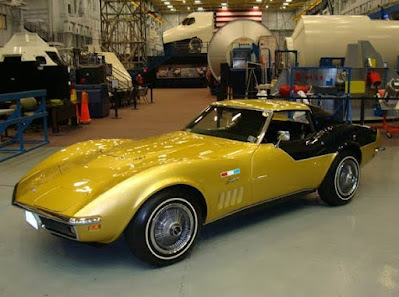
    1969 Corvette Stingray "AstroVette" Apollo-Themed

       Summary NASA + Corvette: GM connected the Corvette brand with NASA astronauts through cars, publicity, and an executive lease program. T...